Rato Machindranath Jatra, also known as Bunga Dya Jatra, is Nepal’s longest and most evocative chariot festival. For the people of Patan, also known as Lalitpur, it is far more than an annual tradition; it is the city's living heartbeat. When the towering chariot of Karunamaya, “the Compassionate One,” begins its slow journey through the ancient streets, life seems to pause as thousands gather to witness the spectacle.
As pre-monsoon clouds gather over the Kathmandu Valley, a rhythmic thunder echoes through Patan’s brick-paved lanes. It is not the sound of an approaching storm, but the collective roar of devotees pulling the massive chariot forward of Rato Machindranath Jatra. Rising nearly 60 feet above the ancient rooftops, the swaying structure, crowned with fresh pine branches and bright marigolds, carries centuries of faith, devotion, and living history into the open sky.
Table of Contents
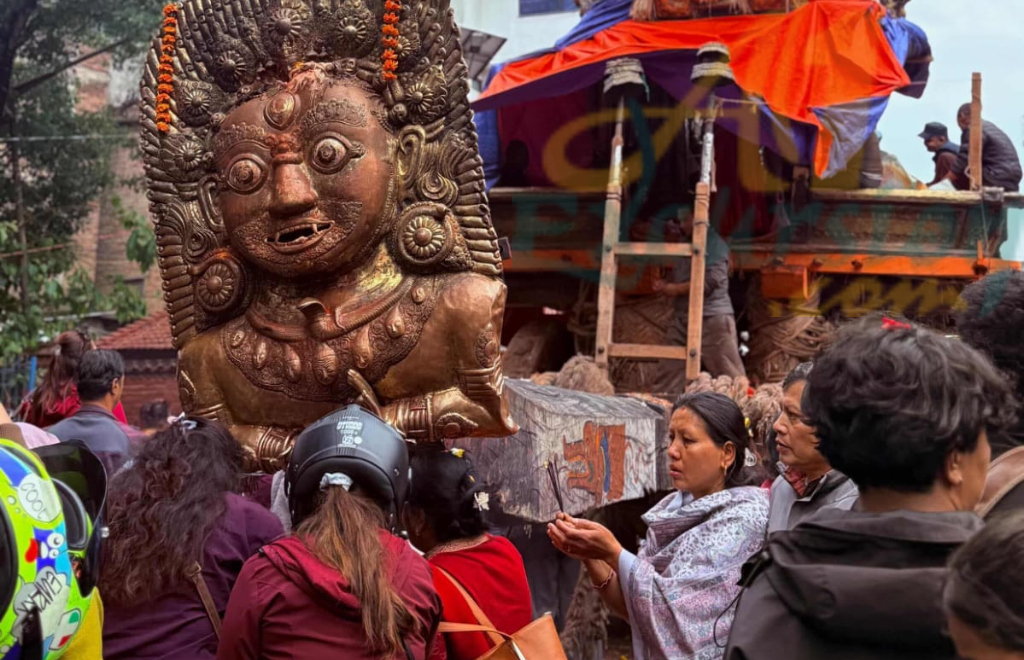
Devotees offering prayers before the towering chariot of Rato Machhindranath.
How a 12-Year Drought Gave Birth to Nepal's Greatest Festival
The origins of Rato Machindranath Jatra, also known as Bunga Dya Jatra, are rooted in an epic struggle against nature. Centuries ago, a devastating 12-year drought gripped the Kathmandu Valley. The great sage Gorakhnath, angered by a perceived lack of respect, captured the Nagas, the serpent deities believed to bring rain, and sat upon them in deep meditation. With the serpents imprisoned, the clouds disappeared, and crops across the valley began to wither.
In a desperate effort to save the land, a remarkable trio set out on a perilous journey: King Narendra Dev of Bhaktapur, the Tantric priest Bandhudatta Acharya (often known as Jamanama Gubaju), and a humble farmer from Patan, Lalit Jyapu. Representing the three ancient cities of the valley, they traveled to Kamaru Kamakhya in Assam, India, to invite the deity Rato Machindranath, also revered as Karunamaya or Lokeshwor, and regarded as a guru of Gorakhnath, to return with them.
When the deity finally arrived in the valley, Gorakhnath rose to pay his respects to his teacher. In doing so, he unknowingly released the Nagas. Almost immediately, rain poured over the parched land, restoring life and hope to the valley.
Today, the festival continues as both a sacred plea for a timely and abundant monsoon and a powerful symbol of harmony between Hindu and Buddhist traditions in Nepal.
Rato Machindranath Chariot: Ancient Engineering With No Metal Nails
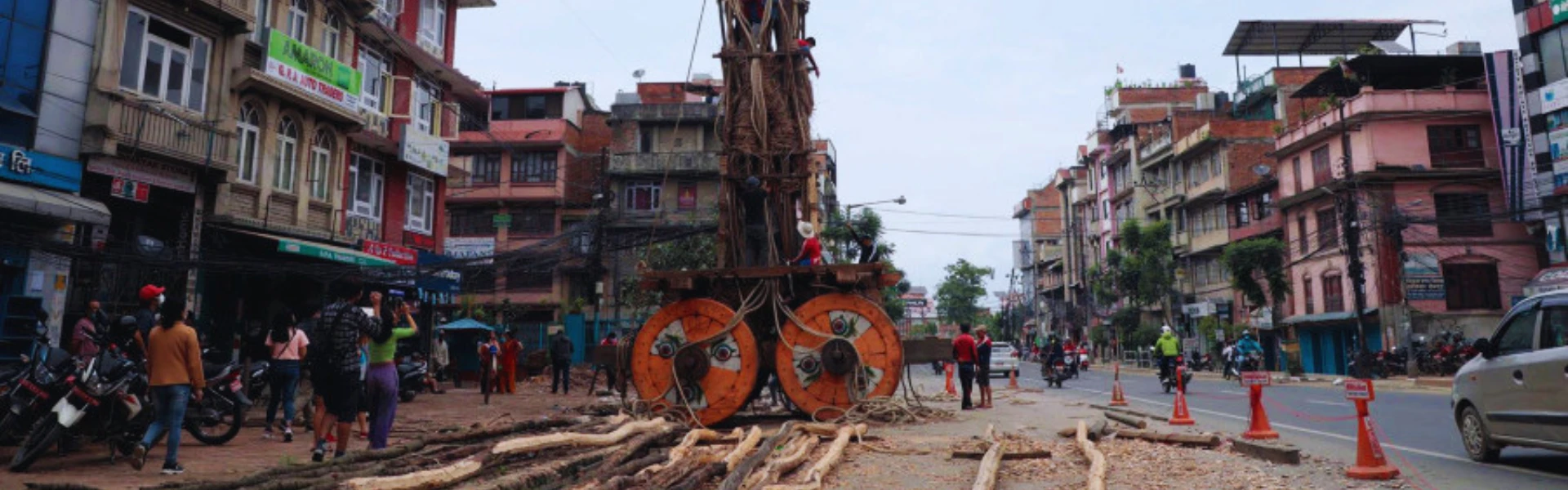
Crafting the magnificent chariot for the sacred Rato Machhindranath Jatra.
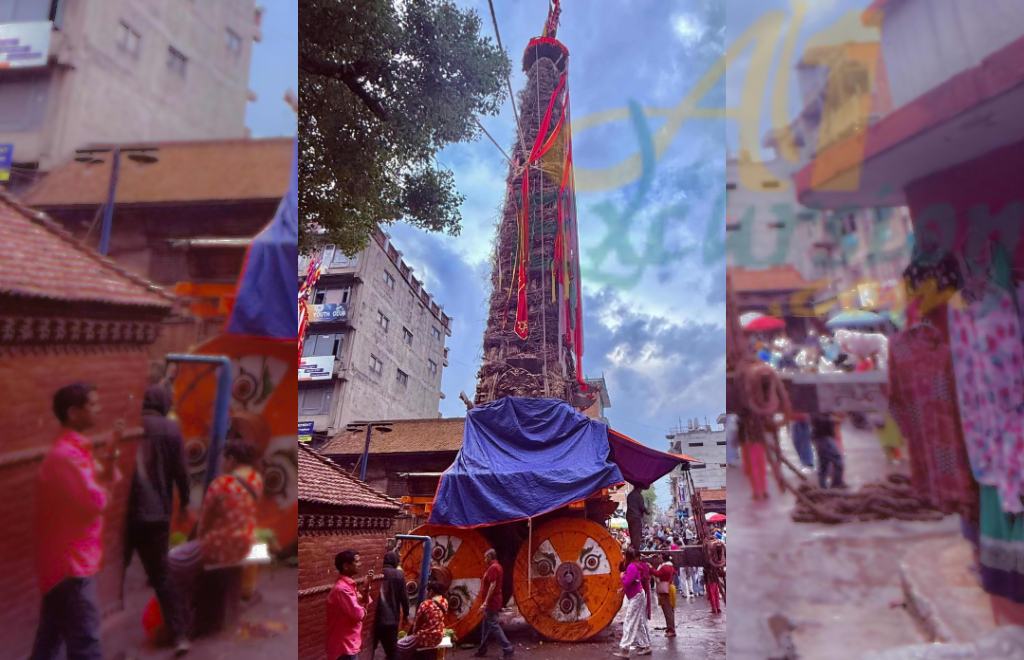
One of the most extraordinary aspects of the Rato Machindranath Jatra is the chariot itself, a monument to ancestral Newari ingenuity. Built without a single metal nail, the entire structure relies on wood, cane, and thick ropes, a design that allows the chariot to flex and sway as it navigates Patan's narrow lanes. Engineering is not a curiosity; it is the reason the chariot has survived centuries of journeys.
Every element carries meaning:
The four massive wooden wheels represent the four powerful Bhairabs, guardians who protect the deity throughout his journey.
The long curved beam at the front symbolises Karkotaka, the King of the Nagas, who guides the way.
The towering pine-and-marigold spire is not merely decorative; it is an offering to the sky, a prayer made visible.
The Festival Route: Week by Week Through Patan's Streets
The festival of Rato Machindranath Jatra, also known as Bunga Dya Jatra, unfolds over several weeks as the towering chariot is pulled through the historic neighborhoods of Patan (Lalitpur). It pauses in each community along the way, allowing residents to offer prayers, food, and devotion. This is not a hurried procession; it is a journey that honors every stop.
The route begins in Pulchowk, where the chariot is constructed, then winds through Gabahal and passes the majestic Patan Durbar Square. One of the most distinctive moments comes during a stretch known as Yakah Misaya Bhujya between Lagankhel and Thati, where the chariot is pulled exclusively by women, a quietly powerful tradition of inclusion.
At Lagankhel, the atmosphere peaks during the famous coconut dropping ritual, where coconuts are thrown from the chariot as blessings to the crowd below. The procession then moves toward Jawalakhel, where the grand finale takes place with the celebrated Bhoto Jatra, the ceremonial display of a sacred jeweled vest before thousands of spectators, including state dignitaries.
After the conclusion of Bhoto Jatra in Jawalakhel, the chariot is dismantled, marking the end of the procession. The deity is then returned to its original residence in Bugamati, the sacred village from where it was first brought at the beginning of the festival, completing the full spiritual cycle.
The Auspicious Coconut Throw: Patan's Rato Machindranath Jatra Ritual
When the chariot of Rato Machindranath Jatra reaches Lagankhel, the energy reaches a fever pitch for the Nariwal Khasalne, the Coconut Throwing Ceremony. A priest climbs to the summit of the 60-foot structure and hurls a sacred coconut into the sea of outstretched hands below. The scramble that follows is joyful chaos. Local belief holds that whoever catches the coconut will be blessed with immense good fortune
Bhoto Jatra during Machindranath Jatra: The Jewelled Vest That Has Never Been Claimed
After the coconut-throwing ceremony, the climax of the Rato Machindranath Jatra occurs at the open grounds of Jawalakhel during Bhoto Jatra. According to legend, a Naga king once gifted a jewel-studded vest (the Bhoto) to a farmer for curing his wife. After it was stolen and a dispute over ownership arose, the vest was entrusted to Rato Machindranath for safekeeping.
Every year, in the solemn presence of the Head of State of Nepal and the Living Goddess Kumari, an official holds the vest aloft from the chariot and asks the assembled crowd if anyone can claim it with proof of ownership. As it has for centuries, the vest remains unclaimed. It is returned to the deity's care, and the city exhales
What Happens When the Rato Machindranath Jatra Ends
Once the vest has been displayed, the deity is moved to a smaller palanquin and carried to his winter home in the village of Bungamati, a few kilometres south of Patan. The great chariot is dismantled piece by piece, its timber and rope stored away until the pre-monsoon clouds gather once more and Patan readies itself to begin again.
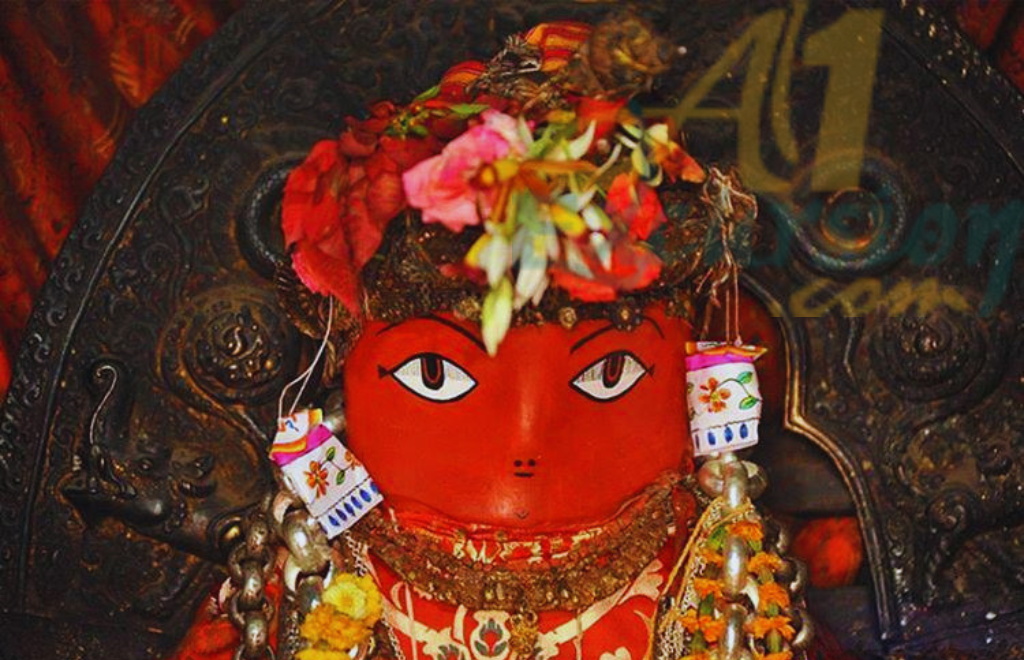
Idol of Rato Machhindranath — the Red God of Rain and Compassion.
Minnath: The Hidden Deity Behind Rato Machindranath Jatra
While the towering chariot of Rato Machindranath dominates the skyline of Patan, it is not alone in its journey.
Accompanying this grand procession is a smaller, often overlooked chariot carrying the god Minnath, a deity of deep historical and spiritual significance. Known as Chakbaha Dyo in Lcal Newari Language and Jattadhari Lokeshwor, the “dreadlocked” form of compassion, Minnath belongs to the same Lokeshwor lineage as Machindranath (Padmapani Lokeshwor). Yet his presence in the valley is believed to be even older.
Residing at the sacred Jestha Varna Mahavihar in Tangal, Minnath plays a crucial ceremonial role in the Jatra. Before the great chariot of Bunga Dyo begins its movement, Minnath symbolically welcomes the deity into the city. From Pulchowk, he leads the way toward Nuga (Sundhara), guiding the sacred route before following closely behind for the rest of the journey.
This relationship is not incidental; it is foundational. The presence of Minnath reflects an older layer of devotion within Patan, one that continues to shape the rhythm and meaning of the festival today.
To understand Minnath is to understand a deeper dimension of the Rato Machindranath Jatra itself. While the crowds gather around the towering chariot, Minnath moves with quieter purpose, a guiding force that ensures the journey unfolds as it has for generations.
When is Rato Machindranath Jatra celebrated?
Month Range: The festival typically begins in late April or early May and lasts for several weeks, sometimes extending into June, depending on the specific lunar alignment.
Lunar Calendar Note: It commences on the fourth day of the bright fortnight of Baisakh (Baisakh Shukla Chaturthi) according to the Nepali calendar. Because it follows the lunar cycle, the exact dates shift annually.
Where Does the Festival Take Place?
The Jatra is centered in Lalitpur (Patan), but its significance resonates across the entire valley:
Patan: The majority of the procession winds through the narrow, ancient streets of Patan. The chariot is painstakingly constructed at Pulchowk and travels through neighborhoods like Gabahal, Sundhara, and Lagankhel.
Kathmandu: While the physical chariot remains in Patan, residents from Kathmandu and Bhaktapur traditionally participate, honoring the historical legend in which leaders from all three cities united to bring the deity to the valley.
Jawalakhel: The final destination. The festival reaches its grand climax here with the Bhoto Jatra, where a sacred, jewel-studded vest is displayed to the public in the presence of the Head of State.
How to Experience Rato Machindranath Jatra
Experiencing Nepal’s longest chariot festival is breathtaking but requires some preparation.
Best Viewing Spots
Pulchowk: Head here at the very start to see the towering, 60-foot chariot in its full glory before it begins its journey.
Patan Durbar Square: A magnificent backdrop as the chariot passes through the heart of the city’s heritage zone.
Residential Balconies: If you know a local, viewing the procession from a second or third-story window offers the best perspective of the "Chakadev" (the priest atop the chariot) and the massive crowds below.
Local Tips
Timing is Fluid: The chariot doesn't move on a strict hourly schedule. It moves when the puller's strength and the rituals allow. Follow local news or social media updates to see which neighborhood the chariot is currently resting in.
Try the Food: The festival is a great time to sample Newari delicacies like Samay Baji from local vendors lining the route.
Safety Advice
Mind the Ropes: Stay well clear of the massive, thick ropes used to pull the chariot. When the crowd starts to pull, the force is immense and can be unpredictable.
Footwear & Hydration: Wear closed-toe shoes to protect your feet in the throngs of people and carry water, as the afternoon sun in Baisakh can be quite intense.
Watch for Overhead Wires: In the narrow alleys of Patan, the chariot's towering spire can brush against low-hanging electrical cables. Stay alert and step back when you hear the crowd warning others. Chariot, handlers will often pause to manage these obstacles, but the surrounding area can quickly get chaotic.
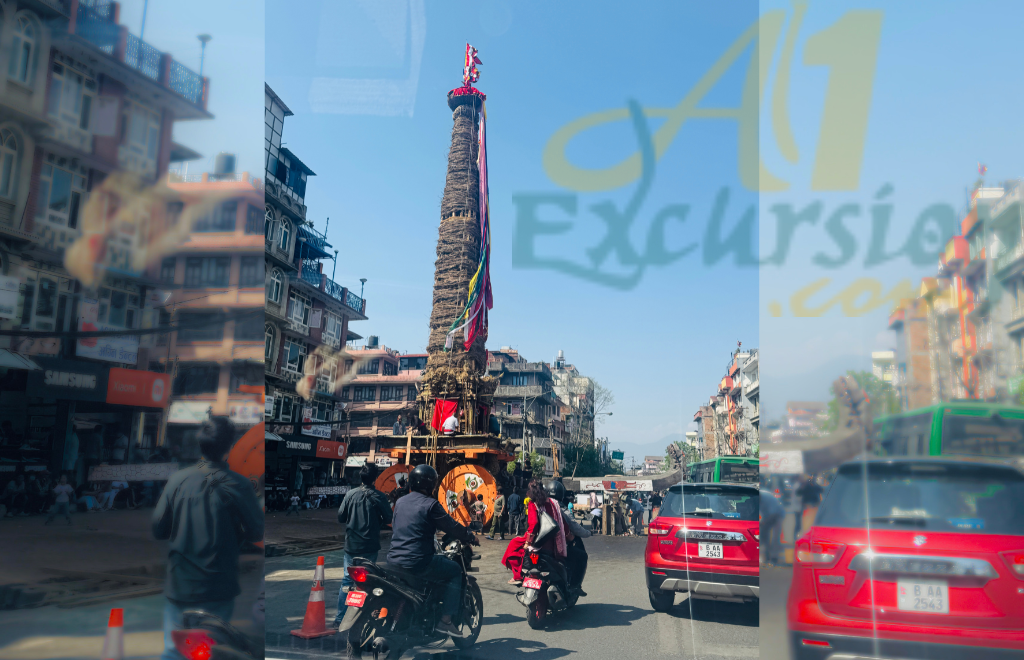
The majestic chariot of Rato Machhindranath rising above the streets of Nepal.
Final Thoughts
Witnessing the Rato Machindranath Jatra in Patan is one of the most rewarding cultural experiences Nepal offers. Yet, the scale and intensity of the festival can feel overwhelming without local insight. The best vantage points for the coconut-dropping ceremony at Lagankhel or the sacred Bhoto Jatra in Jawalakhel aren’t marked on any map; they are passed down through generations.
Few festivals in South Asia rival the cultural depth and visual spectacle of this ancient celebration. The Rato Machindranath Jatra is at once a living religious tradition, an extraordinary feat of indigenous engineering, and a powerful community ritual that has bound the people of Patan together for centuries. Whether you find yourself in the joyful chaos of the coconut throw, witnessing the solemn ritual of Bhoto Jatra at Jawalakhel, or simply standing beneath the towering chariot as it creaks through a narrow alley, every moment feels raw, real, and unrepeatable.
If you’re planning a journey to Nepal between April and June, building your itinerary around this festival is more than a good decision; it's an unforgettable one. Come prepared to be patient, to be present, and to be deeply moved.
Experience it the right way. Join us for a guided cultural immersion into the living heart of Patan, where every ritual has meaning and every moment tells a story.
FAQs
1. Why is the chariot so tall, and what is it made of?
The chariot stands approximately 60 to 65 feet tall. It is constructed almost entirely of wood and bamboo, tied together with strong vines and ropes without the use of metal nails. The towering spire is covered in green pine branches, symbolizing fertility and life.
2. Who is Rato Machindranath to Hindus and Buddhists?
This festival is a beautiful example of religious syncretism. Hindus worship the deity as an incarnation of Lord Shiva or as the god of rain, while Buddhists venerate him as Padmapani Lokeshwor, the Avalokiteshvara of compassion.
3. What happens if the chariot tilts or breaks?
According to local lore, any mishap during the procession—such as the chariot tilting or a wheel breaking -- is considered a bad omen for the country. If this happens, specific atonement rituals and sacrifices must be performed by the priests before the journey can continue.
4. What is the significance of the "Bhoto Jatra"?
The Bhoto Jatra is the festival climax at Jawalakhel. A jeweled vest (Bhoto) is held up from the four corners of the chariot for the public to see. Legend says it belonged to a Naga (serpent) and was lost; it is displayed annually in hopes that the rightful owner will come forward with proof to claim it.
5. How long does the entire festival last? It is the longest chariot festival in Nepal.
While the actual pulling of the chariot takes place over several weeks, the entire cycle—including the construction of the chariot, the ritual bathing of the deity, and the final display of the vest can span up to two months.
6. Can tourists participate in pulling the chariot?
Technically, yes, the pulling is a communal effort. However, it is highly physical and can be dangerous due to the massive weight of the wood and the crowd’s surge. If you wish to help, it is best to join in the wider, open areas under the guidance of locals, but most visitors prefer to watch from a safe distance.
Raj Thapa
Founder & Managing Director Raj Kumar Thapa: Founder & Managing Director of the Company, and has over 2 decades of professional experience in the travel and trekking field. Mr. Raj has spent the entirety of his career in the travel & trek organization.


.webp)