What Is a Tea House in Upper Mustang?
If your only trekking experience is the Everest Base Camp route or the Annapurna Circuit, reset your expectations before crossing the gate at Kagbeni towards Upper Mustang. The tea house model here is fundamentally different.
1. Traditional Tea Houses on the Upper Mustang Trek
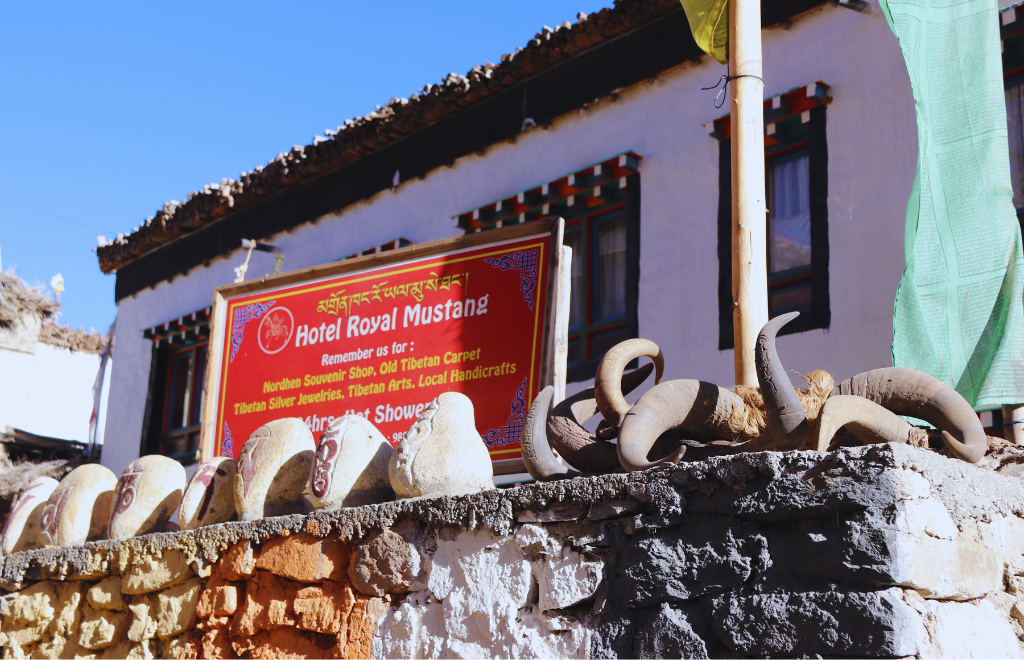
Most tea houses in Upper Mustang are not purpose-built guesthouses. They are traditional Lo-Pa family homes that have opened a few rooms to trekkers in Upper Mustang. The architecture tells the story immediately: sun-dried mud bricks, flat roofs stacked with firewood (a sign of wealth in a treeless landscape), and narrow windows designed to keep out the dust storms that howl through the Kali Gandaki corridor each afternoon while hiking to Lo Manthang.
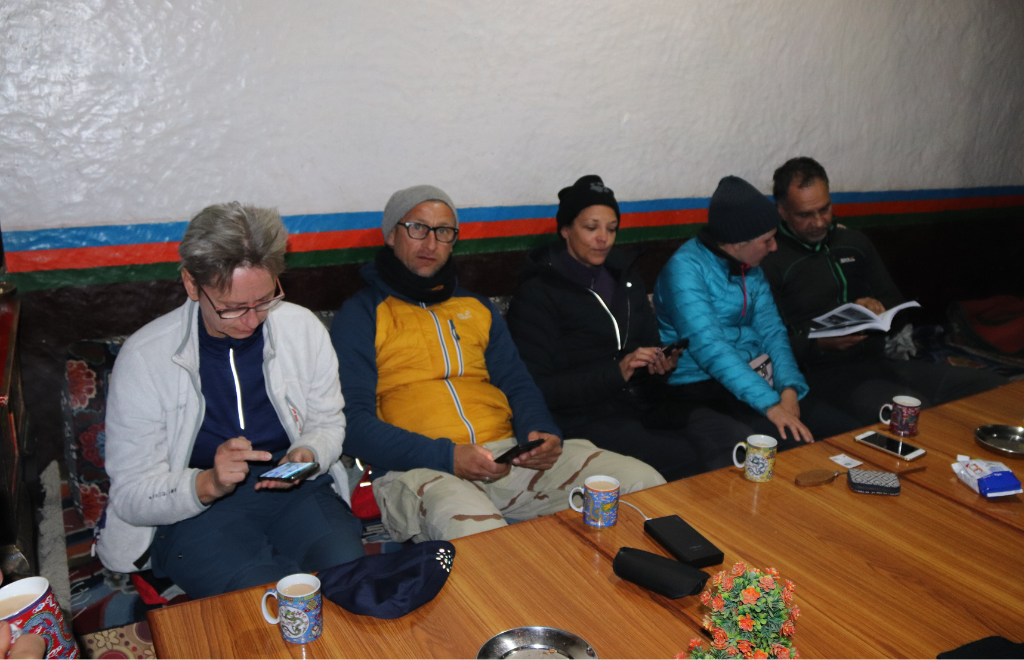
In these tea houses, the kitchen is the heart. Families cook on a central stove fueled by dried yak dung or wood. The dining area is small and communal; you will eat alongside your guide, the family, and whatever other trekkers passed through that day. There is no printed menu in three languages. There is dal bhat, thukpa, Tibetan bread, and if you are lucky, fresh yak cheese from the village above. This is not a limitation. That is the entire point.
2. Standard Tea Lodges in the Mustang Region Trek
During the trek in the larger villages of the Mustang region, like Kagbeni, Syangboche, and Lo Manthang, all have Tea lodges that look more like small hotels. Multi-story buildings with proper dining halls, laminated menus, and, in the best cases, attached bathrooms with hot water. The Buddhist aesthetic remains: thangkas on the walls, butter lamp offerings at the entrance, portraits of the former King of Lo, Jigme Palbar Bista. These are excellent bases. But if you stay only in the large lodges, you will miss the version of Mustang that people travel 3,000 miles to find.
3. Luxury Accommodation Options in Mustang
The luxury trekking market has expanded in recent years in the Mustang region. Properties like Shinta Mani Mustang in Jomsom offer heated rooms, gourmet meals, and spa facilities. However, once you pass the checkpoint at Kagbeni and enter the Restricted Area, genuine luxury accommodation is still rare. 'Luxury' above the gate usually means a helicopter transfer arranged by your agency and a private cook, not a four-star hotel.
The trade-off is real: you gain a hot shower and lose the experience of sitting in a dim kitchen, sharing tea with a 70-year-old who remembers when this land was truly closed to outsiders.
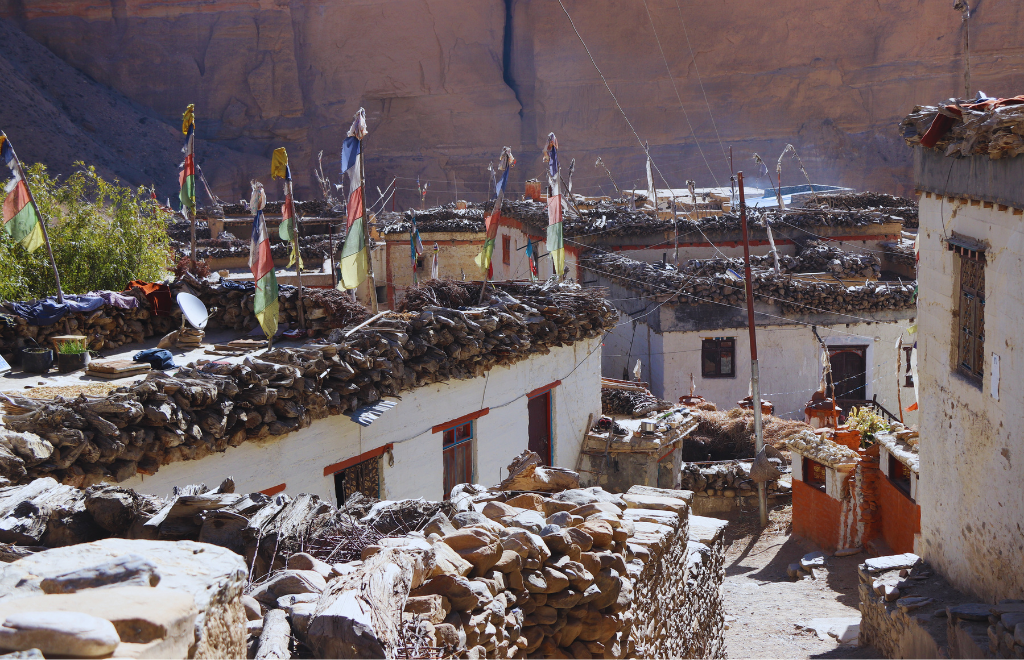
Tea Houses in Upper Mustang: Village-by-Village Guide
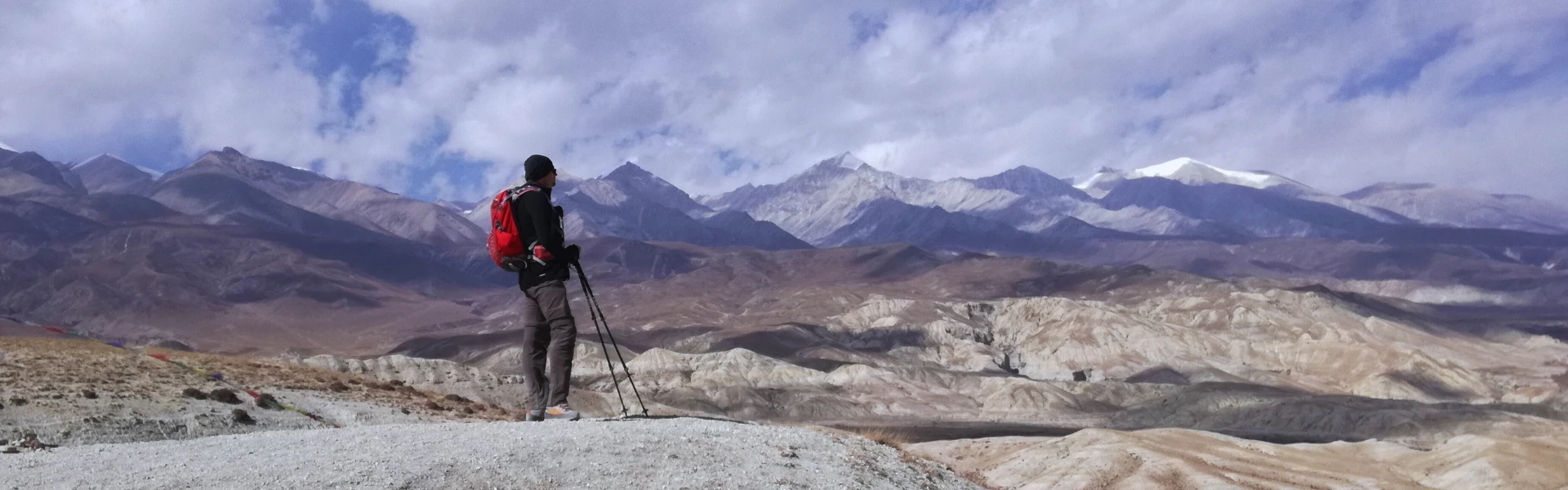
The trail from Jomsom to Lo Manthang is a 70-kilometre ascent through geological time. Each village represents a different layer of Upper Mustang's culture and a different standard of accommodation.
Kagbeni: The Gateway to Upper Mustang (2,810m)
Kagbeni is where the Restricted Area begins and where the infrastructure peaks. The medieval stone village sits at the confluence of the Kali Gandaki and Jhong rivers, its dark alleys and red-walled monastery making it one of the most photogenic stops in Nepal. Tea houses here have improved significantly. Attached bathrooms are common, Wi-Fi is available (though slow), and the bakeries that are stocked with produce from the famous apple orchards of nearby Marpha, which serve some of the best apple crumble you will eat at altitude. Consider spending two nights here to acclimatize.
Chele & Syangboche: Tea Houses in the High Desert
Above Kagbeni, the landscape transforms almost immediately. The vegetation disappears. The ochre cliffs rise hundreds of metres on either side. The wind, by early afternoon, becomes a physical force. Tea houses in Chele and Syangboche are smaller and more basic. Rooms typically hold two single beds with thin foam mattresses. The blankets are adequate, but this is where your sleeping bag earns its keep. The hospitality, however, intensifies as the comfort decreases, as hosts know that their warmth is now part of the infrastructure.
Ghami: Tea Houses Near the Longest Mani Wall
Ghami is home to one of the longest mani walls in the entire Himalayan region, which is full of a continuous line of carved prayer stones stretching hundreds of metres along the trail. Staying here feels genuinely off the tourist circuit. The tea house we used was run by a woman named Dawa, whose family had been hosting trekkers since the late 1990s. She made the best buckwheat pancakes on the entire route.
Charang: Tea Houses in the Former Ancient Mustang Capital
Charang was once a rival to Lo Manthang in importance, and its crumbling dzong (fortress) on the cliff above the village is proof of that former power. The guest houses here feel like old manor houses with heavy timber beams, rooftop terraces with unobstructed views across the desert plateau, and an atmosphere of quiet, faded grandeur.
Lo Manthang: Tea Houses Inside the Walled City
Arriving at the gate of Lo Manthang after four or five days of walking is a moment that earns its reputation. The walled city, home to roughly 200 households, has changed remarkably little since it was built in the 14th century. The royal palace of the former King of Lo still dominates the skyline. In 2026, the lodges inside the walls have made meaningful upgrades. Solar lighting is reliable. Hot showers (genuinely hot, not lukewarm) are available in the better establishments. Starlink has arrived, which means Wi-Fi that actually works, though most trekkers report quickly losing interest in their phones once they step outside.
Spend at least two nights here. Walk the city at 6 am, before the dust and the other trekkers. The early light on the monastery walls is the best photograph you will ever take.
Facilities in Upper Mustang Tea Houses (2026 Expectations)
| Category | Details | Notes |
| Permit Cost | $50 USD per person per day | ------------------------- |
| Best Season | March–May, Sep–Nov | Monsoon also viable |
| Charging Fee | $3–$5 per device | Solar powered |
| Toilet Type | Squat (most villages) | Western in Lo Manthang |
| Wi-Fi | Sporadic / paid | Starlink in Lo Manthang |
| Sleeping Bag | 4-season recommended | Blankets provided |
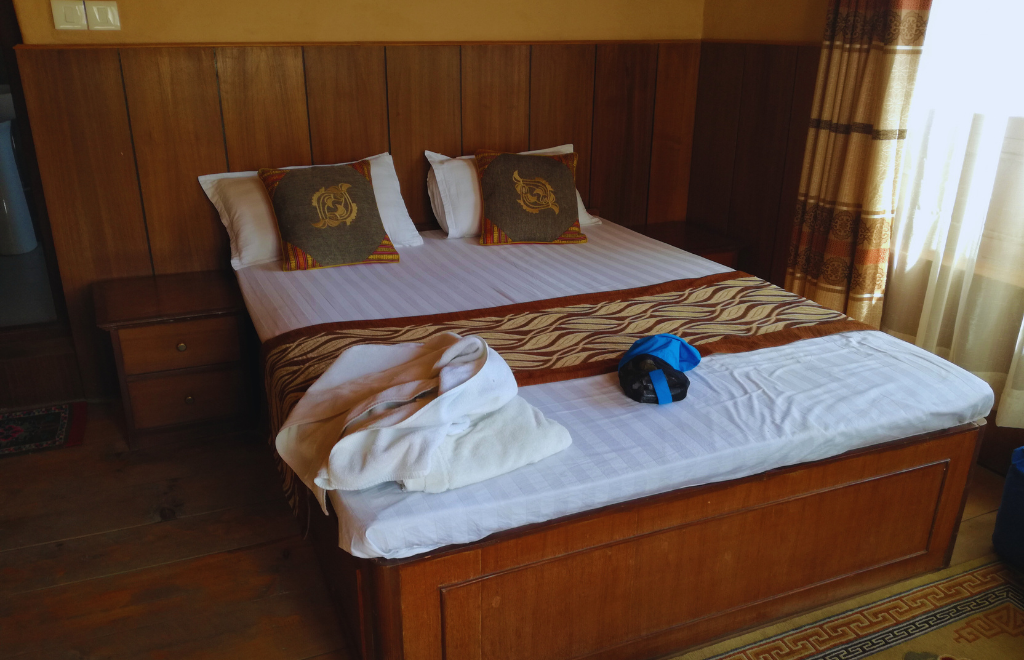
Sleeping Room during Upper Mustang Trek and Jeep tour
While on the Upper Mustang Trek or Jeep tour, your Rooms are almost universally twin-sharing with thin foam mattresses. Blankets are provided, but can be insufficient for a Mustang night in the colder season. Bring a 4-season sleeping bag rated to at least -10°C for maximum comfort. The mud walls provide impressive insulation against the wind but not against the cold.
Food in Upper Mustang Tea Houses
During trekking in Mustang, dal bhat is your primary fuel, and it is excellent here, richer and more complex than the lowland version, often incorporating local barley, dried yak meat, and fermented vegetables. Other staples include thukpa (noodle soup), Tibetan bread fried in butter, and buckwheat pancakes. In Lo Manthang, menus have expanded to include fried rice, momos (dumplings), and even basic pasta dishes. Do not arrive expecting variety; arrive expecting sustenance that tastes better than anything you have eaten at this altitude.
Water and Altitude During the Upper Mustang Trek
Drink only boiled or purified water. Most tea houses provide boiled water in thermoses at the table, which is usually included in the meal price. Carry purification tablets as a backup. At Lo Manthang's elevation, headaches are common in the first 24 hours, even for experienced trekkers. Acclimatize properly at Kagbeni and Geling before pushing higher.
Essential Permits for Visiting Upper Mustang
The Restricted Area Permit (RAP)
To visit Upper Mustang, it is illegal to enter without a Restricted Area Permit (RAP). As of 2026, the cost is $50 USD per person per day. This fee is set by the Government of Nepal and is non-negotiable. The permit must be processed through a registered Nepali trekking agency like A1 Excursion, and it cannot be obtained independently.
A1 Excursion Adventure can help arrange your Upper Mustang permits, including the Restricted Area Permit (RAP), ACAP permit, and guide services.Need help with permits? Contact us, and we’ll handle the process.
For a full breakdown of costs, rules, and the permit process, read our detailed guide:
Pro tip: Allow 3–5 working days before you depart for processing. You will also need a TIMS card and an ACAP permit.
Why Solo Trekking Is Not Permitted in Upper Mustang
The regulations require a minimum of two trekkers and a licensed Nepali guide. This is not bureaucratic obstruction; it is a meaningful policy that has helped preserve the region's cultural integrity. A knowledgeable local guide also transforms the experience: they know which monastery is unlocked for morning prayers, which family makes the best home-brewed chyang (barley beer), and how to navigate the unmarked trails between villages when the afternoon wind reduces visibility.
Trekking Upper Mustang During Monsoon
Contrary to popular belief, trekking in Nepal during the monsoon (June–August) is not impossible, especially in Upper Mustang. Nestled in the rain shadow of the Annapurna Massif, it stays dry while the rest of Nepal pours. Summer trails are clear, tea houses lively, and mustard and buckwheat fields transform the desert into a riot of colour.
Additionally, you can visit in mid-May to witness the legendary Tiji Festival in Lo Manthang in Upper Mustang that will include three days of masked cham dances by monks from Namgyal Monastery for peace and prosperity.
Experience the Tiji Festival in Lo-manthang with us!
Join A1 Excursion Adventure for a Jeep Tour or Trek to Upper Mustang and immerse yourself in this extraordinary Himalayan festival. Book your Tiji Festival 2026 adventure trip today!
Mustang Trek With A1 Excursion Adventure
Upper Mustang is not a place that any trekking agency will take you to. The permit logistics are complex, the trail is unforgiving, and the cultural sensitivity required is real. Getting it wrong wastes both your money and the opportunity.
At A1 Excursion Adventure, we provide well-curated Upper Mustang Trekking packages tailored for all types of travelers. Our packages include:
A1 Excursion Adventure offers fully customizable trekking experiences tailored to your interests and schedule. Whether you want to add cultural tours in Pokhara, rejuvenating yoga retreats, or spiritual excursions to Muktinath Temple, your itinerary can be personalized for a truly unique journey through Upper Mustang.
Final Thoughts on Staying in a Tea House in Upper Mustang
The true value of a tea house in Upper Mustang has little to do with mattress thickness or WiFi. It is found in the stillness before sunrise, the scent of juniper incense carried by winds from the Tibetan Plateau, and the warmth of a bowl of Butter Tea on a freezing morning. The Upper Mustang does not promise luxury. It invites presence. The tea houses are not just places to sleep. They are the heart of the journey. The families who welcome you, the mud-brick walls that shelter you, and the distant monastery bells that greet the day become part of the experience itself. Everything else is just a room.
Ready to experience the real Upper Mustang region?
Travel with A1 Excursion Adventure and explore the Forbidden Kingdom through carefully designed treks and jeep tours. From ancient monasteries to the timeless streets of Lo Manthang, our journeys bring you closer to the culture, landscapes, and people that make Mustang unforgettable. Contact A1 Excursion Adventure today to start planning your Upper Mustang adventure.
Frequently Asked Questions
1. Can I book tea houses in advance?
In most villages of Upper Mustang, yes. Your guide or trekking agency can call ahead, which is recommended during peak seasons (April–May and September–October). In smaller villages like Charang, accommodation is limited, so advance arrangements are important.
2. Is the food safe to eat in Upper Mustang tea houses?
Generally yes. Freshly cooked meals like dal bhat are the safest choice. It is best to avoid raw salads or unpeeled fruit. In places like Lo Manthang, most tea houses serve simple but hygienic home-cooked food.
3. How do I handle altitude sickness?
The key is to ascend gradually and allow time for acclimatization. Most itineraries include acclimatization stops in villages like Kagbeni and Geling. Carry medication such as Acetazolamide if recommended by your doctor, stay hydrated, and descend immediately if severe symptoms appear.
4. What has changed in Upper Mustang in recent years?
Infrastructure in Upper Mustang has improved with more attached bathrooms, better solar power, and faster internet connections in places like Lo Manthang. While the trails are slightly busier during peak weeks, the core experience remains the same: dramatic landscapes, ancient monasteries, and the warm hospitality of local tea house families.


.webp)