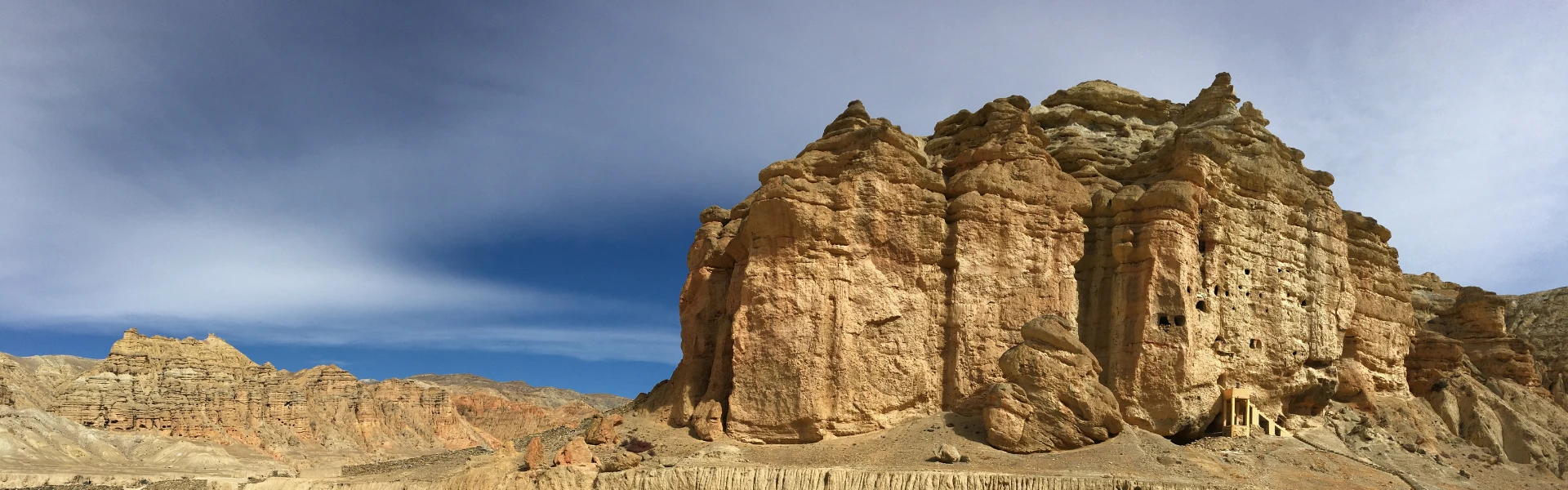
Tucked behind the rain-shadow of the Annapurna and Dhaulagiri Himal lies a high-altitude desert realm like no other on Earth. Known for centuries as the Forbidden Kingdom of Lo, Upper Mustang remains one of the world's best-preserved sanctuaries of ancient Tibetan culture. At the heart of this barren, wind-sculpted landscape sits the legendary walled city of Lo Manthang.
Stepping through the whitewashed main gate of Lo Manthang feels like stepping back into the 15th century. Narrow cobblestone alleys wind past mud-brick homes, spinning prayer wheels, and towering ochre structures that house some of the most sacred spiritual treasures in the Himalayas. The monasteries of Lo Manthang, Upper Mustang, serve as living monuments to Vajrayana Buddhism, preserving priceless medieval murals, massive statues, and sacred rituals that have remained virtually unchanged for over six hundred years.
Whether you choose a classic trek across rugged passes or a comfortable 4WD overland journey, exploring these sacred sites offers a profound journey into the spiritual soul of Nepal. As a government-licensed trekking operator with decades of local expertise, A1 Excursion Adventure invites you on an immersive journey to discover the sacred temples, hidden cave monasteries, and vibrant monastic communities of Upper Mustang.
Discovering the Sacred Monasteries of Lo Manthang
For centuries, Upper Mustang was closed to foreign travelers. This isolation protected its culture, religion, and architecture from external influences, earning it the title of the "Forbidden Kingdom." When you explore the monasteries of Lo Manthang, Upper Mustang, you are not simply visiting historic buildings; you are witnessing a living museum of Tibetan Buddhism in Nepal.
The spiritual identity of the local Loba people is anchored by six major monastic complexes across the region:
Jampa Lhakhang: The oldest major temple inside the walled city, renowned for its giant statue of Maitreya Buddha and intricate wall mandalas.
Thubchen Gompa: A grand 15th-century assembly hall supported by massive wooden pillars and decorated with exquisite frescoes.
Chode Monastery: The active administrative center of religious life in Lo Manthang, housing young monks and hosting the world-famous Tiji Festival.
Namgyal Gompa: Perched atop a hill outside the city walls, known as the "Monastery of Victory" and a center for community administration.
Ghar Gompa (Lo Gekar): Located on the trail to Lo Manthang, this is the oldest active monastery in Upper Mustang, founded in the 8th century by Guru Rinpoche.
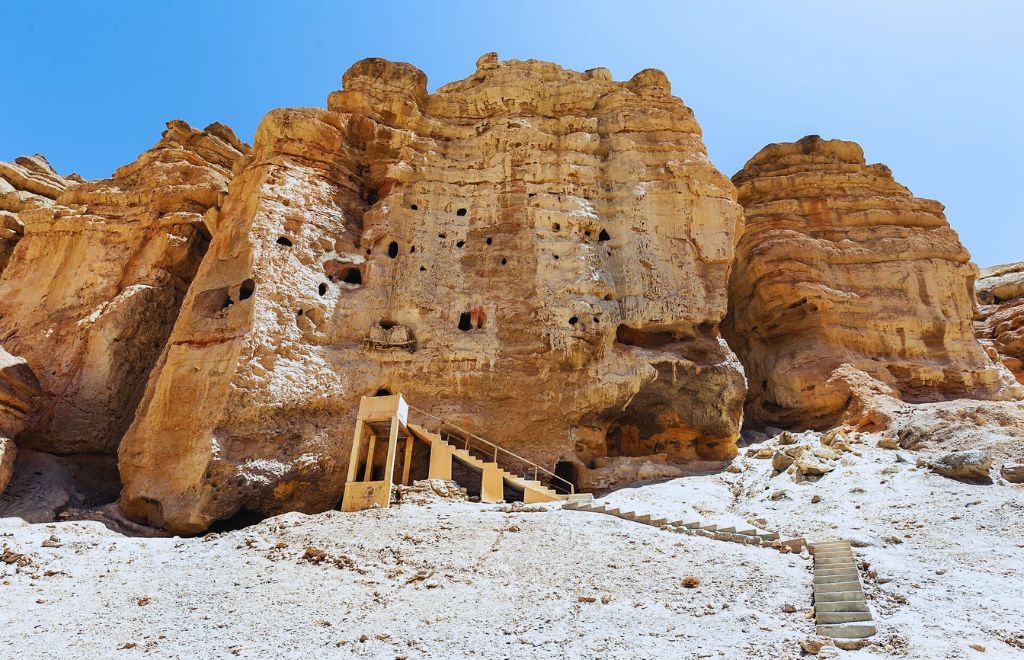
Luri Gompa: A breathtaking cave monastery carved into sheer sandstone cliffs, housing priceless 14th-century murals.
Each monastery possesses a distinct architectural style, historical legacy, and spiritual energy. Together, they represent a cultural treasure trove deserving of UNESCO World Heritage recognition.
Table of Contents
History of Buddhism in Upper Mustang
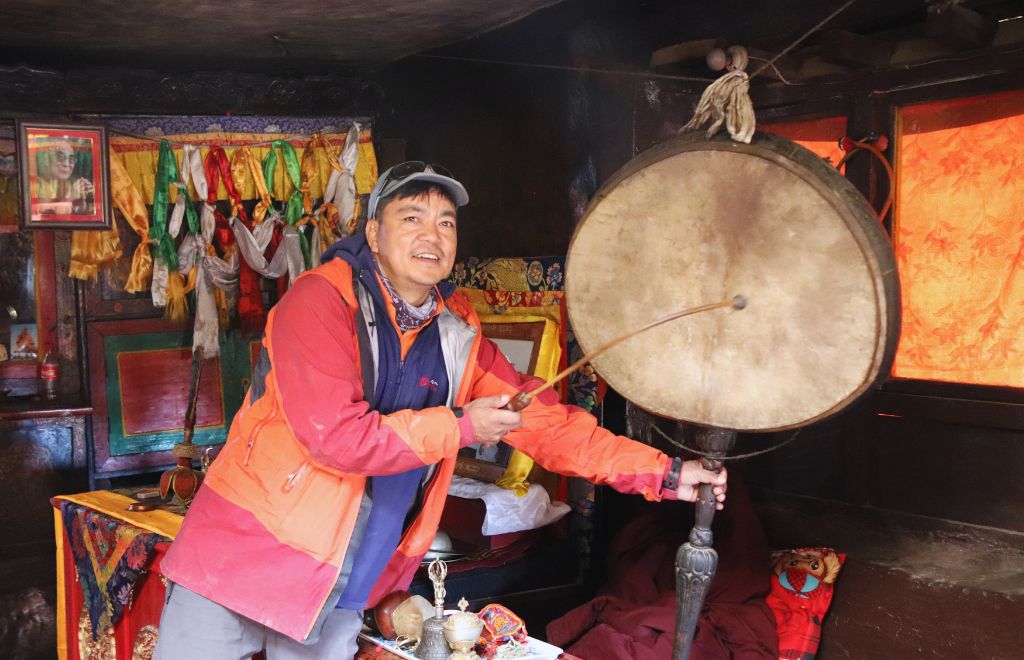
A captivating interior view of a traditional Buddhist monastery in Upper Mustang, showcasing its ancient architecture and spiritual heritage.
To appreciate the Upper Mustang monasteries, one must understand the complex historical tapestry of the Kingdom of Lo. Founded in 1380 AD by the warrior king Ame Pal, the kingdom unified the fragmented settlements of the Kali Gandaki valley. King Ame Pal established Lo Manthang as his capital, constructing defensive walls and inviting revered Buddhist masters to consecrate the realm.
Founding of the Kingdom of Lo
(1380 AD) King Ame Pal unifies Upper Mustang and establishes Lo Manthang as the walled capital, establishing a lineage of Buddhist monarchs.
Arrival of Ngorchen Kunga Zangpo
(1427 AD) The great Sakya master visits Lo Manthang, establishing the Sakya school as the region's dominant religious tradition.
Golden Age of Monastery Construction
(1447–1472 AD) Royal patrons erect the Jampa Lhakhang and the Thubchen Gompa, commissioning artists from the Kathmandu Valley and Tibet to paint masterpieces.
Re-Opening to Foreign Trekkers
(1992 AD) Nepal opens Upper Mustang as a restricted trekking area, initiating international heritage restoration initiatives.
Before the 15th century, the region practiced a blend of ancient Nyingma Buddhism and indigenous Bon Shamanism. The arrival of the great Sakya master Ngorchen Kunga Zangpo in 1427 AD transformed the religious landscape. Under his guidance and royal patronage, the Sakya tradition became the dominant spiritual school in Lo Manthang.
Monasteries became the center of society. They functioned as places of worship, educational academies, judicial centers, and repositories of wealth and art. Today, the monks continue to safeguard ancient Tibetan texts, practice ritual arts, and maintain the spiritual balance of the high Himalayas.
Monasteries of Lo Manthang, Upper Mustang
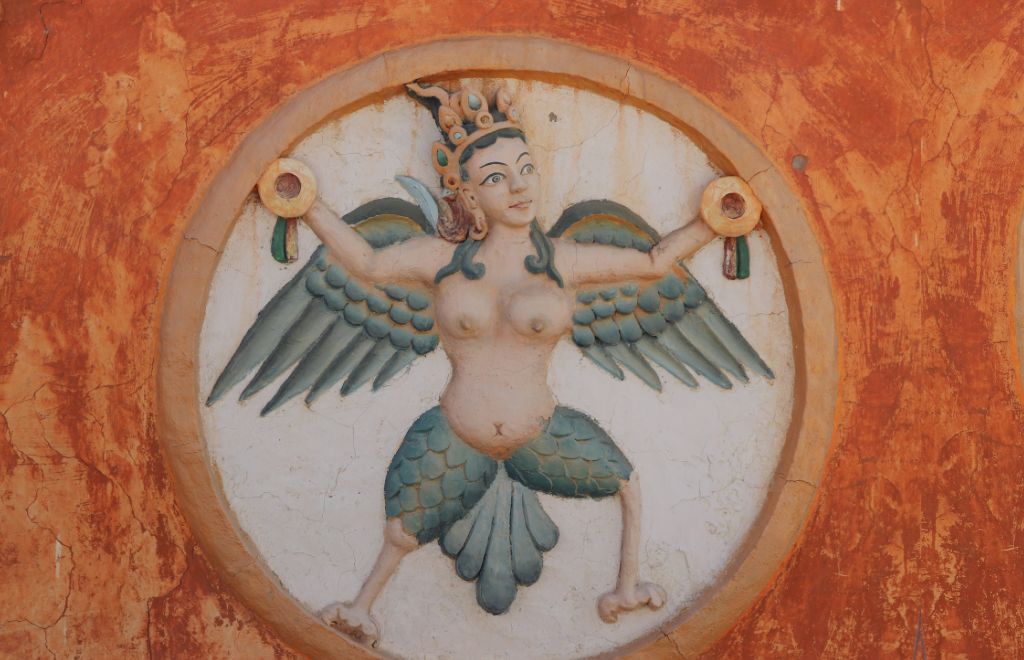
Intricate religious motif adorning the wall of an ancient monastery in Upper Mustang, reflecting the region’s rich Tibetan Buddhist heritage.
The architectural style of the monasteries of Lo Manthang, Upper Mustang is a masterclass in Himalayan engineering. Built to withstand harsh mountain winds, freezing temperatures, and seismic activity, these structures blend seamlessly into the arid landscape.
Core Building Materials and Techniques
Earth and Mud-Brick: Walls are constructed using rammed earth and sun-dried mud bricks, providing natural insulation against extreme cold.
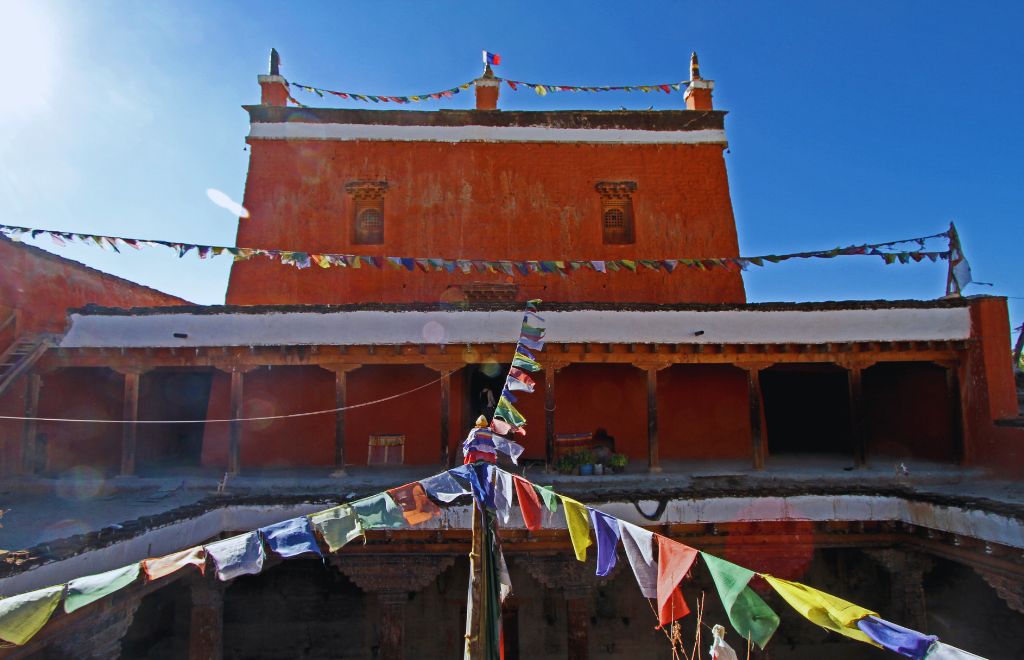
Ochre and Whitewash: Exterior walls are coated with white lime or red clay ochre. Red signifies sacred monastic buildings, while white denotes residential and civic structures.
Heavy Timber Framing: Juniper and cedar beams, transported from southern valleys, support flat roofs capped with willow twigs and compacted clay.
Intricate Woodwork: Door frames, pillar capitals, and window lintels feature hand-carved motifs of snow lions, lotus flowers, and sacred mantras.
Murals and Conservation Challenges
Inside the assembly halls, every square inch of wall space was originally covered in brilliant frescoes painted with ground mineral pigments: lapis lazuli blue, malachite green, cinnabar red, and pure gold leaf.
Over centuries, water seepage through flat mud roofs, earthquake tremors, and soot from butter lamps damaged these artistic masterpieces. Since the late 1990s, international organizations like the American Himalayan Foundation (AHF), alongside local Loba artists, have undertaken painstaking restoration efforts. Today, these temples stand meticulously restored to their original 15th-century glory.
Jampa Lhakhang – The House of Maitreya Buddha
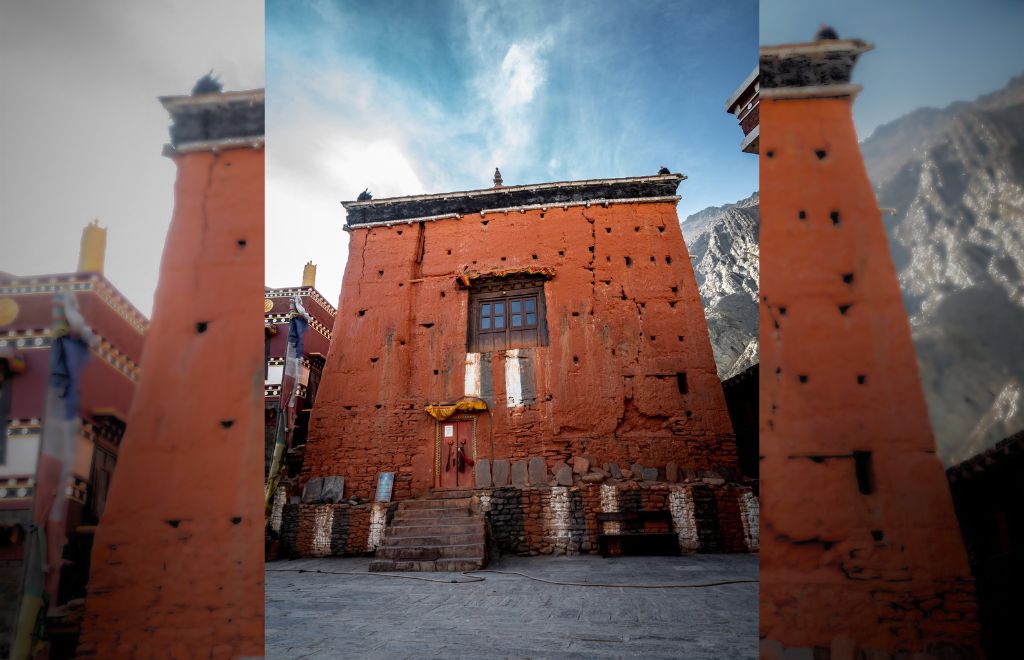
Jampa Gompa is one of the historic Buddhist monasteries in Lo Manthang, reflecting the rich Tibetan Buddhist heritage of Upper Mustang.
History and Construction
Jampa Lhakhang (also written as Jampa Gompa) is widely considered the ultimate artistic crown jewel among the monasteries of Lo Manthang. Built in approximately 1447 AD during the reign of King Tenzin Tragye, this massive three-story red structure was designed to represent a physical mandala of the universe.
The Giant Maitreya Statue and Sacred Murals
Upon stepping into the ground floor of Jampa Lhakhang, visitors are immediately humbled by the sheer scale of the central deity: a 50-foot-tall clay statue of Maitreya (the Future Buddha), seated royally. The statue rises through the central opening of the first two floors, allowing worshipers on the upper level to gaze directly into Buddha’s serene, gilded face.
The ground-floor walls feature 108 complex mandalas, each painted with geometric precision. These mandalas serve as meditative guides for advanced Tantric practitioners.
Visitor Experience Tip: The interior of Jampa Lhakhang is intentionally dark to protect the mineral pigments from light damage. Bringing a soft LED headlamp will allow you to appreciate the intricate details of the murals without harming the art.
Thubchen Gompa – The Great Assembly Hall
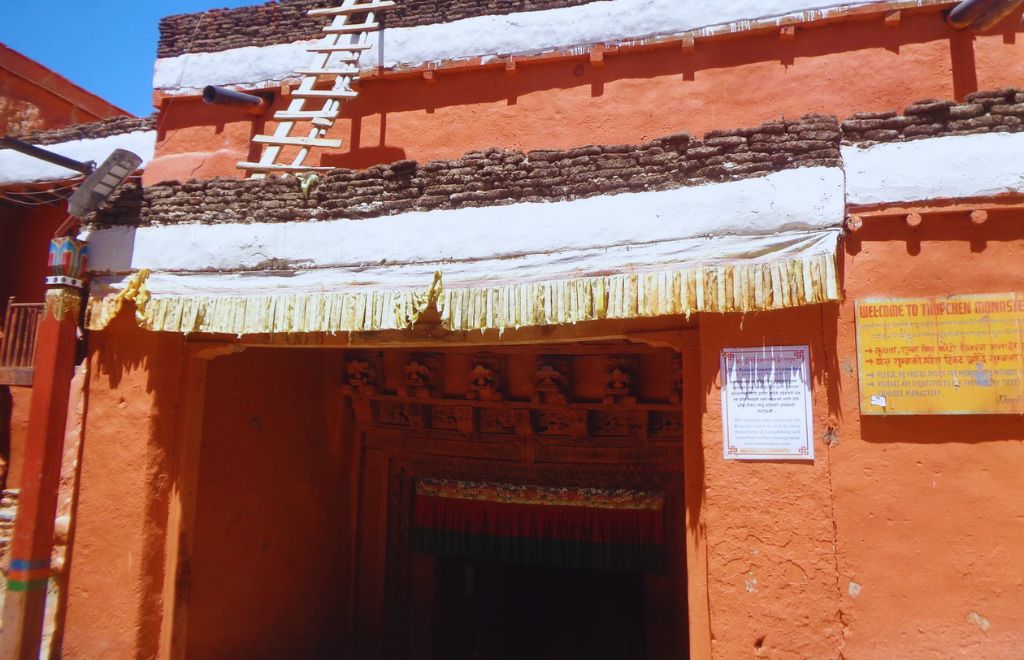
Thupchen Gonpa is one of the historic Buddhist monasteries of Lo Manthang, showcasing the rich Tibetan Buddhist heritage of Upper Mustang.
Historical Background and Architecture
Located just a short walk from Jampa Lhakhang, Thubchen Gompa was constructed in the late 15th century by King Tashi Gon. It served as the principal assembly hall (Du-khang) for royal ceremonies, public teachings, and community prayers.
The main hall is immense, supported by 35 massive, carved wooden pillars that create a sense of solemn grandeur. The hall can comfortably accommodate hundreds of monks chanting in unison.
The Great Mural Restoration
Thubchen’s walls are adorned with monumental paintings depicting Shakyamuni Buddha surrounded by bodhisattvas, guardians, and protective deities. In the late 20th century, the roof of Thubchen was on the verge of total collapse. A joint effort between Italian art conservators and trained local Loba youth spent over a decade repairing the structure and carefully removing soot to expose brilliant colors painted over 500 years ago.
Chode Monastery – The Living Monastery
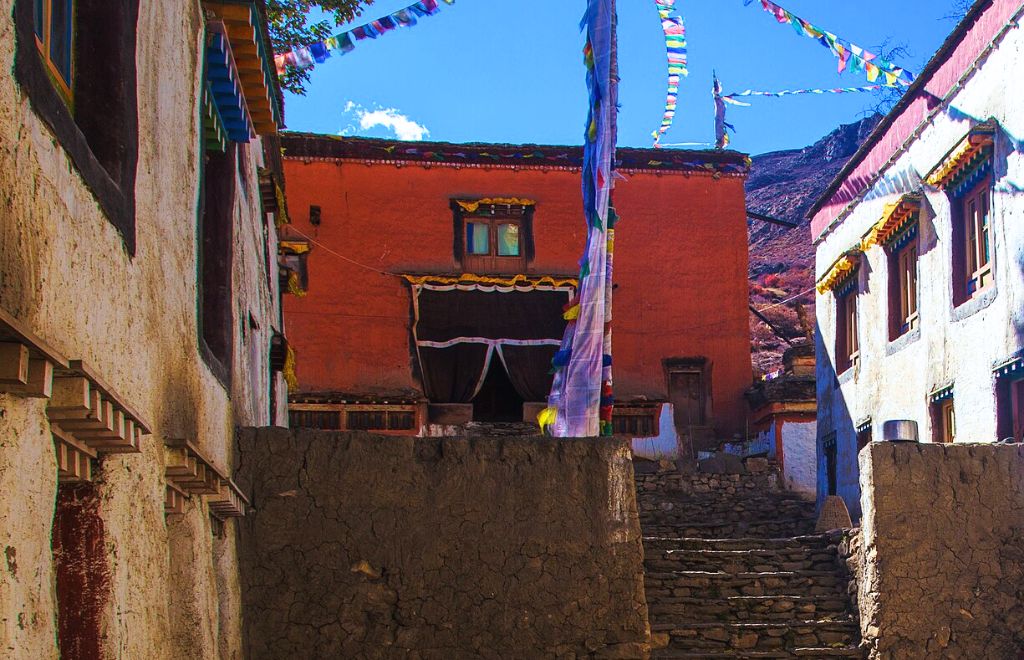
Kag Chode Thupten Samphel Ling Monastery is a centuries-old Buddhist gompa in Kagbeni, reflecting the rich spiritual and cultural heritage of the Upper Mustang region.
While Jampa Lhakhang and Thubchen Gompa stand primarily as historic monuments and prayer halls, Chode Monastery (Chode Gompa) is the vibrant heart of monastic life in Lo Manthang today. Belonging to the Ngor sub-sect of the Sakya tradition, this monastery is home to roughly 50 young monks who live, study, and pray here.
Daily Monastic Life and Spiritual Education
Visitors arriving at Chode Monastery early in the morning are greeted by the deep, resonant echoes of long brass horns (Dungchen), rhythmic drumbeats, and unified chanting. The young monks receive a comprehensive education that combines traditional Tibetan Buddhist philosophy, ritual performance, and English literacy.
Home of the World-Famous Tiji Festival
Chode Monastery is the official organizer of the annual Tiji Festival. The resident monks spend months rehearsing sacred masked dances (Cham) and preparing elaborate sand mandalas, carrying on a cultural ritual that protects the kingdom from ill fortune.
Namgyal Gompa – Monastery of Victory
Perched dramatically on a hill approximately two hours on foot (or a 20-minute drive) north of Lo Manthang lies Namgyal Gompa. Known as the "Monastery of Victory," this sacred complex was established on a site chosen to symbolize triumph over spiritual obstacles.
Namgyal Gompa plays a unique dual role in Upper Mustang:
Spiritual Sanctuary: It serves as a peaceful retreat center for elder monks seeking silent meditation.
Local Court: Traditionally, the monastery acted as a local tribunal where senior monks and village elders settled community disputes.
From the courtyard of Namgyal Gompa, visitors enjoy breathtaking 360-degree views across red-rock canyon walls, green barley oases, and snow-capped peaks stretching toward the border of Tibet.
Ghar Gompa (Lo Gekar Monastery)
Ghar Gompa, also known as Lo Gekhar Monastery, is one of the historic Buddhist monasteries in Upper Mustang, surrounded by the region's dramatic Himalayan landscape.
No Mustang monastery tour is complete without visiting Ghar Gompa, officially known as Lo Gekar ("Pure Virtue of Lo"). Situated at an altitude of 3,920 meters between Marang and Charang, Ghar Gompa is older than the walled city of Lo Manthang itself.
The Legend of Guru Rinpoche
According to 8th-century Buddhist legend, when the Tibetan king Trisong Detsen attempted to build the famous Samye Monastery in Tibet, demonic forces repeatedly tore down the walls each night. The great Indian tantric master Guru Rinpoche (Padmasambhava) was summoned. He recognized that a giant demoness was lying across Tibet and the Himalayas.
To subdue her, Guru Rinpoche traveled to Upper Mustang, defeated the demoness at Lo Gekar, and built Ghar Gompa over her heart. Only then could Samye Monastery in Tibet be completed.
What to See at Ghar Gompa
Carved Wooden Stones: The interior walls feature hundreds of beautifully painted wood-carved plaques displaying Buddhas and deities.
Nyingma Treasures: As a Nyingma monastery, it preserves ancient texts and prayer wheels that date back over 1,200 years.
Wish-Fulfilling Prayer Wheels: Local pilgrims believe that walking around Ghar Gompa and spinning its outer prayer wheels brings immense spiritual merit.
Luri Gompa – The Cliffside Cave Monastery
Deep in the eastern region of Upper Mustang, near the isolated village of Yara, lies Luri Gompa. This site stands apart from all other Buddhist monasteries in Nepal due to its dramatic location carved high inside a fluted sandstone cliff.
The Mysterious Frescoes of Luri Cave
Reaching Luri Gompa requires climbing a series of steep stone steps and wooden ladders. Upon entering the inner cave chamber, visitors step into a circular, dome-shaped room carved directly out of the rock.
In the center of the cave stands a beautifully preserved clay chorten (stupa). The domed ceiling above the chorten is decorated with exquisite 14th-century frescoes depicting:
The 84 Mahasiddhas (great tantric masters) floating among clouds.
Intricate floral patterns and protective deities painted with silk-smooth brushwork.
Rare iconography belonging to the Kagyu and Nyingma traditions.
The origin of the artists who painted Luri Gompa remains a historical mystery, making this cave temple one of the most enigmatic archaeological treasures in the entire trans-Himalayan region.
Buddhist Art and Cultural Heritage of the Mustang region
The artistic treasures housed within the monasteries of Lo Manthang, Upper Mustang, represent a convergence of artistic traditions from across Asia.
Art Form
Primary Materials
Key Feature & Symbolism
Wall Murals
Mineral pigments (Lapis, Malachite), Gold Leaf
Depicts Buddha's life, lineages of Sakya masters, and tantric deities.
Mandalas
Ground stone powder, paint
Geometric cosmos diagrams used for Tantric visualization practice.
Clay Statuary
Himalayan clay, straw, wooden armatures
Giant statues of Maitreya, Shakyamuni, and Avalokiteshvara.
Carved Reliefs
Slate, Juniper wood, Bronze
Devotional stone plaques (Mani stones) and carved door lintels.
This artistic synergy was created by Nepal's indigenous Newar artisans from the Kathmandu Valley, who were commissioned by Mustang's royalty and worked alongside Tibetan lamas. The result is a distinct "Mustang Style" of Himalayan art characterized by bold colors, expressive facial features, and elaborate decorative detail.
Festivals and Religious Life in Upper Mustang
The Tiji Festival: Triumph of Good Over Evil
The most extraordinary cultural event in Upper Mustang is the Tiji Festival (a contraction of Tenchi, meaning "Hope of Buddha's Dharma on Earth"). Held annually in May in the main square of Lo Manthang, this three-day spring festival commemorates the exorcism of evil forces that once brought drought and suffering to the kingdom.
During Tiji, the monks of Chode Monastery don silk brocade robes and hand-carved wooden masks depicting deities and animals. To the thunderous sound of brass trumpets, cymbals, and drums, they perform sacred Cham dances that re-enact the hero Dorje Jono conquering the demon Elu.
Daily Worship and Seasons of Faith
Outside festival times, spiritual life follows the rhythm of nature:
Spring & Summer: Monasteries host agricultural blessing rituals (Lhabsang) to ensure fertile crops and water for irrigation.
Autumn: Pilgrims from across Nepal and Tibet travel to Lo Manthang to pay homage at sacred shrines before winter sets in.
Winter: Many monks and residents migrate south to Pokhara and Kathmandu to escape severe sub-zero temperatures, leaving a small group of senior lamas to guard the sacred fires.
How to Reach Lo Manthang in Upper Mustang
Traveling to Lo Manthang is an adventure in itself. Located approximately 400 kilometers northwest of Kathmandu, the journey transitions from lush subtropical valleys to arid trans-Himalayan high desert.
1. Kathmandu to Pokhara:1-Day Drive or 25-Minute Flight.
Travel from Nepal's capital to the lakeside city of Pokhara by scenic highway or a quick domestic flight.
2. Pokhara to Jomsom:20-Minute Flight or 8-Hour Overland Drive.
Fly past the Dhaulagiri and Annapurna ranges into Jomsom Airport (2,720 m), the gateway to the Mustang region.
3. Jomsom to Kagbeni:30-Minute Drive / 3-Hour Trek.
Trek or drive alongside the Kali Gandaki River to Kagbeni, the official checkpoint for the Restricted Area of Upper Mustang.
4. Kagbeni to Lo Manthang:4-5 Days Trekking or 1-2 Days by 4WD Jeep.
Traverse ancient villages including Chele, Syanbochen, Ghami, and Charang before arriving at the walled city of Lo Manthang (3,840 m).
Travelers can choose between two main modes of travel:
Upper Mustang Trek: A classic foot journey following ancient salt-trade routes, walking 5 to 7 hours daily through dramatic gorges, red cliffs, and traditional villages.
Upper Mustang Jeep Tour: A comfortable 4WD overland option following the gravel road, making Upper Mustang accessible to families, senior travelers, and those with limited time.
Permits You'll Need to Enter Upper Mustang (And What They Cost)
Because Upper Mustang borders Tibet and preserves fragile heritage, the Nepalese government designates it as a Restricted Area. Visiting the monasteries of Lo Manthang in Upper Mustang requires special permits and compliance with strict travel regulations.
Permit Name
Cost / Fee
Purpose & Notes
Restricted Area Permit (RAP)
$50 USD per person per day
Issued by Nepal Immigration. Requires 1 traveler and a licensed guide.
Annapurna Conservation Area Permit (ACAP)
NPR 3,000 (~$23 USD) per person
Covers environmental management and conservation across the region.
TIMS Card
Free / Waived for RAP holders
Replaced by digital permit tracking through registered agencies.
Important Travel Requirement: Independent trekking is strictly prohibited in Upper Mustang. All travelers must book through a government-registered agency like A1 Excursion Adventure, which handles all permit paperwork, guide logistics, and government filings on your behalf.
Upper Mustang Altitude Sickness, Weather & How to Prepare
Managing Altitude and AMS
Lo Manthang sits at an elevation of 3,840 meters (12,598 feet), with surrounding mountain passes reaching over 4,200 meters. Proper acclimatization is vital to prevent Acute Mountain Sickness (AMS).
Ascend Gradually: Avoid driving directly from Jomsom to Lo Manthang in a single day without overnight stops in lower villages like Chele or Ghami.
Hydrate Consistently: Drink at least 3 to 4 liters of water daily in the dry desert climate.
Recognize Symptoms: Mild headaches or fatigue are common; if severe dizziness or nausea occurs, descend immediately and inform your guide.
Best Time to Visit Upper Mustang
Unlike most trekking regions in Nepal that experience heavy monsoon rains from June to August, Upper Mustang lies in the rain-shadow of the Himalayas.
[ Best ] Spring (March - May) : Mild temperatures, clear skies, Tiji Festival.
[ Unique] Summer (June - August): Rain-shadow effect makes trekking ideal during monsoon!
[ Cold ] Winter (Dec - Feb) : Severe cold, heavy snow, most monasteries closed.
Monastery Etiquette in Upper Mustang: What to Wear, Say, and Do
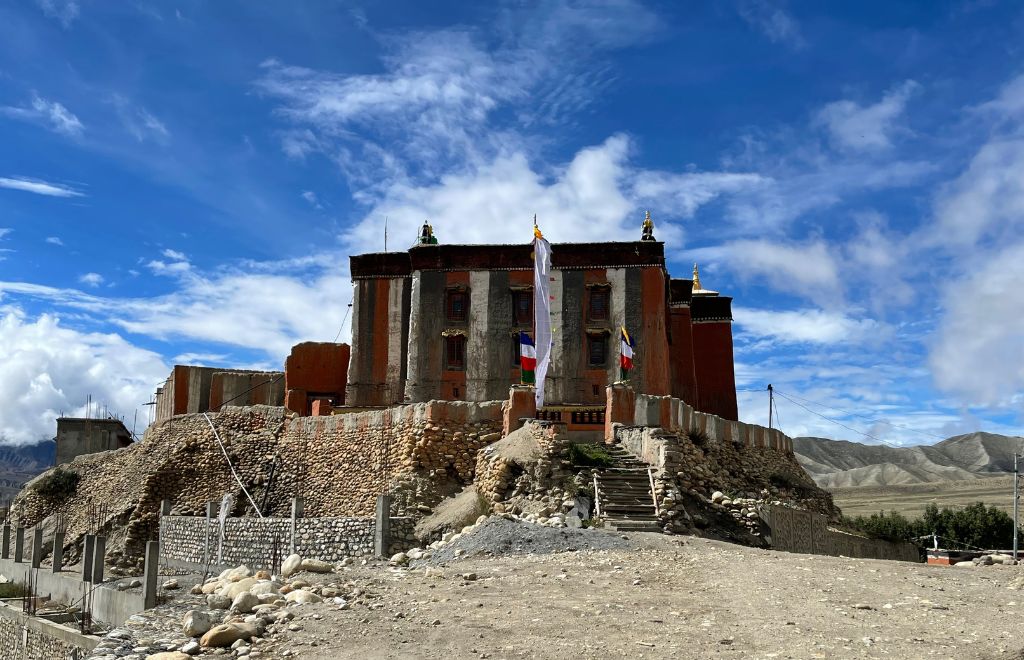
The Red Monastery of Tsarang stands amid the dramatic landscapes of Upper Mustang, reflecting the region's rich Tibetan Buddhist heritage.
When exploring the monasteries of Lo Manthang, Upper Mustang, travelers are entering active places of worship. Demonstrating cultural respect ensures these sacred sites remain open and welcoming to future visitors.
Dress Modestly: Cover shoulders and legs. Remove hats, caps, and sunglasses before entering temple doors.
Remove Footwear: Take off shoes at the entrance of main assembly halls (Du-khang).
Clockwise Movement: Always walk clockwise around monasteries, chortens, mani walls, and prayer wheels (Kora).
Photography Rules: Flash photography is strictly forbidden inside temples to protect ancient murals. Always ask permission from senior monks before taking photographs of individuals or ritual ceremonies.
Butter Lamp Donations: Leaving a modest monetary donation (50–200 NPR) on the altar near butter lamps is a traditional gesture of respect that supports monastery maintenance.
Explore Upper Mustang with A1 Excursion Adventure
At A1 Excursion Adventure, we believe that traveling to Upper Mustang should be more than a vacation; it should be a soul-enriching pilgrimage. As a premier government-licensed trekking operator based in Nepal, our team specializes in handcrafted cultural itineraries guided by licensed local experts.
100% Guaranteed Permit Handling: We take care of all Restricted Area Permits (RAP) and ACAP approvals seamlessly.
Licensed Local Guides: Our guides are natives of the Mustang region who speak local dialects and possess deep personal ties to the monastic community.
Safety First: Equipped with satellite communication devices, comprehensive medical kits, and altitude monitoring equipment.
Customized Itineraries: Tailored private journeys for individual travelers, photography groups, and cultural researchers.
Why the Monasteries of Lo Manthang Belong on Your Bucket List
Choser Monastery, surrounded by the dramatic landscapes of Upper Mustang.
The monasteries of Lo Manthang, Upper Mustang, represent one of humanity's greatest surviving cultural legacies. Where else on Earth can you walk through 15th-century walled gates, stand before 50-foot statues of Maitreya Buddha in dimly lit timber halls, hear the haunting echo of brass horns across canyon walls, and meet monks preserving ancient traditions in a high-altitude desert sanctuary?
Upper Mustang is not merely a destination for adventure; it is a journey into living history. As modern development gradually connects remote mountain valleys, the opportunity to experience this unspoiled Buddhist realm in its authentic form is a privilege that should not be delayed.
Conclusion
The ancient monasteries of Lo Manthang Upper Mustang stand as timeless sentinels of faith, art, and resilience in the heart of the Himalayas. From the breathtaking scale of Jampa Lhakhang and the restored grandeur of Thubchen Gompa to the active spiritual community of Chode Monastery and the mystical cave sanctuary of Luri Gompa, these sacred sites offer travelers an unforgettable glimpse into preserved Tibetan Buddhist heritage.
By traveling responsibly, respecting local customs, and embarking on your journey with trusted local experts, your visit actively supports the ongoing conservation of these cultural wonders and sustains the livelihoods of the local Loba community.
Inside the historic walled city of Lo Manthang, there are three major primary monasteries: Jampa Lhakhang, Thubchen Gompa, and Chode Monastery. Nearby in the immediate surrounding valley lie several important secondary sanctuaries, including Namgyal Gompa and Choprang Gompa. Each monastery plays a unique role in religious education, historical preservation, and daily community rituals for the resident Loba people.
Which is the oldest monastery in Lo Manthang?
Within the walled city of Lo Manthang, Jampa Lhakhang is the oldest major monastery, constructed around 1447 AD. However, in the broader Upper Mustang region, Ghar Gompa (Lo Gekar) is the oldest monastery, established in the 8th century AD by the legendary tantric master Guru Rinpoche (Padmasambhava), long before Lo Manthang was founded.
What is Jampa Lhakhang famous for?
Jampa Lhakhang is world-famous for housing a giant 50-foot clay statue of Maitreya Buddha (the Future Buddha) that spans two floor levels. It is equally celebrated for its ground-floor interior walls, which feature 108 incredibly detailed 15th-century paint mandalas created with gold leaf and mineral pigments. It is regarded as one of the finest surviving examples of medieval Vajrayana Buddhist art.
Can tourists visit Thubchen Gompa?
Yes, tourists holding valid Upper Mustang Restricted Area Permits are welcome to visit Thubchen Gompa. Visitors can tour the massive wooden assembly hall (Du-khang) and admire the meticulously restored wall frescoes depicting Buddha Shakyamuni and protective deities. A small admission or butter lamp fee collected at the door supports ongoing temple maintenance and conservation.
What is special about Chode Monastery?
Chode Monastery is special because it is the main active "living monastery" inside Lo Manthang today. Unlike older static temples, Chode serves as a monastic school home to roughly 50 young monks. It belongs to the Sakya tradition and acts as the spiritual host of the world-famous annual Tiji Festival, where monks perform sacred masked ritual dances (Cham).
Is Ghar Gompa older than the monasteries inside Lo Manthang?
Yes, Ghar Gompa (Lo Gekar) is significantly older than the monasteries inside Lo Manthang. Built in the 8th century by Guru Rinpoche, Ghar Gompa predates the founding of the city of Lo Manthang (1380 AD) and Jampa Lhakhang (1447 AD) by roughly 600 years. It remains a sacred pilgrimage destination for practitioners of Nyingma Tibetan Buddhism.
What permits are required to visit Lo Manthang?
Travelers visiting Lo Manthang require two main permits:
Restricted Area Permit (RAP): Costs $50 USD per person per day.
Annapurna Conservation Area Permit (ACAP): Costs NPR 3,000 (~$23 USD).
All permits must be processed through a licensed trekking agency, such as A1 Excursion Adventure, as individual travel without a guide is strictly prohibited.
What is the best time to visit the monasteries of Upper Mustang?
The best times to visit are during Spring (March to May) and Autumn (September to November). Spring offers mild temperatures and coincides with the famous Tiji Festival in May. Because Upper Mustang sits in the rain shadow of the Himalayas, the Summer/Monsoon (June to August) is also an excellent time to visit, with blue skies while the rest of Nepal experiences heavy rainfall.
How difficult is the trek to Lo Manthang?
The trek to Lo Manthang is rated as moderate to challenging. While it does not require technical mountaineering skills, trekkers must walk 5 to 7 hours daily over dry, stony trails and cross several mountain passes above 4,000 meters. Proper physical conditioning, good hiking boots, gradual acclimatization, and steady hydration are essential for a safe and enjoyable journey.
Can I visit the monasteries on a Jeep tour?
Yes! A 4WD Jeep tour is an increasingly popular option for travelers who prefer not to trek long distances on foot. Modern dirt roads connect Jomsom directly to Lo Manthang, Charang, and surrounding villages. A Jeep tour allows families, senior travelers, and photographers to visit all major monasteries comfortably in 10 to 12 days.
Raj Thapa
Founder & Managing Director Raj Kumar Thapa: Founder & Managing Director of the Company, and has over 2 decades of professional experience in the travel and trekking field. Mr. Raj has spent the entirety of his career in the travel & trek organization.