If you are searching for the pinnacle of high-altitude cycling, Upper Mustang mountain biking offers an unparalleled adventure here in Nepal. You will pedal across ancient salt trade routes, navigate suspension bridges strung across deep gorges, and roll into medieval walled cities steeped in Tibetan Buddhist traditions in Upper Mustang.
Why is Upper Mustang Nepal's ultimate mountain biking destination?
It is the sheer contrast of the experience that makes Upper Mustang mountain biking a once-in-a-lifetime experience. Where else can you tackle demanding alpine descents surrounded by 8,000-meter peaks, only to finish your day sipping butter tea in a 15th-century monastery? Riding across the last forbidden kingdom is not just a physical challenge; it is a once-in-a-lifetime cultural immersion.
What makes Upper Mustang different from other MTB destinations is its raw, untamed terrain coupled with a highly regulated, exclusive atmosphere. You aren't riding in a crowded bike park. You are undertaking a genuine Himalayan expedition. The trail difficulty ranges from moderate jeep tracks to highly technical, loose-gravel single-tracks. The distances may seem short on paper, often 20 to 35 kilometers a day, but the high altitude, thin air, and relentless headwinds transform those kilometers into demanding tests of endurance. From dramatic landscapes of red fluted cliffs to the welcoming smiles of the local Loba people, this guide breaks down everything you need for a successful mountain biking adventure in Nepal.
Table of Contents
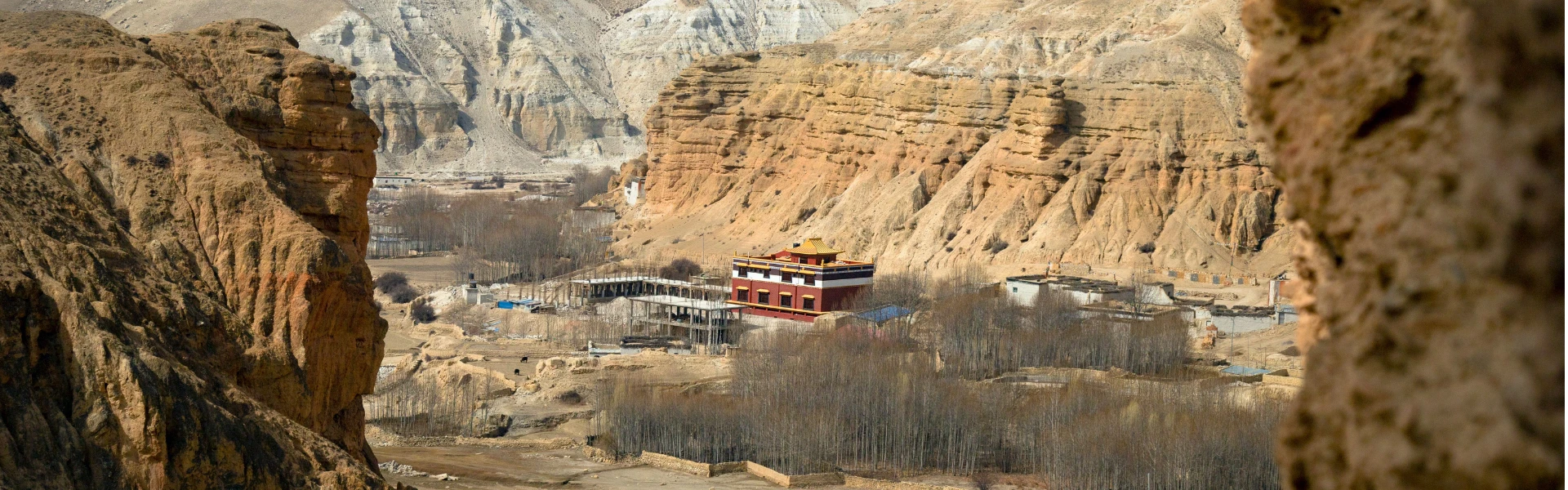
A historic Himalayan settlement and the gateway to Upper Mustang.
Upper Mustang MTB: Terrain, Culture & What to Expect
To truly grasp the magnitude of an Upper Mustang cycling tour, you have to look at the geographical and cultural canvas of the region. This is a restricted area, meaning foot traffic and bike traffic are intentionally limited to preserve the delicate environment and heritage.
Riding a High-Altitude Desert: What the Terrain Feels Like
Nestled in the rain shadow of the Annapurna and Dhaulagiri Peaks, Upper Mustang is a stark, high-altitude desert. Unlike the lush, green valleys of lower Nepal, the terrain here is defined by ochre cliffs, deep canyons, and sweeping valleys of sand and loose rock. The trails are dry, dusty, and incredibly scenic, offering a lunar-like landscape that starkly contrasts with the snow-capped Himalayan giants towering above.
From Salt Caravans to Single-Track: The History Beneath Your Tires
The Mustang MTB trails you will ride are not modern, purpose-built pump tracks. They are ancient pathways carved over centuries by Tibetan traders, salt caravans, and monks. Navigating these historic arteries adds a profound sense of history to your ride. Every switchback and river crossing has a story, connecting remote settlements that have thrived in this harsh environment for millennia.
Technical Climbs, River Crossings, and Epic Descents
A standard Upper Mustang bike expedition involves a mix of grueling, lung-busting climbs and long, adrenaline-pumping descents. You will ford icy tributaries of the Kali Gandaki River, carry your bike across eroded trail sections, and navigate steep, rocky descents that demand sharp brake control and balance. The terrain shifts constantly from wide jeep tracks to narrow, exposed singletracks hugging cliff faces.
Pedaling Through Living Tibetan Villages
Mountain biking in Nepal is famous for its cultural backdrop, but Upper Mustang takes this to another level. As you pedal through villages like Kagbeni, Chele, and Ghami, you are witnessing a vibrant, living Tibetan culture. You will pass long mani walls, colorful chortens, and ancient cave complexes carved into the high cliffs. Respectful riding here means sharing the trail with yak caravans and nomadic herders.
9 Unforgettable Experiences on an Upper Mustang MTB Trip
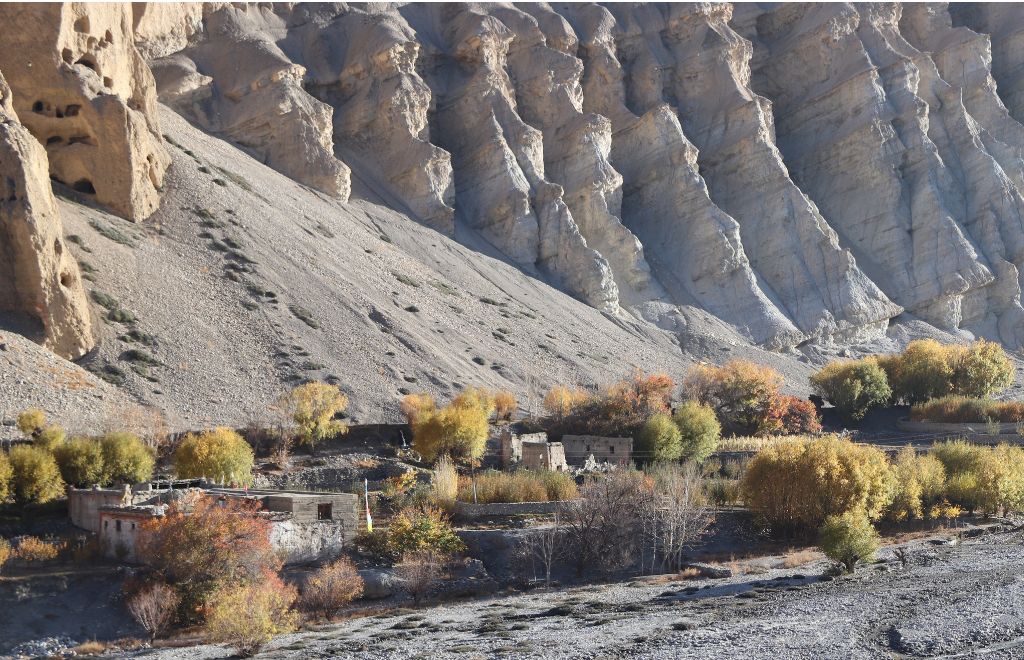
The rugged desert landscape of Upper Mustang features colorful cliffs and breathtaking Himalayan scenery.
Upper Mustang Mountain Biking is more than a trip; it is a total immersion into one of the most isolated and preserved cultures on earth. Every step of this journey offers something extraordinary that you simply cannot find anywhere else in the world.
Here is what you can expect to experience firsthand:
The walled city of Lo Manthang — Step inside the 15th-century capital of the former Kingdom of Lo, enclosed by 6-meter earthen walls. Wander its maze-like alleyways past the four-story Royal Palace and three restored monasteries — Thubchen, Jampa, and Choodey Gompa, housing centuries-old frescoes, giant clay statues, and rare illuminated manuscripts.
The Chhoser Caves (Shija Jhong) — Explore a dramatic cliffside cave complex carved directly into a vertical rock face, with over 40 rooms connected by ladders and narrow passages. Believed to have served as a fortress, burial site, and meditation chamber thousands of years ago.
Ghar Gompa (Lo Gekar) — Visit one of the oldest active Tibetan Buddhist monasteries in existence, said to have been founded by Guru Rinpoche in the 8th century. Its ancient woodcarvings, stone plaques, and spinning prayer wheels create an atmosphere of rare spiritual stillness.
The Red Cliffs of Dhakmar — Stand before towering crimson rock faces stained red in legend by a demon's blood. The contrast of the scarlet cliffs against bright green buckwheat fields below is one of the most photographed scenes in all of Upper Mustang.
Mesmerizing Cham mask dances by monks — Witness robed monks of the Choede, Jampa, and Thupchen monasteries perform sacred ritual dances in fearsome painted masks — an ancient Buddhist ceremony rarely seen by outsiders.
Chang and community feasts with local families — Share homemade barley beer and food with Loba families who have traveled from distant valleys, experiencing the legendary warmth and hospitality of mountain communities.
Folk songs and women's dance circles — Feel the rhythm of ancient Tibetan melodies sung in large community circles, echoing across red cliffs and wind-carved canyons.
A personal blessing from the head lama — On the final day, join the community in receiving a traditional blessing, a deeply moving ritual that closes the festival with peace and spiritual unity.
Sunrise over the Mustang desert plateau — Wake each morning to golden light flooding across the stark, otherworldly terrain, a landscape unlike anything else in Nepal.
Want to know more about this topic? Read our full blog below for a complete guide.
For quick trip planning, here is a breakdown of what to expect on a typical expedition:
Feature
Details
Maximum Elevation
4,300 meters (Kora La Border) / 4,230 meters (Chogo La Pass)
Average Daily Distance
20 km to 40 km (depending on itinerary and acclimatization)
Difficulty Level
Advanced / Expert (due to altitude, terrain, and remote nature)
Total Elevation Gain
Approx. 4,500 to 5,500 meters over the trip duration
Best Riding Months
May, June, September, October, November
Permit Requirements
RAP (Restricted Area Permit) & ACAP (Annapurna Conservation Area Permit)
Average Daily Riding Time
4 to 6 hours
Support Vehicle Availability
Yes (Jeep support available for luggage, emergencies, and shuttling)
Best MTB Setup for Upper Mustang: Bike, Tires & Suspension
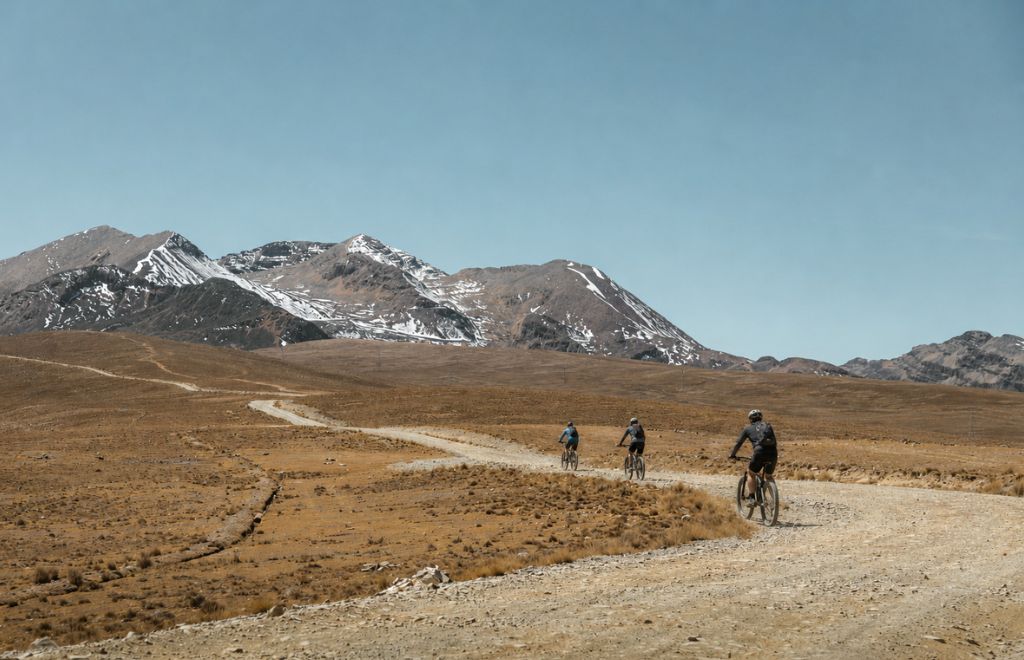
Three people cycling through the barren Himalayan landscape of Upper Mustang on a winding mountain trail.
Selecting the right steed is critical for an Upper Mustang mtb tour. The ruggedness of the Himalayas will quickly expose any weaknesses in your equipment.
Hardtail vs Full-Suspension: Which Wins in Mustang?
While a high-quality hardtail can handle the jeep tracks, a full-suspension mountain bike is highly recommended. A bike with 130mm to 160mm of travel will save your body from the relentless vibrations of rocky descents, corrugated jeep roads, and unexpected drop-offs.
Is an E-MTB Suitable?
E-MTBs are becoming increasingly popular in the region. They level the playing field on brutal high-altitude climbs and allow riders to focus on the scenery rather than the suffering. However, battery management is crucial. Solar charging or relying on teahouse electricity (which can be unreliable) requires careful logistical planning, something A1 Excursion Adventure seamlessly manages.
Tire Width, Tread & Casing for Loose Shale Trails
Go wide and go tubeless. Tires between 2.4" and 2.6" with reinforced sidewalls (like Maxxis Minion DHF/DHR with EXO+ or DoubleDown casing) are essential. The terrain is filled with sharp shale and thorns. Tubeless setups with fresh sealant will prevent pinch flats and punctures.
Dialing In Suspension Sag & Rebound for Rock Gardens
Set your suspension with slightly less sag (around 20-25%) to prevent bottoming out on harsh, unexpected G-outs, and slow down your rebound slightly to handle the continuous rocky chatter without bucking you off the bike.
Recommended Bike Specifications
Reliable 1x12 drivetrains with a large bailout gear (e.g., 50T or 52T cassette) are vital for steep climbs in thin air. Equip your bike with 4-piston hydraulic disc brakes and large rotors (200mm/203mm) to manage heat on massive descents.
Upper Mustang MTB Permits: What You Legally Need
Because Upper Mustang borders Tibet and holds immense geopolitical and cultural significance, the Nepalese government tightly controls access. Understanding the Upper Mustang permit cost and regulations is the first step in your planning.
RAP & ACAP Permit Costs, Explained
To enter the region beyond Kagbeni, you need specific documentation. The Upper Mustang permit cost is one of the highest in Nepal, but it guarantees an exclusive experience free from mass tourism.
Restricted Area Permit (RAP): The cost is $50 USD per person per day.
Annapurna Conservation Area Permit (ACAP): This costs approximately $30 USD (3,000 NPR) per person.
Required Documents For Your Permit
You will need your original passport with at least six months of validity, a valid Nepal visa, and multiple passport-sized photographs.
Why Solo Riding Is Illegal — and Why a Guide Helps Anyway
According to Nepalese law, you cannot ride or trek in Upper Mustang independently. You must be accompanied by a government-licensed guide through a registered agency like A1 Excursion Adventure. For more details on the paperwork, refer to our comprehensive Upper Mustang Permit Guide.
Safety Benefits: Guides are trained in Wilderness First Aid and altitude sickness protocols.
Navigation Advantages: The landscape is vast, and trails often diverge into nowhere. A local guide knows the best single-track alternatives to the dusty jeep roads.
Local Cultural Knowledge: Your guide acts as a cultural bridge, facilitating interactions with locals, monks, and teahouse owners, enriching your Lo Manthang cycling experience.
Best Months to Ride: Season-by-Season Trail Conditions
Unlike the rest of Nepal, Upper Mustang’s unique geography dictates its riding seasons. For a deeper dive into seasonal planning, read our guide on the Best Time to Visit Upper Mustang.
Spring Riding Season (March to May)
Trail Conditions: Trails are dry, compact, and excellent for riding after the winter snowmelt.
Weather: Temperatures are mild, making the physical exertion of climbing much more pleasant.
Visibility: Clear skies offer stunning panoramic views of the Annapurna and Dhaulagiri ranges.
Summer (Monsoon) Advantage (June to August)
Riding Inside the Rain Shadow: Upper Mustang is one of the few places in Nepal where you can mountain bike during the monsoon. Because the Annapurna massif blocks the rain clouds from the south, the region remains largely dry.
Dry Trails During Nepal's Wet Season: While lower elevations are muddy and leech-infested, Mustang's trails are perfectly rideable.
Wind Conditions: Be prepared for strong afternoon winds sweeping up the Kali Gandaki valley.
Autumn Adventures (September to November)
Stable Weather: This is universally considered the best time for a Nepal mountain biking adventure. The weather is highly predictable.
Golden Landscapes: The buckwheat fields turn a vibrant pink and golden hue, offering an incredible contrast to the stark grey and red cliffs.
Crystal-Clear Mountain Views: The post-monsoon air is scrubbed clean, offering the sharpest visibility of the year.
Winter Challenges (December to February)
Snow and Ice: Heavy snowfall blocks the high passes, making cycling nearly impossible.
Limited Services: Many locals migrate to lower elevations like Pokhara to escape the bitter cold, meaning teahouses close down.
Is Winter Riding Worth It? We generally do not recommend winter Upper Mustang bikepacking due to extreme cold, blocked trails, and avalanche risks in the narrow canyons.
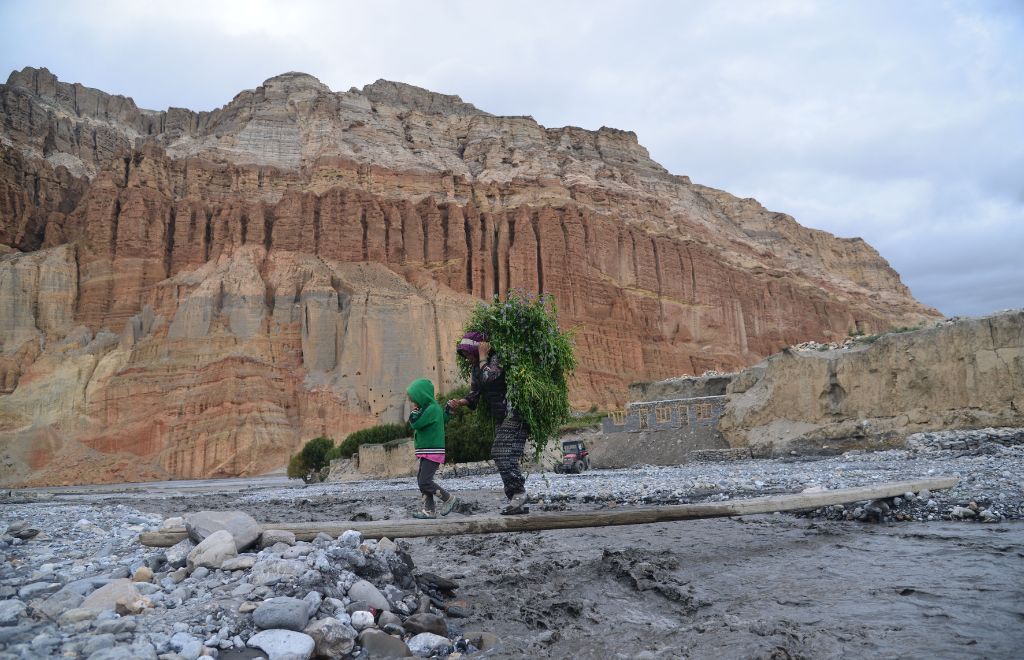
People Crossing the Kali Gandaki that cuts through the rugged valleys of Mustang, creating one of the region's most dramatic landscapes.
Every day on an Upper Mustang bike expedition brings a new topographical challenge and a fresh cultural revelation. Here is an inside look at a typical trail progression, similar to our Upper Mustang Trek routes but optimized for wheels.
Kagbeni to Chele
Riverbeds and Rocky Climbs: You start in the lush oasis of Kagbeni, riding up the wide, rocky riverbed of the Kali Gandaki.
Entering the Restricted Area: After passing the official police checkpoint, the valley narrows. The day ends with a sharp, steep climb off the riverbed up to the cliff-side village of Chele.
Chele to Ghami
Bhena La and Yamdo La Passes: This is a tough day characterized by successive climbs over high passes (nearly 4,000m).
Technical Single Tracks: You will encounter steep, loose-gravel ascents where hike-a-bike is common, followed by screaming, brake-burning descents through painted canyons into Ghami, famous for its massive mani walls.
Ghami to Lo Manthang
Nya La Crossing: Riding over the 4,010-meter Nya La pass offers breathtaking views of the Mustang landscape and the Annapurna range behind you.
Traditional Villages: Pass through Tsarang, riding past its ruined fort and massive red monastery.
High Plateau Riding: The final approach to Lo Manthang involves crossing a high, windswept plateau before the walled city suddenly appears below you.
Lo Manthang Exploration
Ancient Monasteries: Take a rest day from heavy climbing to explore the narrow alleys and 15th-century monasteries of Lo Manthang.
Chhoser Sky Caves: Ride north toward the Tibetan border to explore the Chhoser cave complex, thousands of man-made caves dug out of sheer cliff faces.
Kora La Border Ride: For those feeling strong, a ride up to the 4,660m Kora La border pass between Nepal and Tibet is the ultimate achievement.
Epic Descent Toward Jomsom
Fast Descents and Loose Gravel: The return journey is often much faster, taking alternative routes on the eastern side of the river when possible.
Scenic Canyon Riding: You will descend thousands of meters over a few days, surfing loose gravel through deep, wind-carved canyons back to Jomsom to catch your flight or continue riding down to Pokhara.
How to Train for High-Altitude MTB (8–12 - Week Plan)
Do not underestimate the physical toll of high-altitude cycling. A successful trip requires months of preparation.
Cardiovascular Conditioning: Build a massive aerobic base. Spend hours in Zone 2 heart rate zones on your bike. Long, sustained climbs should become comfortable for you.
Strength Training: Core and upper body strength are vital for controlling a bike on rocky, technical descents and for managing hike-a-bike sections where you must push or carry your rig.
Technical Bike Skills: Practice riding on loose, off-camber surfaces. Master your track stands, low-speed balance, and descending techniques on loose rocks.
Endurance Preparation: Get used to consecutive days in the saddle. Do back-to-back long rides on weekends to condition your body for multi-day fatigue.
Altitude and Acclimatization
Elevation Profile: You will frequently ride above 3,500 meters, reaching up to 4,600 meters. There is roughly 40% less oxygen at these altitudes than at sea level.
Rest Days: Our itineraries incorporate active rest days, adhering to the "ride high, sleep low" principle to aid acclimatization.
Recognizing AMS Symptoms: Headaches, nausea, dizziness, and extreme fatigue are signs of Acute Mountain Sickness. Ignoring these can be fatal. Listen to your guide.
Hydration Strategy: Dehydration accelerates altitude sickness. Drink 4 to 5 liters of water daily, utilizing electrolyte supplements to replace salts lost through sweating in the desert air.
Essential Gear and Packing List for Upper Mustang Mountain Trail Biking
Your Upper Mustang packing list needs to balance lightweight efficiency with robust mountain survival gear. Because A1 Excursion Adventure utilizes Upper Mustang jeep support, you can afford to bring necessary spares without carrying them on your back.
Technical Riding Clothing
Layering System: Merino wool base layers are crucial. They manage moisture and resist odor over multi-day trips. Bring mid-layer fleeces for insulation.
Windproof Clothing: A high-quality, breathable windproof jacket is your most important piece of clothing to combat the afternoon Kali Gandaki headwinds.
Cold Weather Gear: Pack insulated gloves, a thermal skull cap to wear under your helmet, and a down jacket for freezing evenings in the teahouses.
Bike Equipment Checklist
You must bring specific spares, as finding high-end bike parts in a Mustang is impossible.
Spare Tubes: At least two, even if running tubeless.
Multi-Tool: With a chain breaker.
Brake Pads: Bring at least two extra sets. The abrasive dust and steep descents eat through brake pads rapidly.
Chain Links: Quick links specific to your drivetrain.
Tire Repair Kit: Tubeless plugs (bacon strips), tire boots, and extra sealant.
Pump: A high-volume hand pump and a CO2 inflator.
Lubricants: High-quality dry lube for the dusty conditions.
Personal Equipment
Helmet: A well-ventilated, MIPS-equipped trail or enduro helmet.
Hydration Pack: A 15L to 20L backpack with a 3L water bladder to carry daily essentials, snacks, and extra layers.
Sunglasses: Photochromic lenses are ideal for moving in and out of dark canyons and bright high-altitude sunlight.
GPS Device: A Garmin or Wahoo loaded with routes, though your guide will handle primary navigation.
Power Banks: Crucial for keeping cameras and phones charged, as teahouse electricity is often solar-dependent and scarce.
Camera Equipment: Protect your gear from fine, invasive dust. Bring a small, high-quality action camera or mirrorless setup.
Support Vehicle Logistics
When you opt for Upper Mustang jeep support through our packages, your expedition becomes infinitely more enjoyable.
Luggage Handling: The jeep carries your main duffel bag from teahouse to teahouse. You only ride with a daypack.
Emergency Bike Repairs: The support vehicle carries bulkier tools, floor pumps, and major spare parts.
Mechanical Assistance: Our guides are trained mechanics, capable of handling trail-side repairs to keep you rolling.
Daily Nutrition: The jeep ensures a steady supply of safe drinking water, trail snacks, and fresh food provisions throughout the journey.
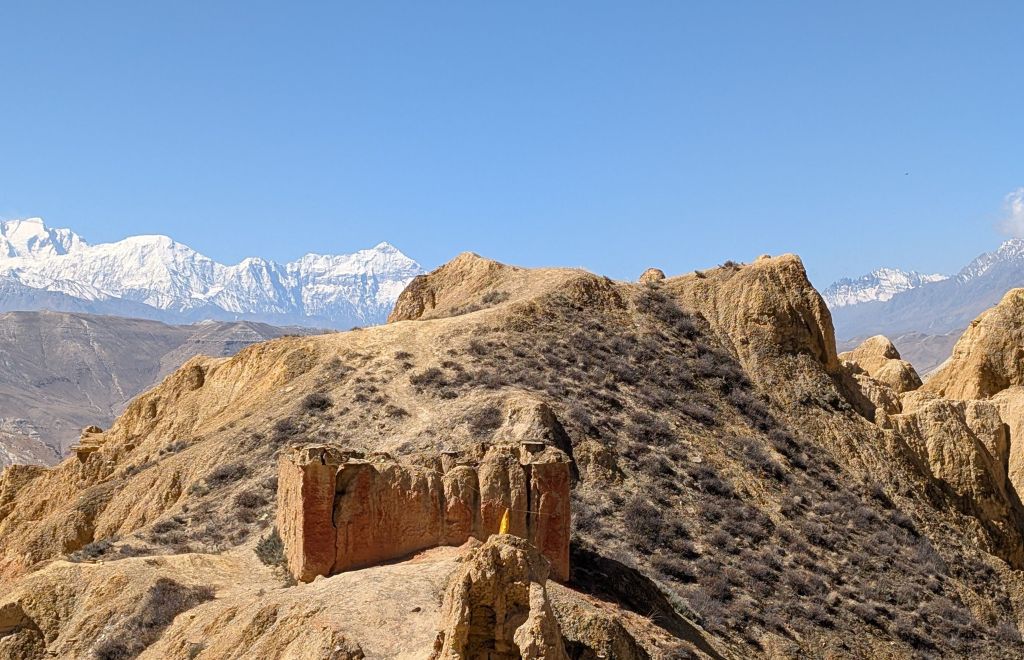
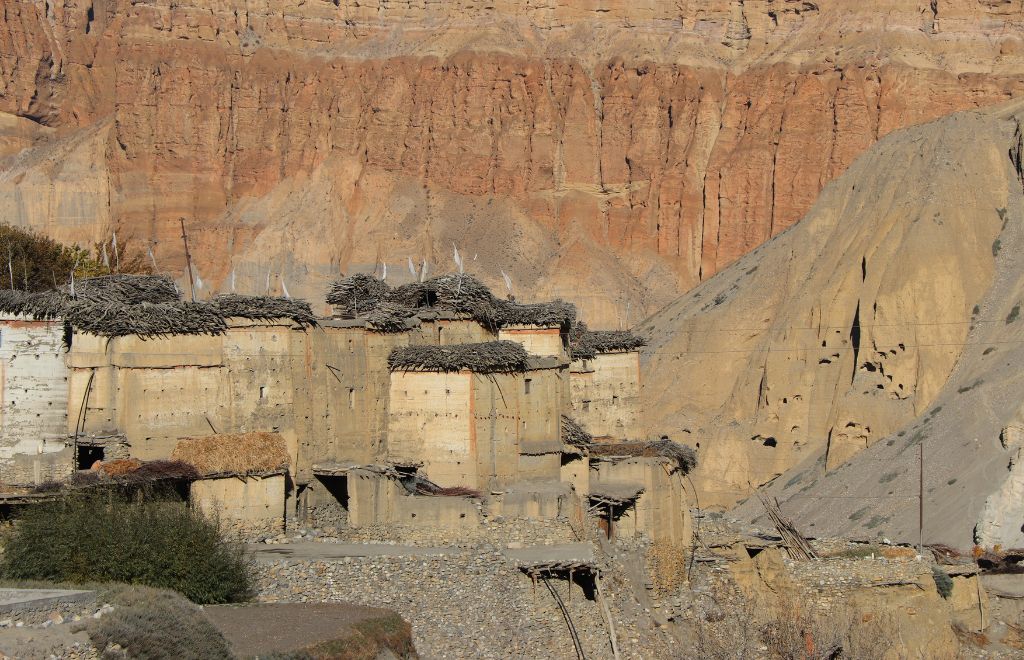
Ancient settlement along the Upper Mustang trail
Upper Mustang MTB Tour Packages by A1 Excursion Adventure
Not all riders have the same time constraints or physical capabilities. A1 Excursion Adventure has crafted tailored itineraries to suit different styles of adventure cyclists and bikepacking enthusiasts.
10-Day Cross-Country Express
14-Day Deep Lo Single-Track Expedition
Upper Mustang Tiji Festival MTB Tour
Trail Etiquette & Responsible Riding in Mustang
As adventure cyclists, we have a duty to preserve the pristine nature of Upper Mustang. Read more about regional customs in our comprehensive Upper Mustang Travel Guide.
Respecting Local Communities: Always dismount or slow down to a crawl when passing through villages. The dust kicked up by fast-riding bikes is highly disrespectful and damaging to local crops and homes. Dress modestly off the bike.
Trail Etiquette: When encountering yak caravans or mule trains, get off your bike, stand on the uphill side of the trail, and let the animals pass calmly.
Wildlife and Livestock Awareness: Avoid startling blue sheep, marmots, or domestic livestock grazing on the high plateaus.
Leave No Trace Principles: Pack out all your trash, including energy gel wrappers and punctured inner tubes.
Sustainable Adventure Tourism: By utilizing local teahouses, hiring local Loba porters and guides, and respecting the fragile environment, we ensure that mountain biking remains a positive force for the region's economy.
Explore Our Upper Mustang Trek Packages
A1 Excursion Adventure offers a range of expertly crafted Upper Mustang trekking and jeep tour packages designed for different travel styles, fitness levels, and timeframes. From classic Himalayan treks to comfortable overland adventures and cultural festival experiences, we take care of every detail, including transportation, teahouse accommodation, experienced licensed guides, and all required permits, so you can enjoy a safe and unforgettable journey into Nepal's legendary Forbidden Kingdom.
Classic Upper Mustang Trek – A complete trekking experience through ancient villages, dramatic landscapes, and the historic walled city of Lo Manthang.
Short Upper Mustang Trek – A shorter itinerary perfect for travelers with limited time who still want to experience Mustang's cultural and natural highlights.
Upper Mustang Overland Jeep Tour – Discover Upper Mustang in comfort with a scenic off-road adventure, ideal for families and travelers seeking minimal trekking.
Upper Mustang Tiji Festival Trek – Witness the vibrant Tiji Festival while trekking through the hidden kingdom, combining breathtaking scenery with one of Mustang's most celebrated cultural events.
Why Choose A1 Excursion Adventure for Upper Mustang MTB?
Planning an Upper Mustang Trail Guide requires intricate logistical expertise. Here is why elite riders trust us.
Expert Mountain Biking Expeditions: We don't just run treks; we are passionate riders who understand the specific needs of mountain bikers.
Experienced Local MTB Guides: Our guides know every inch of the Mustang MTB trails. They know which jeep roads to avoid in favor of ancient, hidden single-tracks.
Fully Supported Tours: From airport pickups in Kathmandu to seamless domestic flights to Jomsom, we handle the heavy lifting.
Permit Management: We navigate the bureaucratic maze of Nepal's immigration offices to secure your RAP and ACAP without delay.
Accommodation and Logistics: We book the best available teahouses, ensuring you have warm beds, hot meals, and safe storage for your bikes every night.
Emergency Support: Our jeep support acts as a safety net for fatigue, altitude sickness, or catastrophic bike failures.
Custom MTB Itineraries: Whether you want an aggressive 10-day sprint or a leisurely 16-day cultural cycling immersion, we tailor the trip to your club or group's specific riding style.
Ready to Ride the Forbidden Kingdom of Mustang?
Embarking on an upper Mustang mountain biking expedition is not just a ride; it is a transformative journey into the heart of the Himalayas. You will push your physical limits on thin-air climbs, experience the thrill of endless descents through dramatic desert canyons, and immerse yourself in a vibrant, ancient Tibetan culture that few outsiders ever truly experience. Whether you are an enduro rider seeking new thrills or a bikepacking enthusiast looking for the ultimate bucket-list destination, choosing the right tour for your riding style is paramount
Do not leave your dream trip to chance. Planning your expedition with A1 Excursion Adventure ensures you have the expert guidance, premium jeep support, and meticulous logistical planning required to conquer the forbidden kingdom safely and spectacularly. Ready to clip in for the adventure of a lifetime? Contact our team today to book your custom Upper Mustang MTB tour and let the Himalayas redefine your limits.
Frequently Asked Questions
Is Upper Mustang good for mountain biking?
Absolutely. It is considered one of the premier high-altitude mountain biking destinations in the world. The combination of ancient trails, challenging jeep tracks, breathtaking trans-Himalayan scenery, and rich Tibetan culture makes it a legendary location for adventure cyclists.
How difficult is Upper Mustang mountain biking?
It is physically and technically demanding. Riders must navigate high altitudes (often above 3,500m), steep, loose climbs, technical rocky descents, and strong afternoon headwinds. It is recommended for advanced riders with excellent cardiovascular fitness and solid off-road bike handling skills.
What permits are required for mountain biking in Upper Mustang?
All riders must obtain a Restricted Area Permit (RAP), which costs $50 USD per day, and an Annapurna Conservation Area Permit (ACAP), which costs approximately $30 USD.
Can I ride the Upper Mustang independently?
No. Nepalese law requires all foreign nationals entering the restricted area of Upper Mustang to be accompanied by a government-licensed guide through a registered local trekking agency. Solo travel is strictly prohibited.
What is the best time for mountain biking in the Upper Mustang?
The optimal times are spring (March to May) and autumn (September to November) when the weather is stable and visibility is clear. However, because it lies in a rain shadow, it is also a fantastic destination during the summer monsoon months (June to August).
What type of bike is recommended?
A high-quality full-suspension mountain bike with 130- 160 mm of travel, robust 4-piston hydraulic disc brakes, and wide, tubeless tires (2.4" - 2.6") is highly recommended to handle the rocky, corrugated terrain comfortably.
Is an e-MTB suitable for Upper Mustang?
Yes, e-MTBs are excellent for offsetting the exhausting effects of high altitude and steep climbs. However, riders must carefully plan their battery management and charging logistics, as electricity in remote teahouses can be unreliable.
How many days do I need for an Upper Mustang MTB tour?
A typical tour requires anywhere from 10 to 14 days of active riding. We recommend 12 to 14 days to allow for proper altitude acclimatization, cultural exploration in Lo Manthang, and resting days to ensure an enjoyable experience.
What should I pack for an Upper Mustang cycling trip?
Your Upper Mustang packing list should include a versatile layering system (merino wool, windproof jackets, down jackets), essential bike spares (brake pads, tubes, quick links, derailleur hangers), a hydration pack, and high-SPF sun protection for the intense UV exposure.
Is altitude sickness common for cyclists?
Because cyclists often ascend faster than trekkers, altitude sickness is a real risk. Following a proper acclimatization schedule, staying extremely hydrated, and recognizing the early symptoms (headache, nausea) are critical for safety.
Are support vehicles available?
Yes. A1 Excursion Adventure provides an Upper Mustang jeep support. This vehicle carries your main luggage, heavy spare parts, and tools, and can provide a ride if you experience mechanical failure, extreme fatigue, or altitude sickness.
How do I book an Upper Mustang MTB tour with A1 Excursion Adventure?
You can easily book by contacting us directly through our website. We will discuss your riding experience, fitness level, and group size to customize the perfect itinerary, handle all your permit paperwork, and arrange your domestic logistics.
Raj Thapa
Founder & Managing Director Raj Kumar Thapa: Founder & Managing Director of the Company, and has over 2 decades of professional experience in the travel and trekking field. Mr. Raj has spent the entirety of his career in the travel & trek organization.


.webp)