Route Map: Annapurna Circuit to Upper Mustang
The structural layout of this itinerary relies heavily on geography and human physiology. The most logical and safe direction is to tackle the Annapurna Circuit and Upper Mustang from east to west. You begin your trek at Dharapani or Chame, ascending gradually along the eastern flank of the Annapurna massif via the Marsyangdi River. This direction ensures an optimal, step-by-step climb that prepares your body for the extreme altitude of the high pass.
Once you conquer the pass, you drop into the Kali Gandaki valley, using your peak physical conditioning and altitude adaptation to transition directly into the dry, high-altitude trails of Upper Mustang without needing a separate acclimatization phase.
Entering Upper Mustang Through Kagbeni
The transition point of this mega-trek is the ancient, mud-brick village of Kagbeni, located at 2,800 meters. For regular trekkers on the Annapurna Circuit, Kagbeni is merely a fascinating lunch stop or a quick side trip. For you, it is the threshold of the forbidden. The famous Kagbeni checkpoint serves as the literal and legal gatekeeper. Beyond this point, the Upper Mustang restricted area begins. Here, park rangers and police officials will carefully inspect your special restricted- area permits and match them with your guide’s credentials before unlocking the trail that leads north into the heart of the former Kingdom of Lo.
Trek Variations: Full Trek vs Jeep-Assisted Route in Upper Mustang
With road infrastructure expanding through the Kali Gandaki corridor, trekkers can customize their journey using a hybrid approach or stick entirely to classic footpaths.
- The Pure Foot Path: Bypasses the dirt roads by utilizing alternative trekking trails on the eastern banks of the Kali Gandaki, visiting villages like Tangbe, Chhusang, and Tetang on foot. This path suits purists who want to earn every kilometer.
- The Hybrid Jeep Support: Uses a strategic Upper Mustang jeep tour connection for specific dusty sections such as the dry riverbed stretches between Jomsom, Kagbeni, and Chele, saving your energy, lungs, and knees for the pristine high-altitude trails leading into Lo Manthang trek territory.
Highlights of the Annapurna Circuit Section
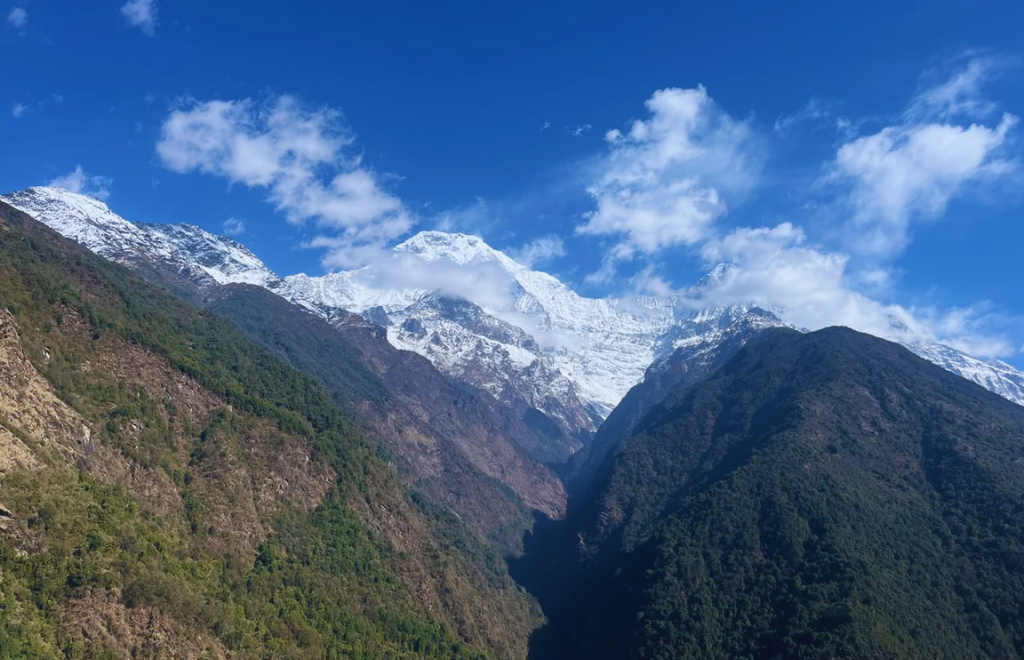
The first phase of your journey is a masterful lesson in mountain geography. Starting in the lush valley, the trail snakes along vertical cliffs carved out by the turquoise waters of the Marsyangdi. As you trek through Tal, Dharapani, and Chame, the landscape undergoes a dramatic shift. Subtropical warmth gives way to crisp alpine air, and oak forests are replaced by rhododendrons and towering blue pines. Villages feature flat-roofed stone houses, and long walls of mani (prayer stones) appear, signaling your entry into the cultural realm of the Gurung and Ghale communities.
Acclimatization in Manang Village in Annapurna Region
At 3,540 meters, Manang is the vital staging ground for the high pass. Spending a compulsory rest and adaptation day here is non-negotiable for safety. Manang is well-equipped with comfortable tea houses, bakeries, and regular high-altitude medical briefings hosted by the Himalayan Rescue Association (HRA).
To stimulate your cardiovascular system and safely trigger red blood cell production, follow the classic "climb high, sleep low" rule. Excellent acclimatization side trips include:
- The steep climb up to Praken Gompa (3,945m) for a blessing from the local monk.
- The rigorous hike to Ice Lake (Kicho Tal) at 4,600 meters, which offers panoramic views of Annapurna II, Annapurna III, and Gangapurna.
Crossing Thorong La Pass (5,416 meters / 17,769 feet)
The crossing of Thorong La Pass is a true physical and mental milestone. The typical crossing day begins in freezing, pitch-black darkness around 4:00 AM from Thorong Phedi (4,450m) or High Camp (4,850m). Illumination from your headlamp reveals your frozen breath as you slowly ascend the steep, switchback moraine trail. As dawn breaks over the Himalayas, the surrounding peaks turn a soft pink and gold. The final push across the snowfields requires a steady, rhythmic pace. Reaching the crest marked by an iconic pile of prayer flags blowing wildly in the wind reveals a sweeping view of the Dhaulagiri massif and the vast, arid landscape of Mustang stretching out before you.
Descending into the Sacred Sanctuary of Muktinath
Leaving the pass behind, you make a steep drop of nearly 1,700 vertical meters down to the sacred valley of Muktinath (3,760m). This ancient pilgrimage site is revered by both Hindus and Buddhists as a place of liberation (Mukti Kshetra). The temple complex features 108 brass water spouts shaped like bulls' heads and an eternal flame fueled by natural gas rising directly from the earth. Witnessing devout pilgrims bathe in the freezing waters after your demanding physical crossing creates a profound spiritual atmosphere, welcoming you to the lower western edge of the Mustang region.
Trekking into Upper Mustang, the Forbidden Kingdom of Lo
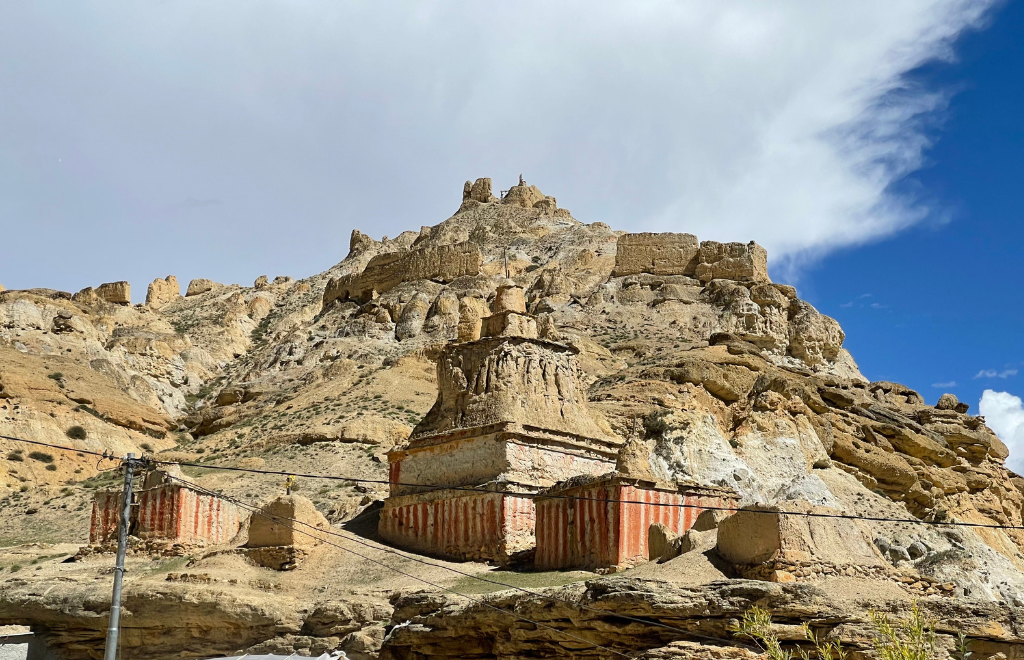
Journey from Kagbeni to Upper Mustang
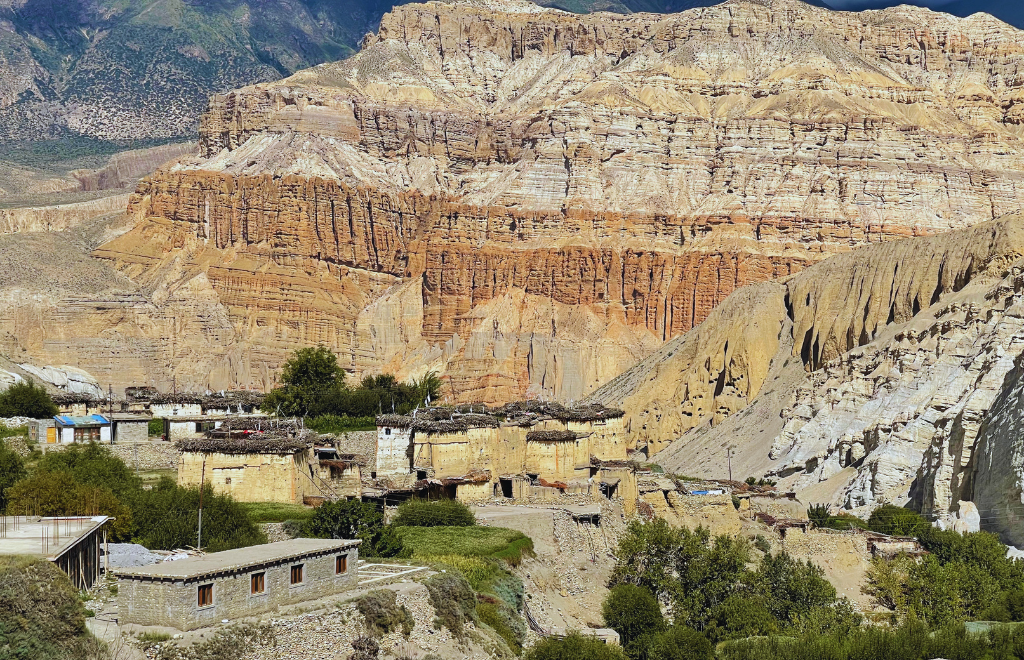
After registering your departure from the standard circuit at Kagbeni, you step into Upper Mustang and immediately notice a shift in the environment. The air grows noticeably drier, and the southern monsoons are completely blocked out by the Annapurna and Dhaulagiri massifs. You are now walking through the deep, ancient trenches of the Kali Gandaki Gorge. By midday, powerful winds rush northward up the valley, kicking up dust clouds and requiring protective eyewear and windproofing. The landscape opens up into a vast, rolling horizon of stark ochre, brown, and grey earth, broken only by green, irrigated oases of willow trees and barley fields surrounding remote villages.
The Red Cliffs of Dhakmar and Fluted Sandstone Pinnacles
As you journey deeper toward the heart of Lo, the geology becomes increasingly spectacular. Near the village of Dhakmar, you encounter a massive, two-kilometer-long wall of deep crimson cliffs that seem to glow like fire under the midday sun. Local Tibetan mythology states these cliffs were stained red by the blood of a fierce demoness vanquished by the great 8th-century tantric master Guru Rinpoche. Scientifically, this striking feature of the Mustang desert landscape is caused by iron oxide minerals within the sedimentary layers, beautifully sculpted over millennia by wind erosion into a labyrinth of fluted columns and pinnacles.
Arriving at the Walled City: Exploring Lo Manthang
The ultimate destination of the northern leg is the historic, fortified capital of Lo Manthang, sitting at 3,840 meters. Founded in 1380 by Ame Pal, this medieval settlement is enclosed by a massive, six-meter-high earthen wall fitted with defensive watchtowers. Walking inside through the single main gate feels like stepping directly into the 14th century.
The narrow, whitewashed earthen alleys lead to towering monasteries that house some of the finest collections of early Tibetan Buddhist art in existence. Key sites include:
- Jampa Lhakhang: The "God House," featuring an enormous three-story clay statue of Maitreya Buddha and intricate murals.
- Thubchen Chode Gompa: A massive assembly hall built in the 15th century, boasting grand wooden pillars and masterfully restored frescoes.
Discovering the Sky Caves of Chhoser
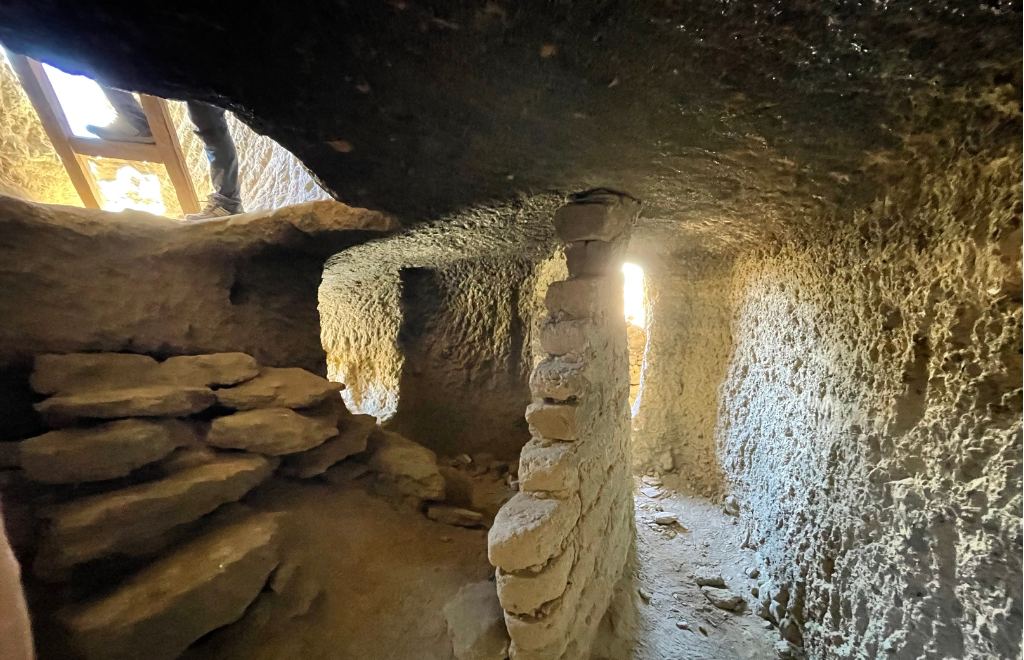
A short trek or jeep ride north of Lo Manthang, close to the border with Tibet, brings you to the fascinating archaeological complex of Chhoser. Here, soaring vertical sandstone cliffs are riddled with thousands of man-made openings known as the Sky Caves of Mustang. The most famous of these is Shija Jhong Cave, a remarkable five-story honeycomb structure featuring more than 40 interconnected rooms, storage niches, and meditation cells linked by simple wooden ladders. Archaeologists have discovered mummified human remains, 2,000-year-old burial artifacts, and hidden manuscripts within these caves, suggesting they served as collective tombs, defensive bunkers during times of conflict, and high-perch meditation sanctuaries.
Annapurna Circuit vs Upper Mustang: What's the Difference?
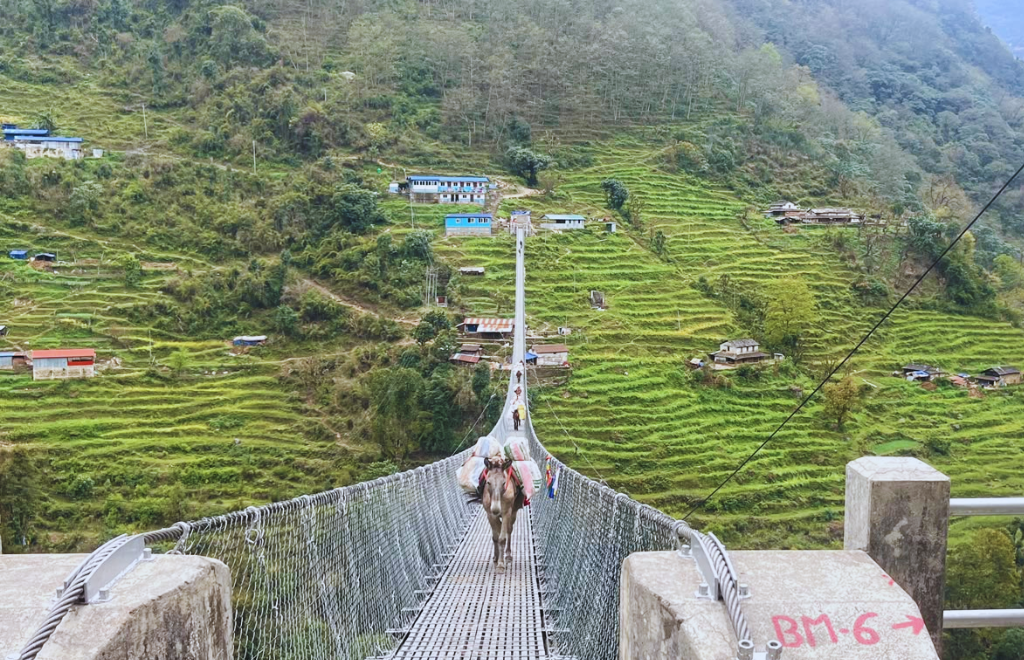
To help you mentally prepare for this multi-week combination journey, it is helpful to look at how the two distinct segments compare across key features.
| Comparative Feature | Annapurna Circuit Segment | Upper Mustang Segment |
| Primary Landscape | Deep river valleys, subtropical forests, subalpine pastures, and sheer ice walls | High-altitude cold desert, wind-carved sedimentary canyons, and barren plateaus |
| Precipitation Profile | Subject to heavy monsoon rainfall on southern slopes; heavy snow at high passes | Situated completely in the Trans-Himalayan rain shadow, with less than 200 mm annual rainfall |
| Dominant Culture | Gurung, Ghale, and Thakali, Magar communities blending Hindu and Buddhist traditions | Loba people practicing centuries-old Tibetan culture in Upper Mustang |
| Max Elevation Point | Thorong La Pass (5,416 m / 17,769 ft) | Nyi La Pass (4,960 m) or Lo La Pass (4,080 m) |
| Trail Dynamic | Popular, highly social, world-class trail with developed infrastructure | Restricted-access, remote, quieter trails with strict visitor controls |
Landscape and Climate Comparison of Annapurna and Upper Mustang
The shift in climate on this trek is sharp and noticeable. The Annapurna portion exposes you to classic, moisture-heavy mountain weather patterns, where green forests thrive on heavy precipitation. Once you cross into Upper Mustang, you enter a true high-altitude cold desert environment. The air is remarkably clear, UV levels are high, and moisture is practically nonexistent. This makes for excellent visibility but requires careful skin and hydration management.
Cultural Variations: Hindu-Buddhist Syncretism vs. Pure Loba Tibetan Buddhism
On the eastern side of the circuit, you will experience a fascinating blend of ethnic groups where Hindu traditions overlap with Buddhist practices. In contrast, Upper Mustang is a pristine cultural time capsule of old Tibet. The Loba people have preserved their distinct heritage due to decades of geographic and political isolation. Here, daily life revolves around ancient monasteries, the spiritual authority of Lamas, and unique seasonal festivals that have remained unchanged for generations.
Trail Infrastructure: Teahouse Hubs vs. Remote Restricted Settlements
The Annapurna Circuit features highly developed, commercialized teahouse infrastructure offering extensive menus, hot showers, and private attached bathrooms in major hubs. Upper Mustang offers a more rustic, intimate experience. While comfortable lodges are increasingly available along the main jeep routes, the side trails still rely on traditional, family-run homestays and basic stone lodges where you gather around a central mud stove in the dining hall to share simple, home-cooked meals.
Annapurna Circuit Trek Packages by A1 Excursion Adventure
Planning an adventure in the Annapurna region requires careful coordination of permits, transportation, accommodation, and experienced guides. Choosing a trusted local operator can make your journey smoother, safer, and more rewarding. A1 Excursion Adventure specializes in expertly crafted Himalayan trekking experiences, offering flexible itineraries designed to suit different schedules, fitness levels, and travel styles.
Whether you're seeking a short scenic trek or a challenging high-altitude expedition, A1 Excursion Adventure offers a range of carefully curated packages, including:
Trekking Permits Required for Upper Mustang and Annapurna Circuit Trek
Navigating the legal framework for a Nepal restricted- area trek has historically been a significant hurdle for independent adventurers. Traditionally, the government required a minimum of two foreign nationals traveling together under a registered agency to secure a Restricted Area Permit (RAP). The updated solo permit regulations have introduced an exciting shift for independent travelers. Individual foreign trekkers can now legally obtain permits to combine these two iconic routes without being forced to travel with a second foreign national. This change opens up new opportunities for solo travelers who want to experience this trans-Himalayan journey on their own terms. Crucial Safety Mandate: While you no longer need a second foreign trekking companion, the Upper Mustang guide requirement remains strictly active. You must be accompanied by a licensed, government-certified trekking guide to clear the checkpoints.
Upper Mustang special trekking Permit
To smooth your logistics at the checkpoints, here is a clear breakdown of the exact permit fees and requirements for the combined itinerary:
- Upper Mustang Restricted Area Permit (RAP): $50 USD per person, per day. There is no minimum day requirement, giving you full flexibility to customize your route length.
- Annapurna Conservation Area Project (ACAP) Permit: Approximately NPR 3,000 (roughly $23 USD). Required for both the circuit and Mustang sections.
- Trekkers' Information Management Systems (TIMS) Card: Approximately NPR 2,000 (roughly $15 USD). Mandatory for tracking hiker safety across Nepal.
Upper Mustang Trek Packages by A1 Excursion Adventure
When planning this logistics-heavy combination journey, choosing a reliable, locally owned agency can make all the difference. A1 Excursion Adventure offers specialized, expert-guided itineraries tailored to different timelines, fitness levels, and travel preferences.
Packing List for Upper Mustang and Annapurna Circuit Trek
Packing for this combined trek requires a smart, multi-layered gear system. You must prepare for sub-zero alpine blizzards on a high mountain pass and hot, dusty, windswept gales in a high-altitude desert within the same three-week window.
Essential Gear for Thorong La Pass
The crossing of Thorong La demands professional-grade mountaineering layers. Temperatures at High Camp and the pass can easily plummet in the early morning hours.
- Essential items include: A high-loft down jacket (minimum 800 fill power), windproof and waterproof Gore-Tex outer shells, heavy-duty thermal base layers (merino wool is highly recommended), insulated winter gloves, a warm fleece beanie, and reliable trail microspikes to ensure solid traction on icy mountain passes.
Wind and Dust Protection for Upper Mustang
Once you cross into the Mustang desert landscape, your primary challenge shifts from intense cold to relentless wind, dust, and high UV exposure.
- Essential items include: a breathable, windproof softshell jacket; a seamless neck gaiter or Buff to shield your nose and mouth from fine silt particles; specialized UV-blocking category 3 or 4 sunglasses to prevent snow blindness and dust irritation; high-SPF sunscreen; and protective lip balm to combat the desert air.
Footwear and Layering Management
Your choice of footwear can make or break an expedition of this length.
- Boots: Ensure you use sturdy, high-top trekking boots that are fully broken in before your trip, featuring a waterproof membrane and plenty of tread depth.
- Socks: Pack multiple pairs of thick merino wool hiking socks for colder days, along with thin liner socks to reduce friction and prevent blisters.
- Socks management: Keep a dedicated, clean pair of heavy wool socks sealed in a dry bag, reserved strictly for staying warm inside the tea houses at night.
Accommodation and Facilities on the Annapurna Circuit vs Upper Mustang
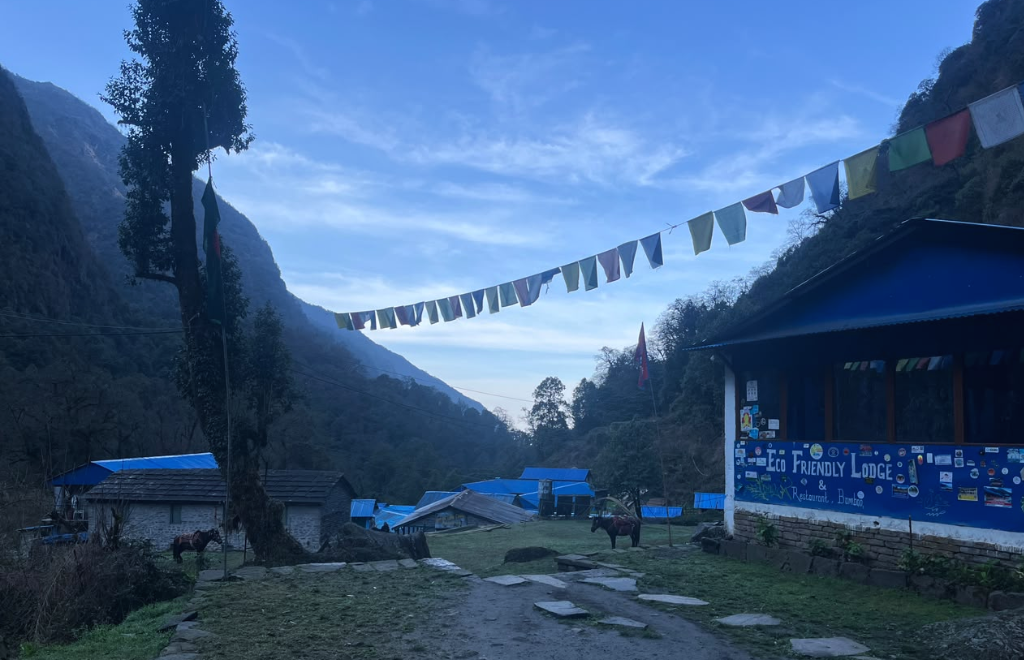
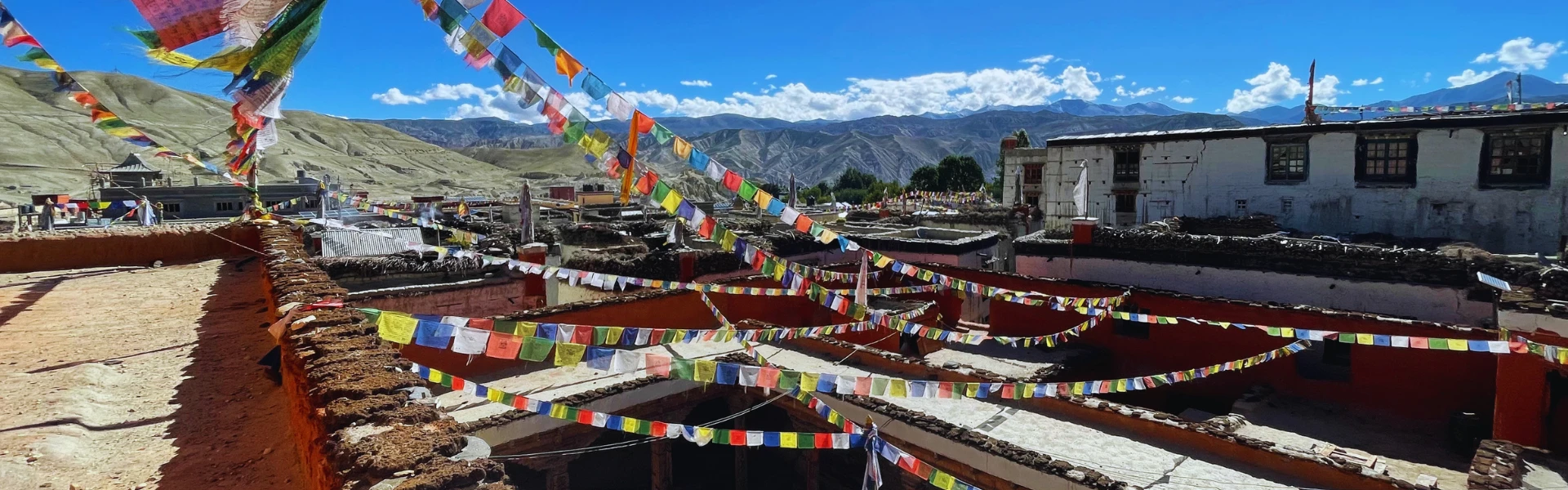
The accommodation landscape shifts noticeably as you move between the two trekking regions. Along the Annapurna Circuit, towns like Chame and Manang feature highly developed, commercialized lodges. Many of these properties offer private attached rooms, Western-style flush toilets, electric blankets, and extensive menus featuring everything from wood-fired pizza to fresh apple baked goods. In Upper Mustang, the lodging model preserves a more traditional, authentic character. Accommodations primarily consist of classic Tibetan-style earthen buildings with flat, wood-lined roofs. Rooms are basic and clean, typically featuring twin beds and shared bathroom facilities. The heart of these properties is the communal dining hall, where guests gather around a central wood or yak-dung-burning stove to stay warm and share stories in the evening.
Connectivity, Wi-Fi, and Power Charging Realities on the Trail of Upper Mustang and Annapurna Circuit
Staying connected requires a flexible approach across both routes.
- Mobile Networks: Both Ncell and Nepal Telecom (NTC) offer decent cellular coverage across most of the Annapurna Circuit. In Upper Mustang, network availability can be inconsistent, with NTC providing the most reliable signal for basic calls and data text routing in larger villages.
- Satellite Wi-Fi: Many teahouses offer access to commercial satellite internet services like Everest Link or Air Link for a small daily fee (typically $3 to $5 USD).
- Power Access: Charging electronic devices or portable power banks is readily available via solar or hydro-power networks in most villages. However, lodges usually charge a modest fee per device at higher elevations.
Food Options on the Trail of Upper Mustang and Annapurna Circuit
Maintaining proper nutrition and caloric intake is essential for sustaining your energy over a multi-week trek.
[Breakfast] ➔ Tibetan Bread with Honey/Eggs, Hot Apple Cider or Sea Buckthorn Juice
[Lunch] ➔ Traditional Nepalese Dal Bhat (Lentil Soup, Rice, Veg Curry - Free Refills)
[Dinner] ➔ Loba Specialties: Tsampa (Roasted Barley), Thukpa (Noodle Soup), Yak Steaks
- The Baseline: The classic Nepalese Dal Bhat (rice, lentil soup, spiced vegetable curry, and pickled greens) remains the ultimate, nutrient-dense fuel for the trail, especially since refills are traditionally included.
- Local Specialties: In Upper Mustang, look for traditional Loba dishes like Thukpa (a hearty Tibetan noodle soup), Tsampa (roasted barley flour dough), and fresh yak meat delicacies.
- Fresh Fruit: The lower Mustang region around Marpha and Jomsom is famous for its vast organic orchards. Be sure to try the local apple pies, dry apple rings, and fresh, immune-boosting sea buckthorn juice along the way.
Trek Difficulty, Fitness, and Altitude Challenges on the Trail of Upper Mustang and Annapurna Circuit
Tackling a combined Upper Mustang trek with Annapurna Circuit trek requires excellent physical conditioning and stamina. You will be hiking for 18 to 22 consecutive days, carrying a light daypack, and climbing and descending hundreds of vertical meters daily.
- Training Timeline: Begin a dedicated physical preparation program at least three to four months before your departure date.
- Aerobic Fitness: Build a strong aerobic base by engaging in targeted cardiovascular exercises three to four times a week, such as long-distance running, cycling, swimming, or stair climbing.
- Strength & Endurance: Incorporate weighted weekend hikes on local trails with a loaded pack to condition your core, lower back, and legs for the continuous physical demands of high-altitude trekking.
Recognizing and Treating AMS (Acute Mountain Sickness) at High Altitude
Operating at elevations above 3,500 meters carries an inherent risk of Acute Mountain Sickness (AMS). Understanding the warning signs and knowing how to respond is critical for team safety.
- Golden Rule of Altitude Safety: Any sickness experienced at high altitude is considered mountain sickness until proven otherwise. Never ascend with active symptoms.
- Early Symptoms to Watch For: Mild but persistent headaches, sudden dizziness, loss of appetite, mild nausea, unexplained fatigue, sleeplessness, or a lingering dry cough.
- Effective Prevention Strategies: Maintain a slow, deliberate pace on the trail, drink at least four to five liters of water daily to stay hydrated, avoid alcohol and sleep medications, and consider talking to your travel physician about using preventive options like Diamox (Acetazolamide).
- Emergency Response Protocol: If symptoms progress from mild to severe—such as loss of motor coordination (ataxia), persistent confusion, or shortness of breath while resting you must immediately stop ascending. Initiate a safe descent to a lower elevation with your guide and arrange for an emergency helicopter evacuation via your travel insurance provider if conditions do not improve
Best Seasons to Experience the Combination of Upper Mustang and Annapurna Trek
Choosing the right time of year is essential for balancing mountain visibility, pass safety, and trail comfort.
Spring (March–May): Blooming Forests and Clear Mountain Passes
Spring is an exceptional window for completing this entire loop. The lower valleys of the Annapurna Circuit come alive with blooming red and pink rhododendron forests, creating a beautiful contrast against the snow-capped peaks. Temperatures are comfortably warm at lower elevations, and morning skies are generally clear. The winter snow accumulation on Thorong La Pass typically melts back by late April, making for safer and more reliable crossings.
Autumn (September–November): Crispest Mountain Views and Cultural Festivals
Autumn is widely considered the peak trekking season in Nepal. The post-monsoon air is remarkably clean and free of dust, resulting in exceptional mountain visibility and sharp photographic conditions across both regions. While nighttime temperatures drop significantly at higher camps, daytime walking conditions are pleasantly cool and stable. This season also coincides with major cultural celebrations across the country, providing unique opportunities to witness local holiday traditions in the villages.
The Monsoon Exception: Why Mustang's Rain Shadow Helps You in Summer
While the summer monsoon season (June to August) brings heavy rains and transport delays to most of Nepal's classic trekking routes, it offers a fascinating opportunity for this specific combination.
The Annapurna portion will experience wet trails and cloudy conditions. However, once you pass the mountain barrier and enter Upper Mustang, you step into a complete rain shadow. The weather here remains clear, warm, and dry throughout the summer, making it one of the few regions in the Himalayas where you can enjoy pristine desert trekking conditions while the rest of the country experiences the monsoon.
Final thoughts
Completing the Upper Mustang Trek with the Annapurna Circuit Trek is more than a trekking holiday; it is a once-in-a-lifetime adventure that combines the challenge of crossing a 5,000-meter Himalayan pass with the rare opportunity to explore the ancient Kingdom of Mustang. Along the way, you'll experience dramatic landscape changes, rich Tibetan culture, and some of Nepal’s most spectacular mountain scenery.
Ready to Plan Your Expedition here in Nepal?
From permit arrangements and route planning to navigating the latest solo trekking regulations, the expert team at A1 Excursion Adventure is here to make your journey smooth and stress-free. With local expertise, personalized support, and carefully crafted itineraries, we ensure a safe, seamless, and unforgettable trekking experience. Contact A1 Excursion Adventure today and start planning your dream Himalayan adventure with confidence.
Frequently Asked Questions
What is the primary keyword for this combined trek route?
The primary keyword travelers use to research this specific combined route is Upper Mustang trek with Annapurna circuit trek, which connects the classic alpine circle with the northern restricted desert terrain.
Can I complete this combined journey entirely on my own without assistance?
No, independent solo travel without any support is not permitted in this region. While updated regulations allow individual foreign nationals to obtain the necessary permits without a second traveling companion, the Upper Mustang guide requirement remains strictly mandatory. You must be accompanied by a licensed, government-certified guide to clear the checkpoints past Kagbeni.
What are the main permit fees required for this combination?
The permit structure includes three primary items: the Upper Mustang Restricted Area Permit (RAP) at $50 USD per person per day, the Annapurna Conservation Area Project (ACAP) permit for approximately NPR 3,000, and a standard TIMS card for approximately NPR 2,000.
How difficult is the terrain compared to standard trekking routes?
This combination route is graded as strenuous due to its length and altitude. The first phase requires a challenging high-altitude crossing of Thorong La Pass at 5,416 meters, while the second phase involves navigating the dry conditions, strong midday winds, and high desert trails of Upper Mustang.
What is the accommodation standard along the combined trail?
The trail features a mix of accommodation styles. The Annapurna Circuit portion provides modern, well-developed tea houses with extensive menus and private rooms. The Upper Mustang segment offers a more traditional experience centered around classic, family-run homestays and rustic stone lodges.
Is it possible to complete this trek during the summer monsoon season?
Yes, this is one of the unique advantages of this combination. While the initial Annapurna valleys will experience rainy conditions, the Upper Mustang region sits entirely within the trans-Himalayan rain shadow. This makes it an excellent destination for clear, desert trekking throughout the summer months.


.webp)