You can absolutely visit Upper Mustang without trekking, and in 2026, it has never been easier or more affordable to do so. What was once a remote trekking destination accessible only by long days on foot is now reachable by a demanding but rewarding overland jeep route that winds through one of Nepal’s most culturally preserved Himalayan regions.
For travelers who want the landscapes and culture of Mustang without committing to a multi-week trek, a 4WD overland journey to Lo Manthang offers a practical and immersive alternative. Agencies such as A1 Excursion Adventure, which operates Upper Mustang overland tours with full permit support, have helped make this route accessible while ensuring travelers remain compliant with Nepal’s restricted-area regulations.
This guide explains how the road works, the 2026 permit rule changes, realistic costs, and what it’s actually like to explore and reach Lo Manthang by jeep.
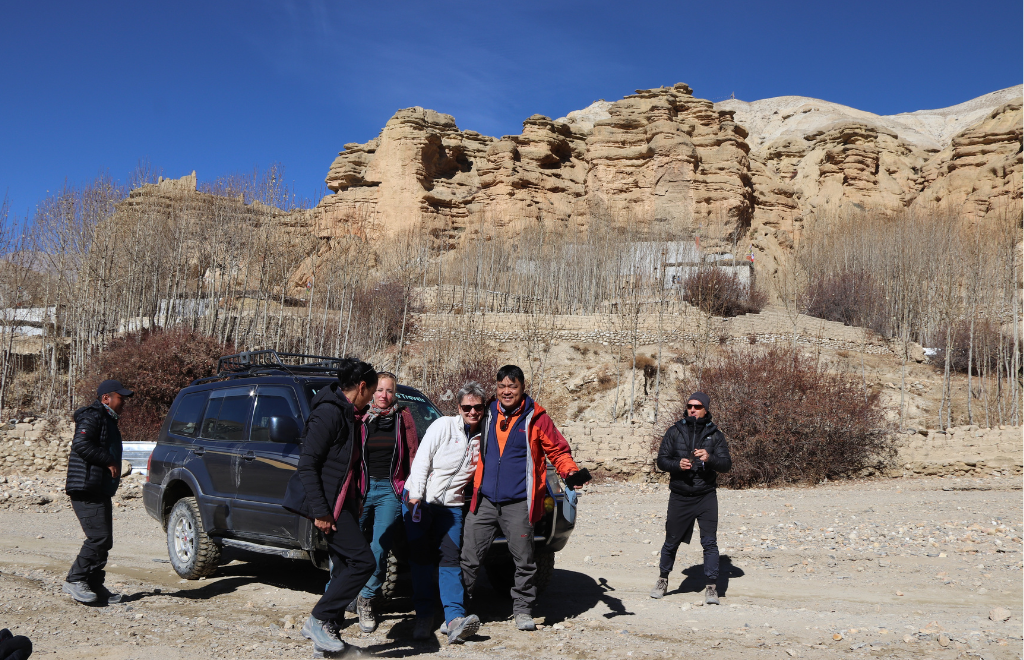
Jeep convoy traveling from Kagbeni to Lo-manthang, Upper Mustang
Table of Contents
How Upper Mustang Became Accessible by Road ( Not Just by Foot)
For decades, Upper Mustang had a reputation as a destination reserved almost exclusively for trekkers. The region opened to foreign travelers only in 1992, and for many years, the only practical way to reach Lo Manthang was on foot via the multi-day trekking route from Jomsom.
That situation changed gradually with the construction of the Kali Gandaki corridor road, which extended north from Beni through Jomsom and eventually toward the Tibetan border. By the early 2020s, a rough but functional road connected Jomsom to Lo Manthang, fundamentally transforming how travelers could access the region.
Today, travelers who may not want to trek at high altitude, such as seniors, families, photographers, or visitors on limited schedules, can reach Upper Mustang by 4WD jeep. The route is still physically demanding due to altitude and terrain, but the road means the journey no longer requires two weeks of trekking.
This shift has quietly reshaped Mustang tourism. What was once an expedition-style trek is now accessible as a short overland expedition lasting four to seven days.
Upper Mustang Jeep Tour vs. Trekking: Which Is Right for You?
Within trekking circles, there is sometimes a lingering belief that the “authentic” way to experience Mustang is only on foot. In reality, that view overlooks some practical realities of the region. The trekking route from Jomsom to Lo Manthang follows the Kali Gandaki valley, a corridor known for intense afternoon winds and blowing dust. During peak season, trekkers frequently deal with strong crosswinds, high UV exposure, and daily elevation gain that can become physically draining.
An Upper Mustang jeep tour eliminates the need for continuous hiking in those conditions while still allowing travelers to stop in villages, monasteries, and cultural sites along the route. In fact, many travelers who initially planned to trek end up choosing the overland route because it allows them to:
Reach Lo Manthang faster
Enjoy an adventure jeep drive with beautiful scenic views
Avoid prolonged exposure to dust storms and valley winds
Travel comfortably at altitude
Allocate more time exploring villages and monasteries
In practical terms, the jeep route is not a “shortcut.” It is simply a different style of exploration, one that prioritizes access and efficiency.
What to Expect on an Upper Mustang Overland Jeep Tour
The 4WD Route from Kathmandu or Pokhara to Upper Mustang
Most travelers begin their journey from Kathmandu or Pokhara. Two standard approaches are used:
Option 1: Full overland approach
Kathmandu → Pokhara → Beni → Tatopani →Marpha- Jomsom → Kagbeni → Lo Ghami-Tsarang- Lo Manthang
Kathmandu to Pokhara: ~6–7 hours by road
Pokhara to Jomsom via Beni: ~8–9 hours driving
Jomsom to Lo Manthang: ~6–7 hours by 4WD jeep
Option 2: Flight + overland
Pokhara → Jomsom (flight) → Lo Manthang (jeep)
Pokhara to Jomsom flight: ~20 minutes
Jomsom to Lo Manthang drive: ~6–7 hours
The second option is common among travelers who want to minimize long road travel.
Upper Mustang Road Conditions: What the Drive Really Looks Like
It is important to understand that the Upper Mustang road trip is not a standard highway journey. The road conditions change dramatically along the route:
Pokhara to Beni-Galeshwor: paved highway
Beni to Jomsom: gravel and partially paved mountain road
Jomsom to Kagbeni: rough track
Kagbeni to Chuksang: sections across the Kali Gandaki riverbed
From Kagbeni northward, the route enters the restricted Upper Mustang region. Here, the terrain becomes progressively rougher, with stretches of dry river crossings, loose gravel, and high desert plateau roads. The result is a journey that feels closer to an off-road expedition than a conventional drive.
Best Vehicle for Upper Mustang — Why a 4WD Is Non-Negotiable
Because of rough road conditions, standard vehicles cannot safely operate on the Upper Mustang route. Most operators rely on two types of vehicles:
4WD Mahindra Scorpio A widely used vehicle across Mustang routes. It offers good ground clearance and is capable of handling rough terrain while remaining relatively affordable for group tours.
Toyota Land Cruiser A higher-end option offering better suspension, improved comfort on rough roads, and greater reliability in extreme terrain.
Both vehicles are built for off-road conditions, but travelers seeking maximum comfort on long drives often prefer the Land Cruiser, while the Mahindra Scorpio remains the most common choice for standard tours.
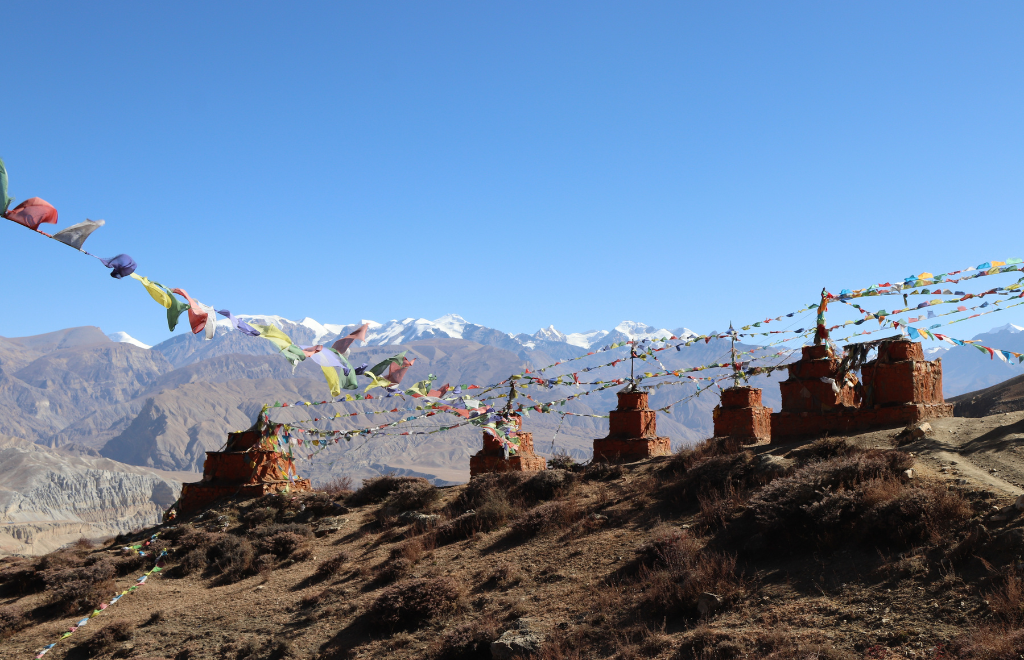
Chortens on hills seen while on Upper Mustang jeep tour
Upper Mustang Permit 2026: New $50/Day Rule Explained
One of the most important updates for travelers planning to visit Upper Mustang without trekking in 2026 is the change in the permit system. For many years, the Restricted Area Permit (RAP) for Upper Mustang required a flat fee of $500 per person for a minimum of 10 days. That model has now been replaced.
How the New $50/Day Restricted Area Permit Works
From 2026, the RAP for Upper Mustang operates on a $50 per person, per day basis. This means travelers can now plan shorter itineraries without paying for a mandatory 10-day permit.
For example: 5 days in Upper Mustang = $250 permit cost
This change alone has significantly lowered the entry barrier for overland travelers.
All Permits Required for Upper Mustang
Travelers entering Upper Mustang must hold two permits:
Restricted Area Permit (RAP) $50 per person per day
ACAP Permit Approximately $30 (around NPR 3,000)
In addition, Nepal’s regulations require that travelers entering restricted areas must:
Travel with a licensed guide
Book through a registered trekking agency
Independent travel in Upper Mustang is not permitted under any circumstances. Operators such as A1 Excursion Adventure handle the entire permit process, which includes RAP applications, ACAP registration, and guide assignment before the journey begins.
Solo Travel to Upper Mustang: How the New Permit Rule Works in 2026
Under the updated Nepal restricted area trekking permit regulations introduced in 2026, solo foreign travelers are now officially allowed to apply for permits to restricted regions such as Upper Mustang. This marks a major change from the previous rule that required a minimum group size of two trekkers. Previously, trekking agencies often arranged a pairing service, sometimes informally called a “ghost permit,” to meet the two-person requirement on paper. However, with the latest reforms, this workaround is no longer necessary in most cases, as solo trekkers can now obtain permits independently through the official system.
Despite this flexibility, trekkers must still comply with other key requirements of the Nepal restricted area trekking permit, including obtaining permits through a registered trekking agency and following designated travel guidelines set by the government. These measures ensure safety, proper documentation, and responsible tourism in sensitive border regions. For experienced operators like A1 Excursion Adventure, assisting solo travelers with permit processing, documentation, and logistics remains an essential service. Trekkers planning to visit Upper Mustang are encouraged to arrange their permits in advance and confirm the latest requirements before starting their journey.
Upper Mustang Jeep Tour Cost: Full Breakdown
Understanding the Upper Mustang travel cost is essential when deciding between trekking and an overland tour. Below is a realistic cost structure for a 5-day jeep tour.
Fixed Costs
Restricted Area Permit: $50 per person per day
ACAP Permit: $30
Operational Costs
Licensed guide: $25–$35 per day
Private 4WD jeep rental: 150–$200 per day
Accommodation + meals: $30–$50 per person per day
A group of four to five travelers sharing a jeep usually achieves the best balance between affordability and comfort. Solo travelers or pairs will pay proportionally more due to vehicle costs.
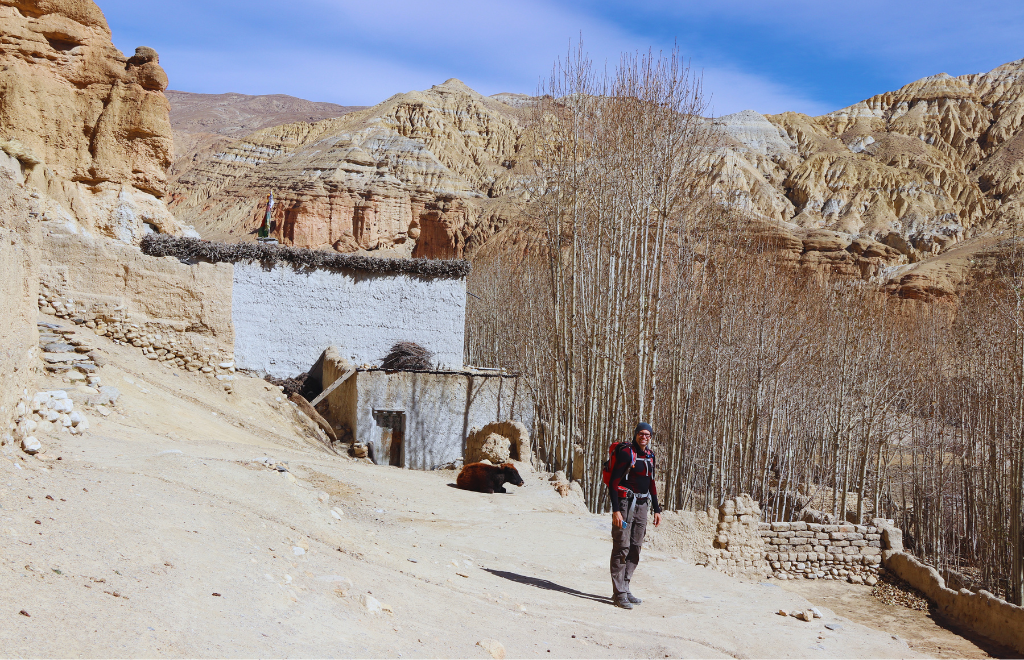
Travelers visiting in Upper Mustang
Best Time to Visit Upper Mustang
Upper Mustang lies within a Himalayan rain shadow region, meaning the high mountains block much of the monsoon rainfall that affects the rest of Nepal. This geographic feature makes Mustang one of the few trekking and travel destinations in Nepal that remains accessible during the June–August monsoon season. While trails across much of the country become muddy or damaged by heavy rain, Upper Mustang typically receives only light precipitation. For this reason, many experienced travelers deliberately schedule their Mustang journeys during the summer. That said, the region remains attractive in other seasons:
Spring (March–May) Clear skies, moderate temperatures, and the annual Tiji Festival in Lo Manthang.
Autumn (September–October) Stable weather and excellent mountain visibility.
Because of its climate pattern, Upper Mustang is one of Nepal’s rare multi-season travel destinations.
Cultural Immersion during the Upper Mustang overland tour
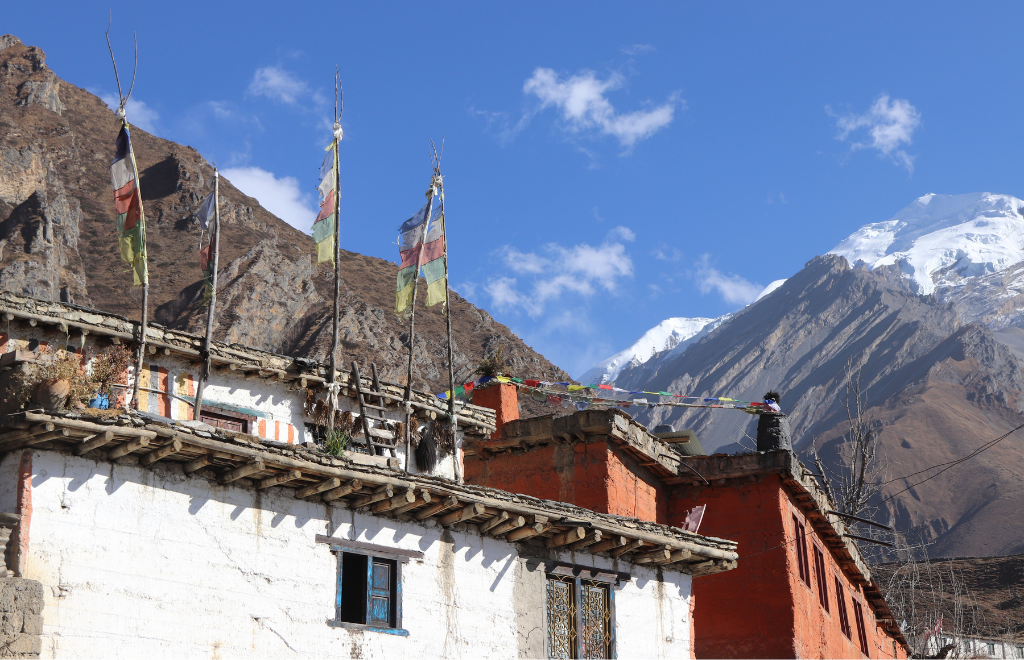
Choosing an Upper Mustang road trip does not mean sacrificing cultural experiences. The route passes directly through villages that still maintain strong connections to Tibetan Buddhist culture, architecture, and language. At the center of the region stands Lo Manthang, a walled city founded in the 15th century and one of the most historically intact settlements on the Tibetan plateau.
Travelers can explore:
Monasteries inside the walled city
Traditional mud-brick houses and narrow alleyways
Palace structures linked to Mustang’s former royal family
Just north of Lo Manthang lies Chhoser, home to the famous Sky Caves carved high into cliff faces. Archaeologists believe these caves were used for habitation and burial centuries ago. Along the route, villages such as Ghami, Tsarang, and Charang provide insight into daily life in Mustang. The jeep simply allows travelers to move efficiently between these cultural sites.
Planning a journey to Upper Mustang involves far more than simply choosing a route. Restricted area permits, vehicle logistics, and high-altitude coordination all require local expertise and precise planning. A1 Excursion Adventure, a Nepal-based operator with direct, on-the-ground experience in Mustang, manages every aspect of your trip in-house, from permit processing and transportation to guide coordination, ensuring a seamless, fully compliant, and stress-free journey.
For travelers who want to explore Upper Mustang without trekking, our overland jeep tour offers the most efficient and comfortable way to experience the region’s unique landscapes and culture.
Whether you prefer a scenic drive or a culturally rich trekking adventure, our itineraries are designed to match different travel styles, timeframes, and comfort levels.
Final Thoughts
For travelers who want to visit Upper Mustang without trekking, the overland jeep route is no longer a compromise; it is the most practical and efficient way to experience the region in 2026. The combination of road access and the new $50-per-day permit system has transformed Mustang travel. Shorter itineraries are now possible without the heavy permit costs that once required a ten-day commitment. That flexibility makes the destination accessible to a much wider range of travelers, from photographers and cultural explorers to visitors working within limited travel windows. At the same time, the journey remains a genuine Himalayan expedition. The road north from Jomsom is rugged, the landscapes become increasingly stark and dramatic, and the arrival at the walled city of Lo Manthang still feels like entering a place that has preserved centuries of Tibetan plateau culture.
Yes, you can visit Upper Mustang without trekking by taking a 4WD jeep along the Kali Gandaki corridor road. The route connects Pokhara or Kathmandu to Lo Manthang via Jomsom, and has been fully drivable since the early 2020s. The journey takes approximately 6–7 hours by jeep from Jomsom to Lo Manthang. You will still need a valid Restricted Area Permit (RAP) and an ACAP permit, and must travel with a licensed guide through a registered Nepal trekking agency.
Q2 How much does the Upper Mustang permit cost in 2026?
From 2026, the Upper Mustang Restricted Area Permit (RAP) costs $50 per person per day, r replacing the old flat fee of $500 for a minimum 10-day permit. You also need an ACAP permit, which costs approximately $30 (around NPR 3,000). For a 5-day itinerary, your total permit cost would be $250 (RAP) + $30 (ACAP) = $280 per person. This change has made shorter jeep tours significantly more affordable.
Q3 How long does it take to drive from Jomsom to Lo Manthang?
The drive from Jomsom to Lo Manthang takes approximately 6–7 hours by 4WD jeep, depending on road conditions and stops along the way. The road passes through Kagbeni, Chuksang, Ghami, and Tsarang before reaching Lo Manthang. North of Kagbeni, the terrain becomes significantly rougher with dry river crossings and high-altitude plateau roads, so a capable 4WD vehicle such as a Mahindra Scorpio or Toyota Land Cruiser is essential.
Q4 Can a solo traveler visit Upper Mustang?
Yes, solo travelers can visit Upper Mustang, but Nepal's Restricted Area Permit requires a minimum group size of two foreign nationals. Most licensed agencies solve this through a pairing arrangement sometimes called a "ghost permit," where two solo travelers are paired on paper to meet the government's minimum group requirement. You do not need to share your full itinerary with the other traveler. Agencies such as A1 Excursion Adventure offer
Raj Thapa
Founder & Managing Director Raj Kumar Thapa: Founder & Managing Director of the Company, and has over 2 decades of professional experience in the travel and trekking field. Mr. Raj has spent the entirety of his career in the travel & trek organization.

.webp)

.webp)