Knowing how to reach the Upper Mustang from Pokhara is the first step of planning a journey into one of Nepal’s most restricted and culturally preserved Himalayan regions. Starting from Pokhara, the gateway city of western Nepal, the route to Upper Mustang is not a simple road trip; it is a regulated expedition through high-altitude desert landscapes, ancient trade routes, and controlled entry checkpoints. The journey to Upper Mustang leads toward Lo Manthang, the walled capital of the former Mustang Kingdom, where Tibetan-influenced culture, centuries-old monasteries, and dramatic canyon landscapes remain remarkably preserved.
Unlike standard Himalayan travel, reaching Upper Mustang requires permits, careful logistics, and an understanding of multiple transport modes. This guide breaks down every practical route, including distance, duration, cost, road conditions, trekking stages, and expert travel advice.
Table of Contents
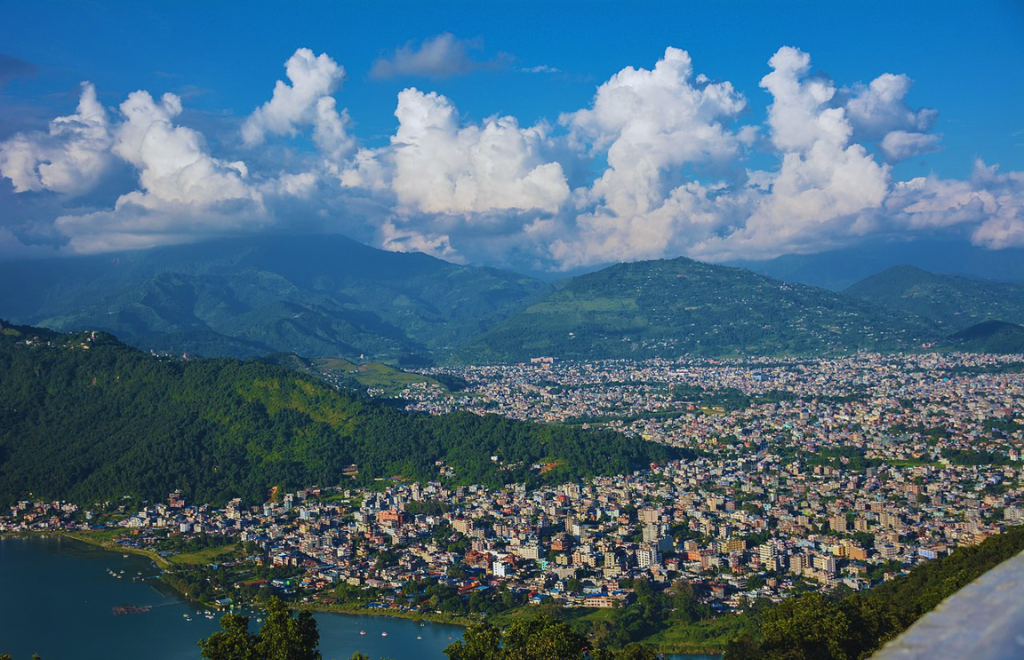
Pokhara from above – where peaceful lakes meet majestic Himalayan views.
Famous Attractions of Upper Mustang
Upper Mustang is a land of ancient monasteries, dramatic desert valleys, sacred pilgrimage sites, and centuries-old Tibetan culture. Some of the region’s most remarkable attractions include:
Lo Manthang
Chhoser Sky Caves
Ghar Gompa (Lo Gekar Monastery)
Dhakmar Red Cliffs
Ghami Mani Walls
Damodar Kunda
Chungsi Cave
From hidden cave settlements to sacred Himalayan landmarks, each destination reveals a different side of Upper Mustang’s rich cultural and spiritual heritage. To explore these places in detail, read our complete Upper Mustang blogs below.
Pokhara to Upper Mustang Distance & Route Overview
The journey from Pokhara to Upper Mustang varies depending on the mode of travel:
By Road: Approximately 220 kilometers (137 miles)
By Air (Pokhara to Jomsom): Approximately 91 kilometers (57 miles)
Total Travel Time: 1 hour (helicopter) to 10–14 days (trekking)
However, distance alone does not define this journey. The route passes through the Kali Gandaki Valley, one of the world's deepest gorges, and climbs into a high-altitude desert region shaped by wind, altitude, and isolation.
Best Ways to Reach Upper Mustang from Pokhara
There are four main ways to reach Upper Mustang from Pokhara, each offering a different level of comfort, cost, and adventure.
Upper Mustang by Helicopter: Fastest Way to Reach Lo Manthang
For travelers who want to experience the dramatic landscapes of Upper Mustang in the most time-efficient and exclusive way possible, a helicopter journey offers an unmatched perspective. This option is especially suited for luxury travelers, photographers, or those with limited time who still wish to witness the remote beauty of Nepal’s hidden Himalayan kingdom without undertaking long road or trekking routes.
A helicopter charter is the fastest and most premium way to reach Upper Mustang, offering direct access into one of Nepal’s most remote and restricted regions.
Route Overview
Departure: Pokhara
Landing: Lo Manthang or nearby designated helipads
Duration: Approximately 1 hour (subject to weather conditions)
Highlights
Stunning aerial views of the Annapurna and Dhaulagiri mountain ranges
Direct entry into the restricted Upper Mustang region
Spectacular bird’s-eye perspective of the Kali Gandaki Gorge
No trekking or road travel required
Experience
The journey begins over lush green valleys before dramatically transitioning into the arid, desert-like landscapes of the Himalayas. As you approach Lo Manthang, ancient walled settlements, monasteries, and deep canyon formations emerge below, offering an unforgettable first impression of Mustang from the sky.
Practical Notes
Flights are highly weather-dependent
Landing permissions are limited and regulated
This is the most expensive travel option, reflecting its exclusivity and speed
This option is ideal for luxury travelers, photographers, or those on time-sensitive expeditions who want to experience Upper Mustang in the most efficient and visually spectacular way possible.
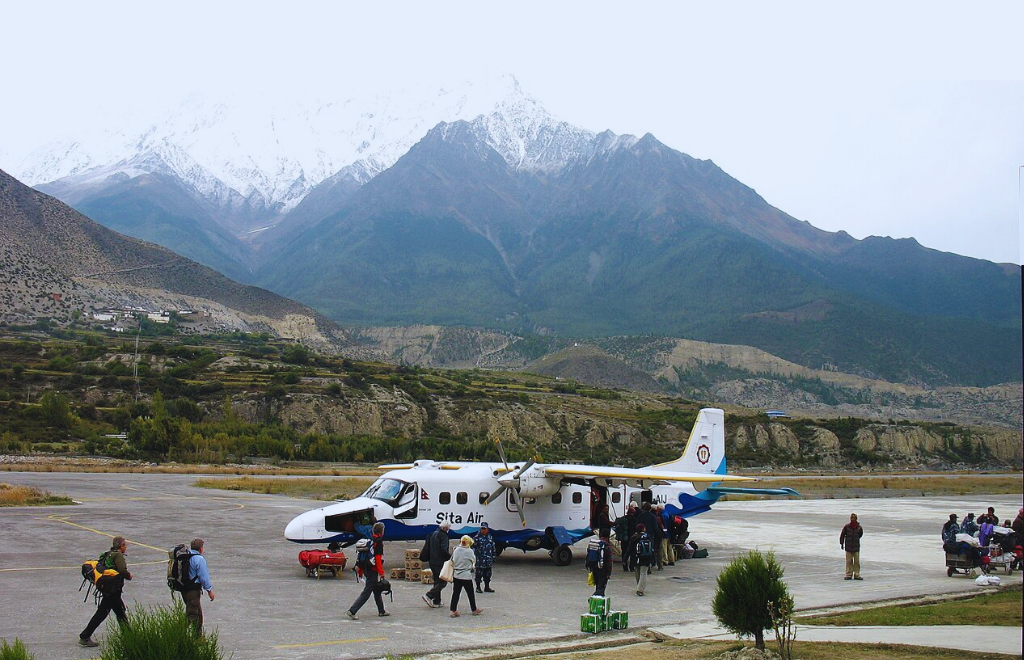
Jomsom Airport – the dramatic gateway to the mystical landscapes of Mustang, surrounded by towering Himalayan peaks.
Pokhara to Upper Mustang by Flight and Jeep
For most travelers, the combination of a short mountain flight and a rugged jeep drive offers the best balance between convenience, cost, and experience. This is also the most commonly chosen route to reach Upper Mustang, allowing you to cover a significant distance quickly while still experiencing the dramatic shift in landscapes that defines the region.
This option is ideal for those who want an efficient journey without missing the essence of overland adventure through Nepal’s remote Himalayan terrain.
Step 1: Pokhara to Jomsom Flight
Destination: Jomsom
Duration: 20–25 minutes
Aircraft: Small mountain planes (Twin Otter / Dornier 228)
Departure: Early morning only
Flight Experience
The flight offers breathtaking aerial views of the Annapurna and Dhaulagiri ranges as you follow the dramatic course of the Kali Gandaki Gorge—one of the deepest gorges in the world. The journey ends with a memorable landing at Jomsom’s famously windy mountain airstrip, surrounded by stark Himalayan landscapes.
Important Note
Flights in this region are highly weather-dependent. Strong winds are common, often leading to delays or cancellations, so it is strongly recommended to keep buffer days in Pokhara when planning this route.
From Jomsom, the journey continues by jeep along rugged mountain tracks, gradually entering the restricted Upper Mustang region. The route passes through Kagbeni, the official entry checkpoint into Upper Mustang, where permits are checked before continuing deeper into the region.
Highlights
A dramatic transition from lush valleys to barren desert cliffs
River crossings along the Kali Gandaki River
The walled city of Lo Manthang
10,000 mysterious sky caves, centuries-old monasteries, and the vibrant, annual Tiji Festival
Entry into the culturally restricted Upper Mustang region
Ancient villages, monasteries, and cliffside settlements along the route
Experience
This overland journey is where the real character of Upper Mustang begins to unfold. The scenery becomes increasingly arid and dramatic, with wind-carved cliffs, caves, and centuries-old settlements appearing along the route. Each village offers a glimpse into a preserved Tibetan-influenced culture that has remained largely unchanged for generations.
Note: This is the most balanced and recommended option for travelers who want both efficiency and an immersive overland experience, combining the speed of air travel with the authenticity of a rugged Himalayan jeep journey.
Pokhara to Upper Mustang by Road Jeep (Four-wheel)
For travelers seeking the most immersive and adventurous way to reach Upper Mustang, the overland jeep expedition offers a true Himalayan road journey. This route is not just about reaching a destination; it is about experiencing the dramatic transformation of landscapes, cultures, and road conditions as you move deeper into Nepal’s remote north.
Unlike flying, the overland route allows you to witness every stage of the transition from subtropical valleys to the arid, high-altitude desert of Mustang.
The journey begins on relatively smooth highways near Pokhara before gradually shifting into rugged terrain beyond Galeswor Bazar. As the road follows the Kali Gandaki Gorge, travelers experience one of the most dramatic driving routes in Nepal.
Every turn brings a new perspective of the Himalayas, making the journey as memorable as the destination itself.
Challenges
Basic Accommodation during the trip
High Altitude Sickness:
Seasonal monsoon landslides are affecting road conditions
Narrow and rough mountain roads in remote sections
Long driving hours with limited comfort breaks
Weather-related delays in high-altitude areas
Experience
This route is best suited for adventure-focused travelers who want a complete ground-level experience of Upper Mustang. It offers a raw, unfiltered journey through Nepal’s most remote landscapes, where every kilometer reveals shifting geography, culture, and lifestyle. The slower pace allows for deeper immersion into the region’s rugged beauty and ancient heritage.
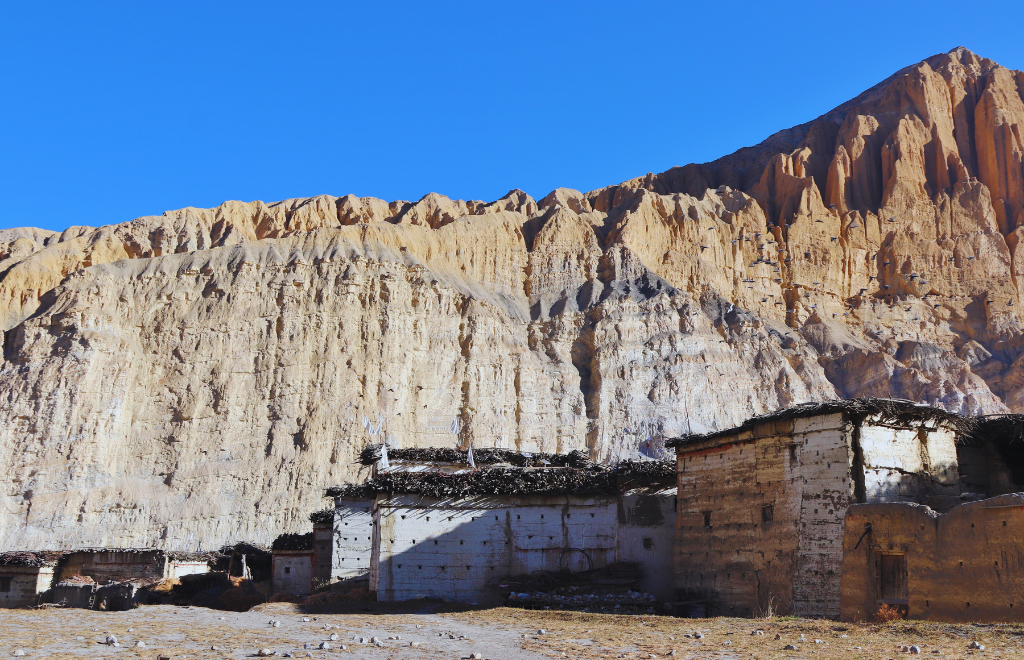
Walking through the historic villages of Upper Mustang feels like stepping back in time.
Upper Mustang Trekking Route from Pokhara
Trekking is the most authentic and culturally immersive way to reach Upper Mustang. This route follows ancient trails that were once part of the historic salt trade between Nepal and Tibet, offering a rare opportunity to experience the region at a slower, more meaningful pace.
Unlike motorized travel, trekking allows you to fully engage with the landscapes, local communities, and centuries-old traditions that define the Kali Gandaki Valley and Upper Mustang.
Trek Overview
Entry Point: Kagbeni
Destination: Lo Manthang
Route Type: Ancient salt trade trail along the Kali Gandaki Valley
Key Trekking Stages
Kagbeni → Chele
Distance: 13 km | 5–6 hrs
Highlights: Caves, suspension bridges, and river valleys
Experience: Gradual entry into arid Mustang landscapes
Chele → Syangboche
Duration: 5–6 hrs
Highlights: Mountain passes and Tibetan-style terrain
Experience: Increasingly remote and rugged environment
Syangboche → Ghami
Duration: 5–6 hrs
Highlights: Traditional villages and chortens
Experience: Strong cultural influence and spiritual atmosphere
Ghami → Tsarang
Duration: 5–6 hrs
Highlights: Ancient monasteries and historical settlements
Experience: Deepening connection to Mustang’s heritage
Tsarang → Lo Manthang
Distance: 15 km | 6–7 hrs
Highlights: Final ascent into the walled city of Lo Manthang
Experience: First views of the historic capital of Upper Mustang
Altitude Warning
Several passes exceed 4,000 meters
The risk of altitude sickness is significant
Proper acclimatization and gradual ascent are essential
Physical fitness and preparation are highly recommended
Experience
This trekking route offers a deep cultural journey through one of Nepal’s most preserved Himalayan regions. From ancient caves and prayer flags to remote villages and centuries-old monasteries, every step reveals the living history of Mustang. The slow rhythm of trekking allows for a genuine connection with both the landscape and its people, making it the most rewarding way to reach Lo Manthang.
Permits Required for Upper Mustang
Upper Mustang is a highly restricted region in Nepal, and entry is regulated by strict government-controlled permit systems. These rules are in place to preserve its fragile environment, unique Tibetan-influenced culture, and archaeological heritage. All travelers, whether arriving by road, trekking, or any organized expedition, must obtain the required permits in advance through a registered trekking agency.
Mandatory Permits
Restricted Area Permit (RAP)
Cost: USD 50 per person per day
Requirement: Mandatory for all foreign visitors entering Upper Mustang
Issued by: Department of Immigration through a licensed agency
Note: The minimum number of days is usually enforced depending on the itinerary
Annapurna Conservation Area Permit (ACAP)
Required for entry into the Annapurna Conservation Area, which includes the route to Upper Mustang
Used for environmental conservation and park maintenance
TIMS Card (Trekkers’ Information Management System)
Required for trekkers
Helps ensure traveler safety and tracking within trekking regions
Key Rules and Regulations
Travel must be arranged with a licensed guide or registered agency
Independent or solo travel is strictly not permitted
Permit checks are conducted at Kagbeni, the official gateway to Upper Mustang
Entry without a valid permit is strictly prohibited and enforced by the authorities
Important Note
Upper Mustang remains one of Nepal’s most regulated trekking regions. Proper documentation is not just a formality; it is a legal requirement. Travelers should ensure all permits are arranged in advance through authorized operators to avoid complications during the journey.
Before you book anything, read the full blog below. The details in there could save you time, money, and a few headaches on the road.
Upper Mustang has a unique climate compared to most trekking regions in Nepal, making it one of the few destinations that remains accessible almost year-round due to its location in the Himalayan rain shadow.
March – May (Spring Season)
Clear skies and pleasant temperatures
Blooming landscapes in lower regions
Occasional cultural festivals in villages
Excellent visibility of the Himalayan peaks
June – August (Monsoon Season / Rain-Shadow Advantage)
Upper Mustang remains largely dry despite the monsoon elsewhere in Nepal
Fewer tourists and quieter trails
Dusty but stable trekking and driving conditions
Ideal for travelers seeking solitude and raw landscapes
September – November (Autumn Season)
Best overall time to visit Upper Mustang
Crystal-clear mountain views and stable weather
Comfortable trekking and road conditions
Perfect visibility for photography and exploration
Key Insight For Upper Mustang
Upper Mustang is one of Nepal’s most exceptional regions because it lies in a rain-shadow zone behind the Annapurna and Dhaulagiri ranges. This natural protection means it stays relatively dry even during the monsoon season, unlike most trekking areas in the country. While Upper Mustang can be visited year-round, September to November is considered the ideal season, followed closely by spring (March–May) for those who prefer cultural richness and vibrant landscapes.
Upper Mustang Trekking Packages
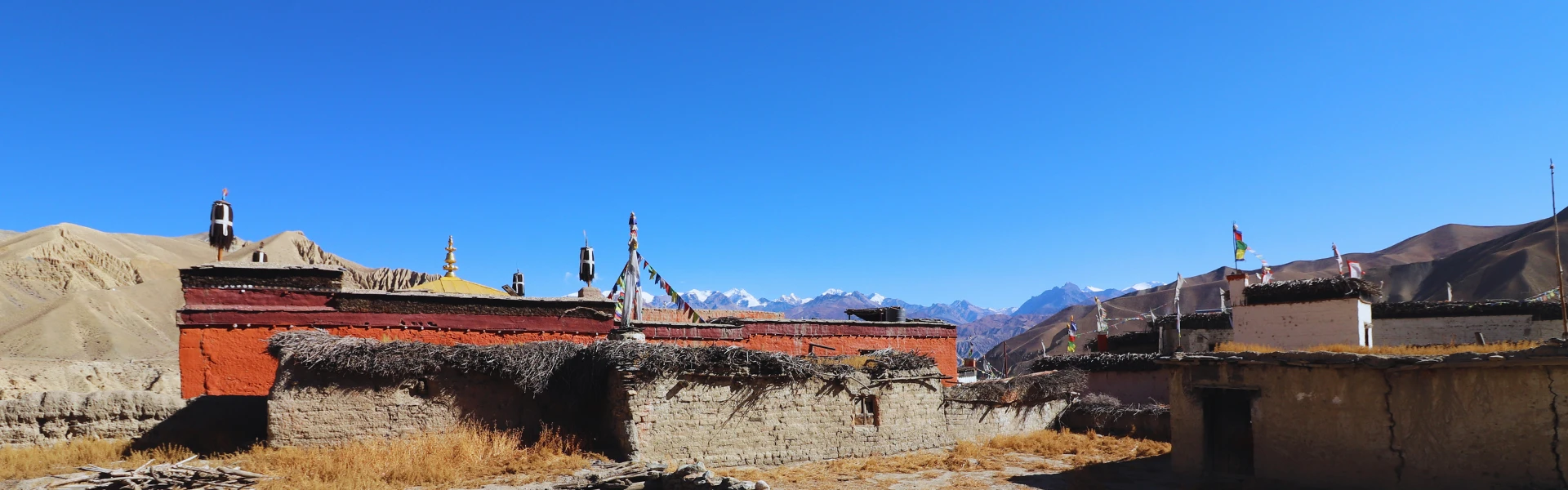
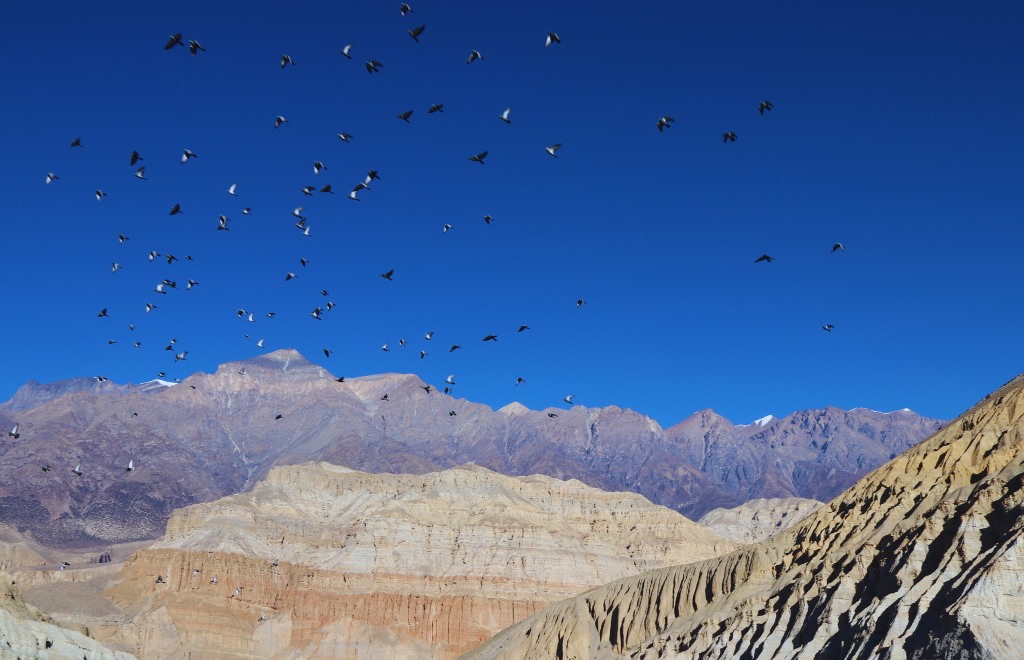
The surreal landscapes of Upper Mustang, where wind-carved cliffs and vast valleys create a desert-like Himalayan wonder.
At A1 Excursion Adventure, we provide complete logistical support for Upper Mustang travel. Our team is composed of experts with extensive regional experience.
We manage:
Restricted Area Permit (RAP) processing
Professional Licensed Trekking guide coordination
Foul wheel Jeep and overland transport logistics
Helicopter and flight bookings
Full Pokhara-to-Mustang itinerary planning
Detailed Upper Mustang Trekking Map
This ensures smooth, safe, and fully compliant travel throughout the restricted Mustang region.
Preparing properly for Upper Mustang is essential, as the region combines high altitude, remote terrain, and rapidly changing weather conditions. A well-planned packing and mindset approach will make your journey safer and far more comfortable.
Carry layered clothing for extreme temperature variation: The weather in Upper Mustang can shift dramatically between warm daytime sun and cold mornings or nights. Layering allows you to adapt easily throughout the day.
Bring sufficient cash: There are no ATMs beyond Jomsom, and card payments are rarely accepted in remote villages. Carry enough Nepali currency for food, accommodation, tips, and emergencies.
Prepare for wind and dust in the Kali Gandaki Valley: The region is known for strong afternoon winds. A scarf, sunglasses, and a face covering can significantly improve comfort during travel.
Use altitude sickness precautions if needed: As elevations rise above 3,000–4,000 meters, symptoms of altitude sickness may occur. Consult a doctor if necessary and consider carrying basic medication for prevention and relief.
Expect limited connectivity: Mobile signal and internet access are highly inconsistent in remote areas. It’s best to inform family or work in advance and be prepared to disconnect for several days.
Before you book anything, read the full blog below. The details in there could save you time, money, and a few headaches on the road.
Understanding how to reach the Upper Mustang from Pokhara is essential for planning a successful journey into one of Nepal’s most remote and culturally preserved Himalayan regions. Whether traveling by helicopter, flight and jeep combination, overland road expedition, or trekking route, each option offers a distinct experience shaped by altitude, terrain, and time.
Upper Mustang is not a destination you simply reach; it is a carefully regulated journey into a living medieval kingdom. With proper planning, permits, and logistics, the experience becomes one of the most extraordinary adventures in the Himalayas.
FAQs
How can I reach Upper Mustang from Pokhara?
You can reach Upper Mustang from Pokhara by helicopter, flight plus jeep, overland jeep expedition, or trekking route. The most popular option is the Pokhara to Jomsom flight, followed by a jeep drive to Lo Manthang.
How far is Upper Mustang from Pokhara?
The overland distance from Pokhara to Upper Mustang is approximately 220 kilometers (137 miles), depending on the exact destination and route conditions.
How long does it take to reach Upper Mustang from Pokhara?
Travel time depends on the route:
Helicopter: Around 1 hour
Flight + Jeep: 1–2 days
Overland Jeep: 2–3 days
Trekking Route: 10–14 days
Can you drive from Pokhara to Upper Mustang?
Yes, travelers can drive from Pokhara to Upper Mustang by 4x4 jeep. The route passes through Beni, Tatopani, Jomsom, Kagbeni, and finally toward Lo Manthang.
Is the road to Upper Mustang difficult?
Yes, parts of the road are rugged and off-road, especially beyond Beni and Jomsom. Travelers should expect rocky tracks, river crossings, dust, and occasional landslide-prone sections during certain seasons.
Do I need a permit to visit Upper Mustang?
Yes, Upper Mustang is a restricted region in Nepal. Foreign travelers require:
Restricted Area Permit (RAP)
Annapurna Conservation Area Permit (ACAP)
Trekkers may also require a TIMS card depending on current regulations.
Can I visit Upper Mustang without a guide?
No. Independent travel is not permitted in Upper Mustang. Travelers must arrange their trip through a registered trekking agency and travel with a licensed guide.
What is the cost of the Upper Mustang permit?
The Restricted Area Permit (RAP) costs USD 50 per person per day for foreign travelers entering Upper Mustang.
Can I fly directly from Pokhara to Lo Manthang?
Direct helicopter access to Lo Manthang is possible from Pokhara, subject to weather conditions and landing permissions. Regular commercial flights only operate between Pokhara and Jomsom.
What is the best way to reach the Upper Mustang?
The best route depends on your travel style:
Helicopter: Fastest and most luxurious
Flight + Jeep: Most balanced and popular
Jeep Expedition: Best for overland adventure
Trekking: Best for cultural immersion and trekking experience
Is Upper Mustang accessible during the monsoon season?
Yes. Upper Mustang lies in the Himalayan rain-shadow region, making it one of the few trekking destinations in Nepal that remains relatively dry during the monsoon months of June to August.
What is the altitude of Lo Manthang?
Lo Manthang sits at an altitude of approximately 3,840 meters (12,598 feet) above sea level.
Where is the entry point to Upper Mustang?
Kagbeni is the official gateway and permit checkpoint for entering Upper Mustang.
Are there ATMs in Upper Mustang?
No reliable ATMs are available beyond Jomsom. Travelers should carry sufficient Nepali cash for accommodation, meals, transportation, and emergencies.
Raj Thapa
Founder & Managing Director Raj Kumar Thapa: Founder & Managing Director of the Company, and has over 2 decades of professional experience in the travel and trekking field. Mr. Raj has spent the entirety of his career in the travel & trek organization.


.webp)