Upper Mustang culture and people represent one of the last surviving strongholds of traditional Tibetan Buddhist civilization in the Himalayas. Hidden within Nepal’s remote trans-Himalayan desert, the ancient Kingdom of Lo preserves centuries-old traditions, monasteries, festivals, language, and ways of life that have remained remarkably untouched by modernization. The indigenous Loba people of Upper Mustang continue to practice deep-rooted cultural customs shaped by Tibetan Buddhism, medieval trade routes, and life in one of the harshest mountain environments on earth. From the walled city of Lo Manthang and sacred Tiji Festival to ancient sky caves and unique family traditions, Upper Mustang offers travelers a rare glimpse into a living Himalayan heritage unlike anywhere else in Nepal.
Upper Mustang Culture and People: History, Religion, and Traditions of the Loba Tribe
Table of Contents
What Makes Upper Mustang the “Forbidden Kingdom”
Geographically part of Nepal but culturally an extension of classical Tibet, Upper Mustang is affectionately known as the "Forbidden Kingdom" or the Kingdom of Lo. It earned this title due to its long history as a highly restricted sovereign territory. Until the late last century, outsiders were strictly banned from entering. Even today, the region preserves its mystique through controlled-access regulations managed by the Department of Immigration, ensuring that global commercialization does not erode the delicate social and environmental fabric of this pristine valley.
Overview of the Loba Tribe and Their Tibetan Heritage in Mustang
The primary inhabitants of this high-altitude desert of Mustang are the Loba people (often spelled Lhopa), whose name translates literally to "the people of Lo." Culturally, linguistically, and spiritually, the Loba share an undeniable lineage with western Tibet. From their heavy woollen chubas to their distinct dialect and strict adherence to Vajrayana Buddhism, their heritage reflects centuries of cross-border migration, trade, and spiritual convergence along the ancient trans-Himalayan corridors.
Why Upper Mustang Preserves Ancient Himalayan Culture
While much of traditional Tibetan culture faced rapid modernization and socio-political shifts over the last century, Upper Mustang remained protected within an environmental and political cocoon. The combination of its extreme isolation, rugged trans-Himalayan terrain, and protective government travel regulations allowed the local communities to maintain their structural heritage, ancient religious sects, and centuries-old agricultural customs completely uninterrupted.
History of the Loba Tribe in Upper Mustang
Origins of the Loba People and Tibetan Empire Connection
The ancestral roots of the Loba people are tied closely to the expansion and eventual fragmentation of the Western Tibetan empires during the 7th to 9th centuries. Early nomadic pastoralists and seasonal traders settled the upper reaches of the Kali Gandaki River complex, forming independent fortified settlements that blended indigenous shamanistic traditions with early Buddhist practices.
The Founding of the Kingdom of Lo by King Ame Pal
In 1380, a legendary warrior and devout Buddhist named Ame Pal unified the scattered local chieftains and founded the independent Kingdom of Lo. He established his capital at Lo Manthang, constructing the massive, four-story white-walled fortress town that still stands today. Under his lineage, the region flourished as a critical hub for wealth, spiritual scholarship, and artistic achievement.
Why Upper Mustang Trekking Remained Isolated Until 1992
Following the geopolitical transitions of the mid-20th century, Upper Mustang was designated a highly sensitive demilitarized border zone. To protect the local population and maintain geopolitical stability, the government of Nepal closed the borders completely to international travelers. This absolute sealing was strictly enforced until 1992, when the region was cautiously reopened under a restricted-area permit framework.
How Isolation Preserved Ancient Tibetan Traditions
Because Upper Mustang missed the wave of late-20th-century global tourism, its structural and spiritual foundations remained entirely unaltered. Monasteries did not lose their sacred art, ancient caste lineages retained their local civic roles, and traditional family structures survived exactly as they had existed since the medieval era.
Geography and Survival in the Himalayan Desert of Mustang
Understanding Upper Mustang’s Harsh Environment
Trekking through Upper Mustang means adapting to an alpine desert environment located between 3,000 and 4,000 meters above sea level. The air is thin, daytime UV exposure is intense, and powerful northern gales rip through the river valleys daily from noon until dusk, shaping both the geology of the canyons and the architecture of the villages.
Mustang: The Rain-Shadow Desert of the Himalayas
Because the towering massifs of Annapurna and Dhaulagiri intercept the moisture-laden summer monsoons moving north from the Indian Ocean, Upper Mustang receives less than 200 millimeters of annual rainfall. This creates an ethereal, stark landscape characterized by deep ochre cliffs, wind-carved hoodoos, and vast gravel flats that contrast sharply with the snow-capped peaks to the south.
Glacial-Melt Irrigation and Farming Systems in Mustang
In a desert devoid of rain, liquid water is a precious resource. Over centuries, the Loba developed brilliant engineering systems of open-air canals (kulos) that capture seasonal glacial melt from the high peaks. This water is channeled meticulously into green oasis settlements to irrigate terraced fields of buckwheat, barley, and mustard.
How the Loba People Adapted to Extreme Conditions in Upper Mustang
Survival here requires absolute resourcefulness. Houses are constructed with thick, compacted mud-brick walls that absorb daytime solar heat and release it slowly during freezing nights. Firewood is exceptionally scarce, leading locals to dry and store livestock dung along their flat roofs as a primary fuel source for cooking and winter heating.
The Loba People: Identity, Language, and Society
Who Are the Loba People?
The Loba are a resilient, deeply spiritual, and tightly knit community of around 6,000 individuals. They are traditionally split into distinct socio-economic sub-groups that manage local agriculture, monastic administrative duties, and long-distance trade networks across the high passes.
The Lowa Language and Tibetan Roots of Upper Mustang
The local language, known as Lowa or Mustang Tibetan, is a distinct tonal dialect of the Tibeto-Burman language family. While closely related to the Lhasa Tibetan dialect, it features localized inflections and vocabulary shaped by centuries of coexistence with neighboring Nepalese mountain communities.
Traditional Clothing and Cultural Identity of the Loba
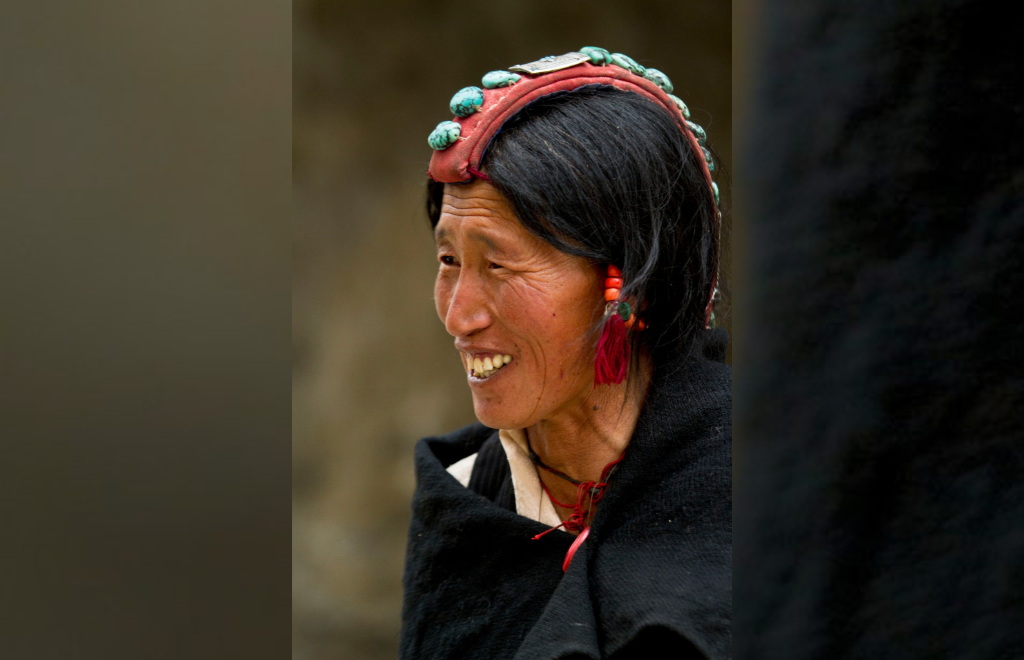
Traditional clothing is highly functional yet heavily symbolic. Men wear heavy, long-sleeved woolen robes (chubas) secured with a sash. In contrast, women wear distinctive dark wrap dresses accompanied by brilliantly striped woven aprons (pangdens) that signal their marital status. For festivals, women display family wealth by wearing stunning perak headdresses adorned with large pieces of turquoise, coral, and silver.
The Three-Name Tradition in Loba Society in Upper Mustang
Loba's identity is deeply intertwined with spiritual protection. Children are traditionally given three distinct names: a family name indicating their lineage, a personal name, and a sacred protective name bestowed by a high-ranking Buddhist lama during a formal naming ceremony shortly after birth.
Traditional Social Structure of the Loba People in Upper Mustang
The Ancient Caste System of the Loba Tribe
Historically, the Loba society operated under a structured three-tier caste system. The highest tier, the Kudak, represents the royal lineage and nobility. The middle tier, the Phal, comprises the vast majority of traditional farmers, nomads, and traders. The third tier, the Garra, historically specialized in essential artisan crafts like ironsmithing, masonry, and traditional music.
Royal Heritage and the Kingdom of Lo
Though Nepal officially transitioned to a republic, the local population continues to hold deep reverence for the traditional royal lineage of Lo. The late King Jigme Parbal Bista, a direct descendant of Ame Pal, served as an essential cultural anchor, settling local disputes and guiding structural preservation initiatives within the walled capital.
Traditional House Architecture and Social Status in Upper Mustang Region
Loba architecture is uniform yet clearly displays subtle indicators of social standing. Houses are painted in a clean white lime wash, while structural trim colors like deep red, grey, and white vertical stripes indicate proximity to monastic or royal lineages, creating a beautifully cohesive visual environment.
Community Rules and Medieval Customs of the Loba
Local governance relies heavily on collective decision-making assemblies. Water distribution rights for irrigation, seasonal yak pasture movements, and community maintenance schedules for ancient trail networks are managed by elected village elders using traditional frameworks that predate modern legal codes.
Marriage, Family, and Inheritance Traditions of the Loba
Fraternal Polyandry in Upper Mustang
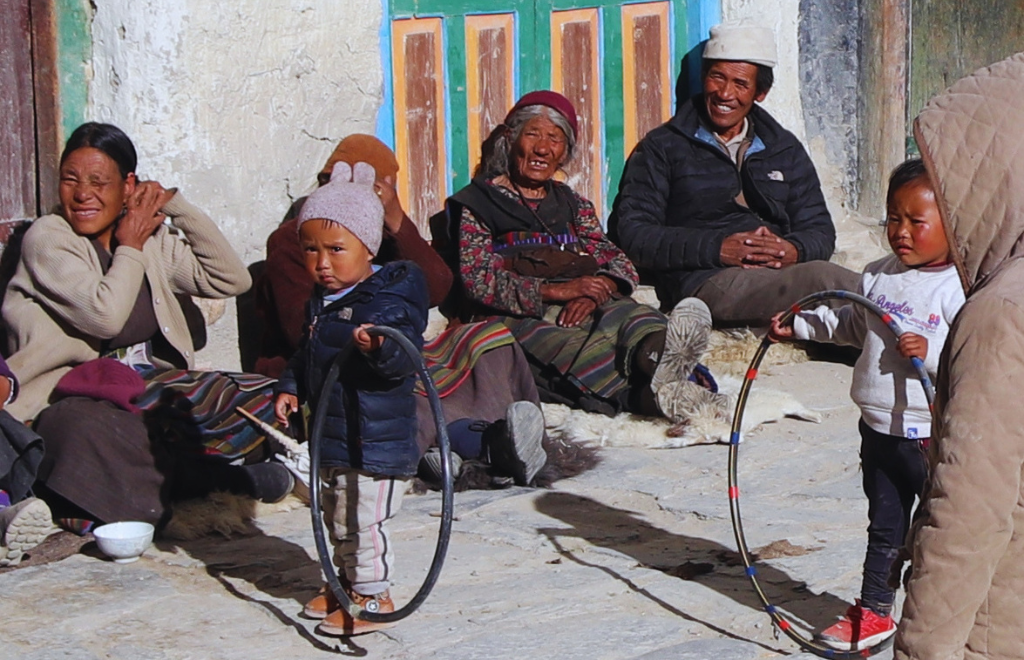
One of the most unique anthropological features of traditional Upper Mustang society is fraternal polyandry, a marital practice where multiple brothers collectively marry a single wife. While this custom is rapidly declining among the younger generation, it remains highly respected among older rural households.
Why Brothers Shared One Wife Historically
This practice was born out of pure economic necessity in a harsh environment. In a desert valley with extremely limited arable land, splitting a family's small farm among three or four brothers every generation would quickly lead to poverty. By sharing a single wife, the brothers keep the family land, livestock, and inherited assets completely unified.
[Traditional Family Land]
│
▼
(Unified Estate) ── Keep Assets Intact ──► Economic Survival
▲
│
[Fraternal Polyandry] (Brothers share one wife)
Primogeniture and Family Land Preservation
Inheritance follows a strict system of primogeniture, where the eldest son inherits the primary family home and agricultural fields. This ensures the survival of the core homestead, while younger brothers traditionally enter monastic life or pursue independent trade networks.
The Role of Monasteries in Population Balance
Monasteries traditionally acted as an essential demographic balancing mechanism. By hosting younger sons as practicing monks, communities naturally curbed population growth in a territory with finite food resources, maintaining a sustainable equilibrium between human settlements and the fragile agricultural yields of the desert.
Religion and Spiritual Life in Upper Mustang
Tibetan Buddhism and the Sakya-pa Sect
Vajrayana Buddhism forms the bedrock of daily life in Upper Mustang. The region is a vital stronghold for the historic Sakya-pa sect, known for its rigorous scholarly traditions, complex meditative practices, and distinctive grey, white, and red striped monastic coloration.
Prayer Flags, Mani Walls, and Chortens of Mustang
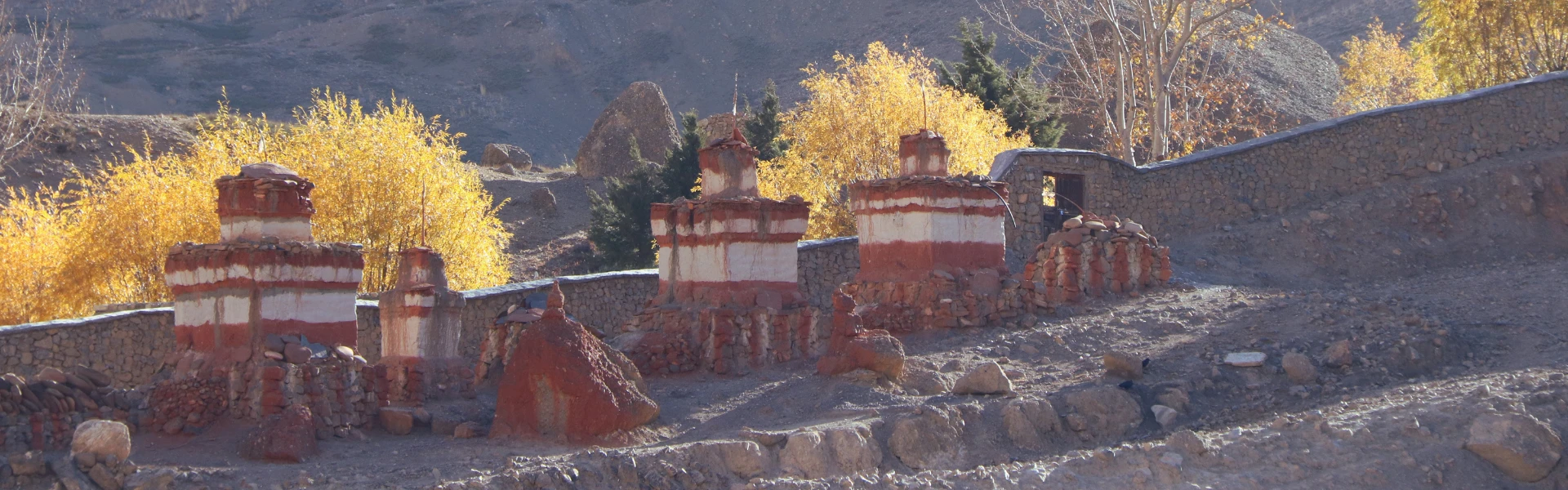
The landscape itself serves as a continuous physical prayer. Every high mountain pass is strung with vibrant Lungta (prayer flags), sending blessings on the wind. Trails are marked by massive Mani walls built from thousands of individual stones hand-carved with sacred mantras, alongside striking Chortens (stupas) guarding village entrances from negative energy.
Ancient Demon Beliefs and Folk Traditions in Upper Mustang Region
Beneath the institutional Buddhist framework lies a fascinating layer of indigenous pre-Buddhist animism and folk beliefs. Houses frequently display intricate ghost traps containing ram skulls, colorful threads, and protective talismans designed to ensnare wandering malevolent spirits before they cross the domestic threshold.
Traditional Tibetan Healing and Amchis practices of Mustang
Healthcare in remote villages is frequently managed by Amchi practitioners of Sowa Rigpa, the traditional system of Tibetan medicine. These medicine specialists utilize wild Himalayan herbs, minerals, and pulse diagnosis techniques, passing their extensive medical treatises down through family lineages for generations.
Monasteries and Sacred Architecture in Upper Mustang Region
Lo Manthang: The Cultural Capital of Upper Mustang
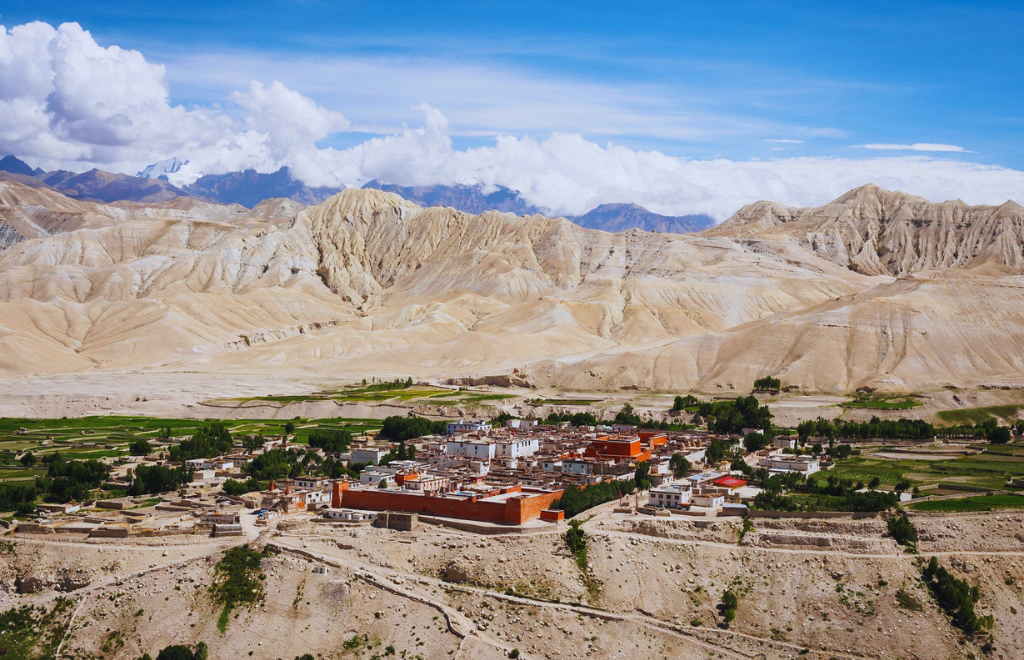
The medieval walled city of Lo Manthang remains the spiritual epicenter of the region. Enclosed by a massive 6-meter-high earthen defensive wall, this labyrinth of whitewashed homes, narrow stone alleys, and imposing monastic compounds has stood resilient against the elements for over six centuries.
Chöde Monastery and Buddhist Learning
Chöde Monastery serves as the primary hub for monastic education within the walled city. It acts as a vibrant center where young monks learn sacred ritual dances, classical logic, and the delicate art of creating elaborate sand mandalas during major spiritual holidays.
Thubchen and Jampa Gompas
Lo Manthang houses two of the most architecturally significant structures in the entire Buddhist world:
- Jampa Gompa: The "House of Future Buddha," a massive three-story clay temple built in the early 15th century, housing a magnificent 50-foot clay statue of Maitreya.
- Thubchen Gompa: A monumental assembly hall featuring a massive red ceiling supported by dozens of hand-carved wooden pillars, where high lamas gather for community blessing prayers.
Ancient Murals, Statues, and Sacred Art
The interior walls of these ancient temples are covered in exquisite, gold-leafed murals depicting complex mandalas and various deities. Recognized by global conservation organizations as masterworks of the classical Newari-Tibetan artistic style, these paintings provide an invaluable record of medieval spiritual iconography.
The Mystery of the Mustang Sky Caves in Mustang
The 10,000 Ancient Cliff Caves of Upper Mustang
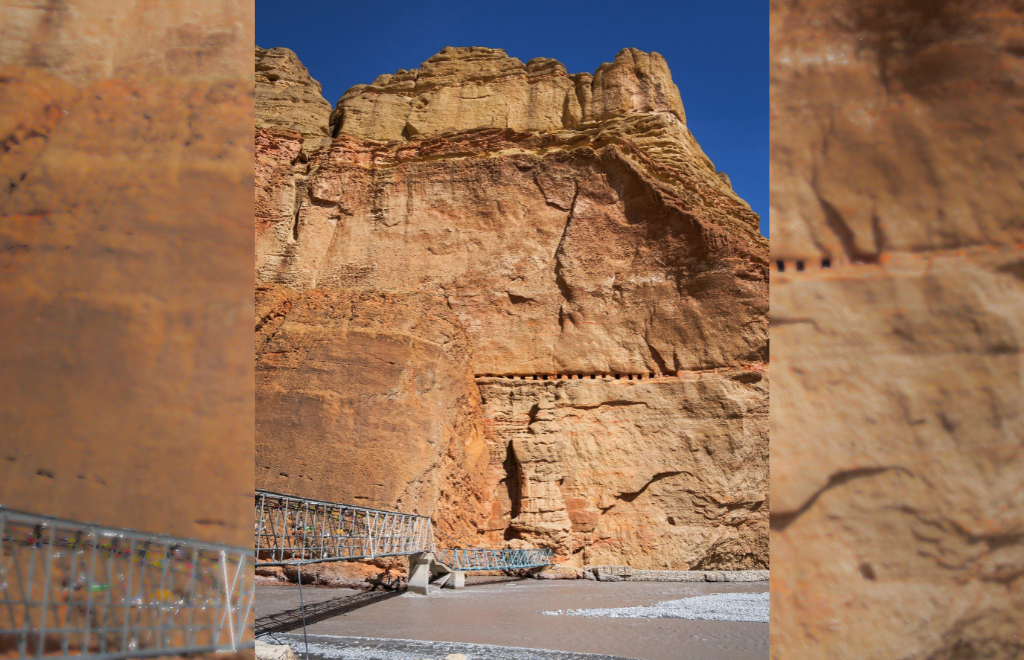
One of the world's greatest archaeological mysteries lies carved directly into the sheer, crumbling cliff faces of Upper Mustang. Over 10,000 prehistoric, man-made openings collectively known as the "Sky Caves" perforate the valleys, some dug into vertical rock walls hundreds of feet above the valley floor.
Burial Chambers, Meditation Sites, and Hidden Settlements
Scientific excavations indicate these caves served varying functions across different historical eras. The oldest layers reveal burial chambers dating back over 2,000 years. Later, during periods of tribal warfare, they were converted into multi-story cliffside defensive settlements, and eventually became quiet sanctuaries for Buddhist meditators.
Archaeological Discoveries and Ancient Manuscripts
In recent decades, explorers have discovered incredible treasures hidden within these high-altitude caves. Discoveries include silver masks, ancient human remains, and exceptionally rare collections of early Buddhist manuscripts and block-printed texts containing invaluable historical records.
Theories Behind the Creation of the Sky Caves
How ancient people climbed into these sheer, unreachable cliffs without modern climbing gear remains an amazing puzzle. Archaeologists believe that shifting water tables and centuries of aggressive wind erosion have radically sheared away the original pathways and ledges, leaving these once-accessible cave networks suspended high in mid-air.
Festivals and Cultural Celebrations
The Sacred Tiji Festival of Upper Mustang
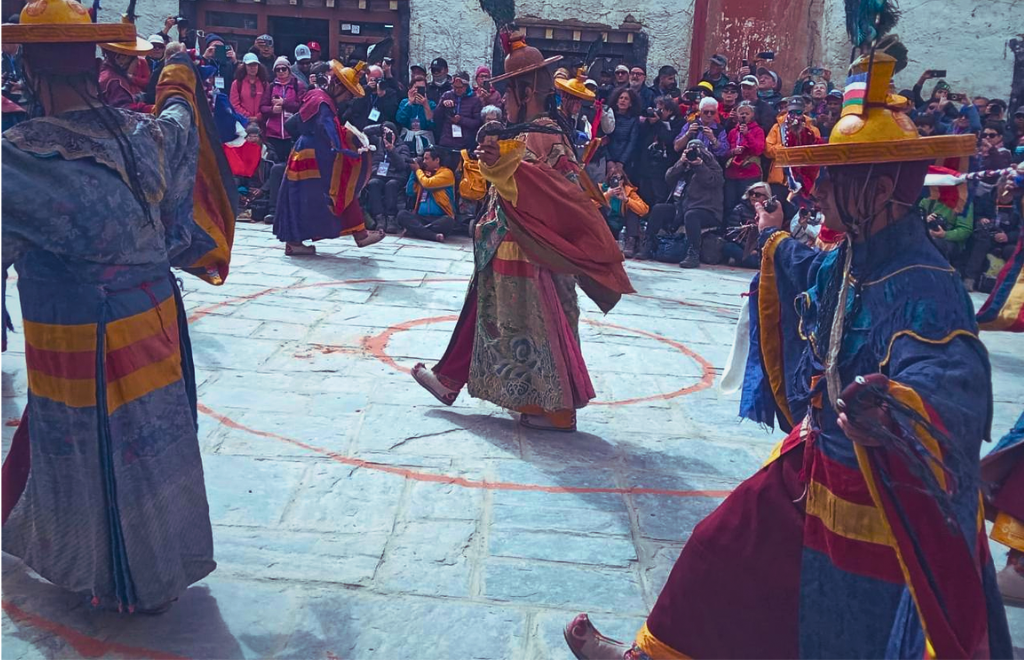
The most important celebration in the region is the Tiji Festival, a vibrant three-day spring ritual held inside the walled square of Lo Manthang. Short for "Tempa Chirim," the festival translates to "Prayer for World Peace" and ritualistically re-enacts the triumph of a Buddhist deity over a destructive demon who sought to starve the valley of water.
Masked Dances and Buddhist Rituals
During Tiji, monks from Chöde Monastery don heavy, elaborate silk robes and striking, painted papier-mâché masks representing protective wrathful deities. They perform complex, meditative ritual dances (Chham) accompanied by the deep reverberation of long Tibetan horns (dungchen), cymbals, and drums, metaphorically purifying the valley of negative energy.
Yartung Horse Festival and Traditional Sports
Celebrated during the late summer harvest, the Yartung Festival is a high-energy celebration of nomadic heritage. Loba men and women gather to showcase incredible feats of speed, strength, and precision, participating in wild horse racing, traditional archery competitions, and vibrant group dances.
Seasonal Celebrations and Community Gatherings
Life in the high desert is punctuated by seasonal agricultural festivals that mark the planting and harvesting of crops. These gatherings provide vital opportunities for scattered nomadic families to reunite, share large jars of traditional salt-butter tea, and strengthen community bonds.
Economy and Traditional Livelihood of the Loba People in Upper Mustang
The Ancient Himalayan Salt Trade Route
Historically, Upper Mustang’s wealth was built entirely on its positioning along the Kali Gandaki salt trade corridor. Loba traders organized massive caravans of yaks and goats, moving pure rock salt from the high lake beds of Tibet down to the mid-hills of Nepal to trade for grain, spices, and manufactured goods.
Agro-Pastoral Farming Lifestyle
With the closing of traditional borders mid-century, the local economy shifted toward an agro-pastoral model. Households manage a delicate balance between seasonal crop farming in irrigated valley floors and livestock herding across vast alpine pastures.
Yak Herding and Seasonal Migration
Yaks are the ultimate lifelines of Loba society. They supply wool for clothing, thick hides for boots, rich milk for making traditional cheese and butter, and serve as powerful pack animals. During the freezing winter months, large portions of the population engage in a seasonal migration, traveling south to Pokhara or Kathmandu to run winter trade stalls.
Tourism and Economic Modernization
The careful introduction of controlled tourism has provided a transformative economic pillar for Upper Mustang. Traditional homes are being thoughtfully converted into cozy, family-run teahouse lodges, creating new income streams that fund local school construction and monastery restoration projects.
Modernization and Cultural Change in Upper Mustang
Roads, Tourism, and Internet Access
The recent construction of a motorable track connecting Pokhara to the Kora La border pass has brought rapid transformation to the valley. Goods are now easily transported by jeep, and satellite internet access connects isolated villages to global information networks, fundamentally altering daily life.
Decline of Traditional Polyandry
As formal education becomes widely available and young people gain economic independence through tourism and global trade, traditional social systems like fraternal polyandry are rapidly disappearing. Modern couples overwhelmingly prefer independent, monogamous family units.
Youth Migration and Lifestyle Changes
Like many remote mountain regions across the globe, Upper Mustang faces a steady migration of its youth toward urban centers like Kathmandu or abroad in search of higher education and diverse employment opportunities, creating new challenges for maintaining traditional farming and oral storytelling customs.
Protecting Loba Heritage in Modern Times
In response to modern shifts, local youth clubs, monastery boards, and cultural heritage organizations are taking active measures to protect their identity. They are establishing community museums, documenting traditional folk songs, and teaching the Lowa language alongside modern school curricula.
Responsible Travel Tips for Trekkers in Upper Mustang
Respecting Loba Traditions and Sacred Sites
Upper Mustang is a deeply sacred landscape where spiritual customs are actively woven into daily survival. Travelers must approach the region with a mindset of deep respect, ensuring their presence supports local conservation efforts and protects indigenous traditions.
Cultural Etiquette for Visitors
- Mani Walls and Chortens: Always walk to the clockwise (left) side of all religious monuments.
- Monastery Photography: Never take photos inside temple assembly halls without receiving explicit permission from the monk in charge.
- Footwear: Always remove your shoes before entering any monastery shrine room or private home kitchen.
- Dress Code: Avoid wearing revealing clothing; choose respectful trekking attire that covers your shoulders and knees.
Upper Mustang Restricted Area Permit Rules
To protect the local heritage, the government of Nepal manages Upper Mustang as a restricted zone. Travelers must strictly adhere to the following current legal framework:
| Permit Type | Official Fee (USD) | Key Operational Rules |
| Restricted Area Permit (RAP) | $50 USD per person per day | Calculated strictly on days spent inside the restricted zone. No mandatory 10-day minimum base fee. |
| ACAP Permit | NPR 3,000 per person | Covers entry into the broader Annapurna Conservation Area. |
| Mandatory Guide Rule | Varies by agency | Independent solo trekking without a guide is strictly illegal. Trekkers must hire a licensed guide processed through a registered Nepalese agency. Individual solo travelers are allowed to get the permit, provided they are accompanied by a licensed guide. |
Sustainable Trekking and Responsible Tourism Tips for Upper Mustang Trek
Help preserve this delicate high-altitude ecosystem by minimizing your footprint. Bring reliable water purification methods to completely eliminate plastic bottle waste, pack out all non-biodegradable trash, and prioritize spending your money at locally owned teahouses and artisan stalls to ensure your tourism spend directly benefits the native Loba communities.
Upper Mustang Trek Packages by A1 Excursion Adventure
To experience this incredible destination firsthand, A1 Excursion Adventure offers tailored itineraries led by expert guides who possess deep regional expertise and unmatched knowledge of the local trails, customs, and heritage:
- Short Upper Mustang Trek (15 Days)
- Classic Upper Mustang Trek (18 Days)
- Upper Mustang Jeep Tour
- Upper Mustang Tiji Festival Trek
Conclusion: Why Upper Mustang Is One of the Last Preserved Tibetan Cultures
The remote region of Upper Mustang remains one of the world’s last living strongholds of authentic Tibetan Buddhist civilization, where centuries-old traditions are not preserved behind museum walls but continue to shape everyday life. From the prayer-flag-lined alleys of Lo Manthang to the ancient monasteries, sky caves, and windswept desert landscapes, the Upper Mustang culture and people offer travelers a rare opportunity to witness a way of life that has remained remarkably untouched by modern influence. Its long isolation, combined with Nepal’s restricted tourism policies, has helped protect the unique identity of the Loba people and preserve the spiritual and cultural heartbeat of Nepal’s Forbidden Kingdom.
However, as roads, technology, and globalization slowly reach the Himalayan frontier, safeguarding the heritage of Upper Mustang becomes increasingly important. Responsible and sustainable tourism plays a vital role in protecting local traditions, supporting community livelihoods, conserving ancient monasteries, and ensuring that future generations can continue practicing their rich cultural legacy with dignity and pride. Visiting Upper Mustang is therefore more than just an adventure trek; it is a meaningful cultural experience that encourages respect, preservation, and a deeper understanding of one of the Himalayas’ most extraordinary communities.
A journey through Upper Mustang leaves travelers with far more than photographs of dramatic landscapes; it offers a profound connection to history, spirituality, and human resilience. Walking beneath towering red cliffs, crossing high-altitude desert valleys, and experiencing the timeless rhythm of life inside Lo Manthang creates memories that stay long after the journey ends. If you are seeking an authentic Himalayan experience filled with culture, spirituality, history, and breathtaking scenery, Upper Mustang stands as one of Nepal’s most unforgettable destinations.
Ready to experience the hidden world of Nepal’s Forbidden Kingdom?
Frequently Asked Questions
Who are the Loba people of Upper Mustang?
The Loba are the indigenous inhabitants of the Upper Mustang region in Nepal. Culturally and linguistically tied to Tibet, they are a deeply spiritual community practicing Vajrayana Buddhism, traditionally working as agro-pastoralist farmers, high-altitude animal herders, and trans-Himalayan traders.
Why is Upper Mustang called the Forbidden Kingdom?
It is called the Forbidden Kingdom because it operated as an independent, walled sovereign territory for centuries and was entirely closed to international visitors until 1992. The region continues to preserve its isolated mystique today through special restricted area permits and protective tourism regulations.
What religion do the Loba people follow?
The vast majority of the Loba people practice Vajrayana Buddhism, specifically following the historic Sakya-pa sect. Their daily lives are deeply intertwined with spiritual traditions, visible in the numerous ancient monasteries, chortens, mani walls, and annual festivals like Tiji that define the region.
Is polyandry still practiced in Upper Mustang?
Fraternal polyandry, where multiple brothers share a single wife to prevent family land division, was historically common across Upper Mustang. While it is still respected and practiced among some older generations in remote villages, it is rapidly declining among the youth in favor of modern monogamy.
What language do people speak in Upper Mustang?
The native language spoken by the local population is Lowa (also known as Mustang Tibetan). It is a distinct dialect belonging to the Tibeto-Burman language family that is closely related to classical Tibetan, though it includes unique regional variations.

.webp)